In search of beauty
Architects are taught to speak of function, structure and cost, and to leave beauty unspoken, as if it were a private indulgence. Alberto Campo Baeza has spent a lifetime insisting on the opposite: that beauty is not the reward for solving the other problems, but the problem itself.
Campo Baeza writes and builds around a single conviction: that the proper aim of architecture is beauty, and that beauty is reached not by adding to a building but by getting its essentials exactly right. Proportion before decoration. Light before finish. The measured relation of a few elements, held with precision, until nothing can be removed without loss. Light, for him, is the true material of architecture, and everything else is there to receive it.
It is an unfashionable thing to say plainly. Beauty is easily confused with ornament, or with expense, and architects often hide the word behind more technical ones. The discipline of pursuing it openly is to refuse those substitutes, to understand that a building of real beauty is usually a true one, where structure, climate, material and proportion have been resolved so well that the result looks inevitable.
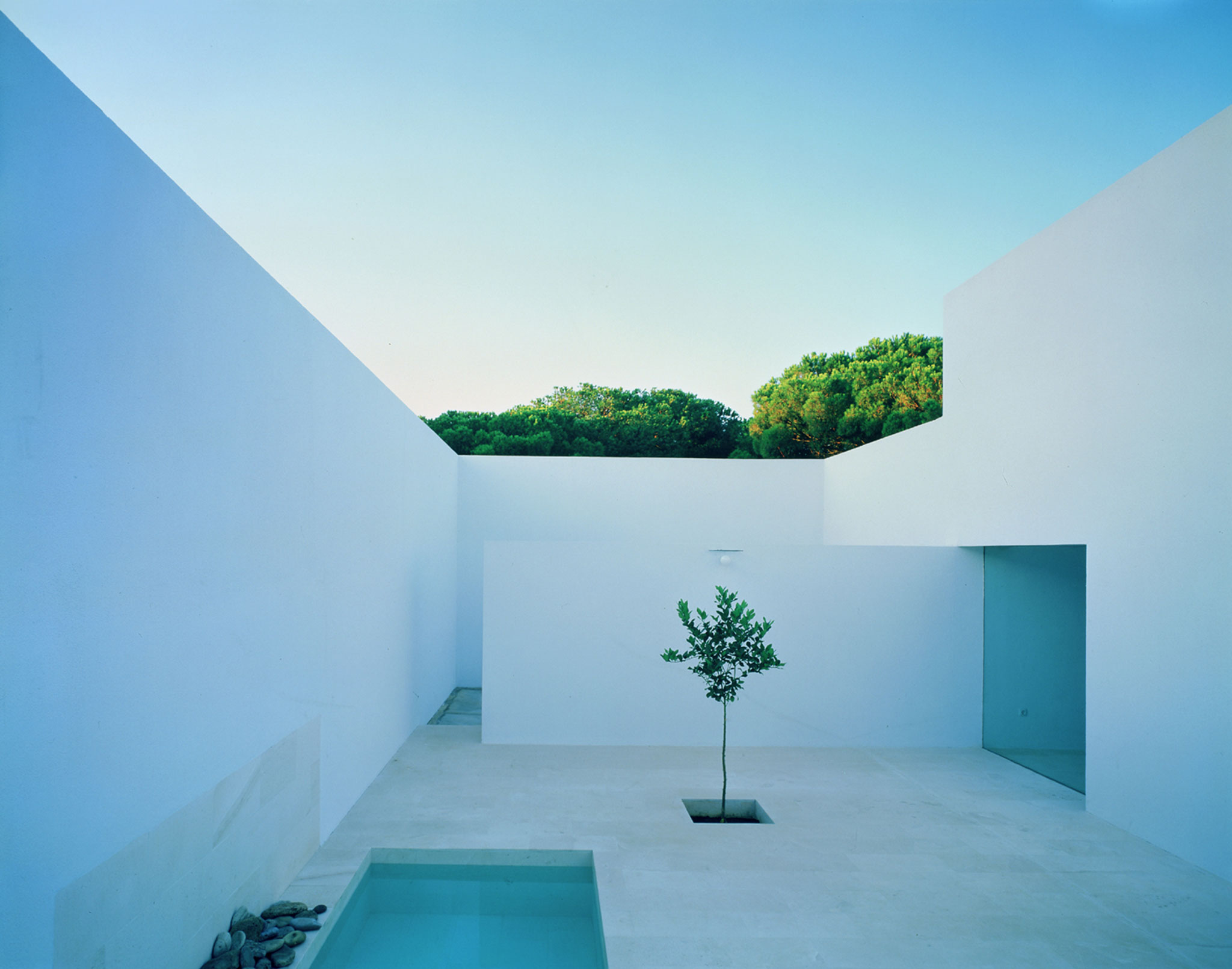
This house is built in search of that kind of beauty. There is no applied ornament anywhere in it. What it has comes from the proportion of the forty-five-metre wall, from the exact height at which the living room holds the horizon, from a single colour carried through every surface, from the way the morning light rakes across the scored lime. These are not effects added at the end. They are the building itself, done with care.
Restraint, here, is not the absence of beauty but its method. The deepest beauty in the house cannot be pointed to: the calm of a symmetrical plan, the quiet of one tone, the precise distance at which the sea is held in each room. A serious house earns its beauty the slow way, by removing everything that is not essential and tuning what remains.
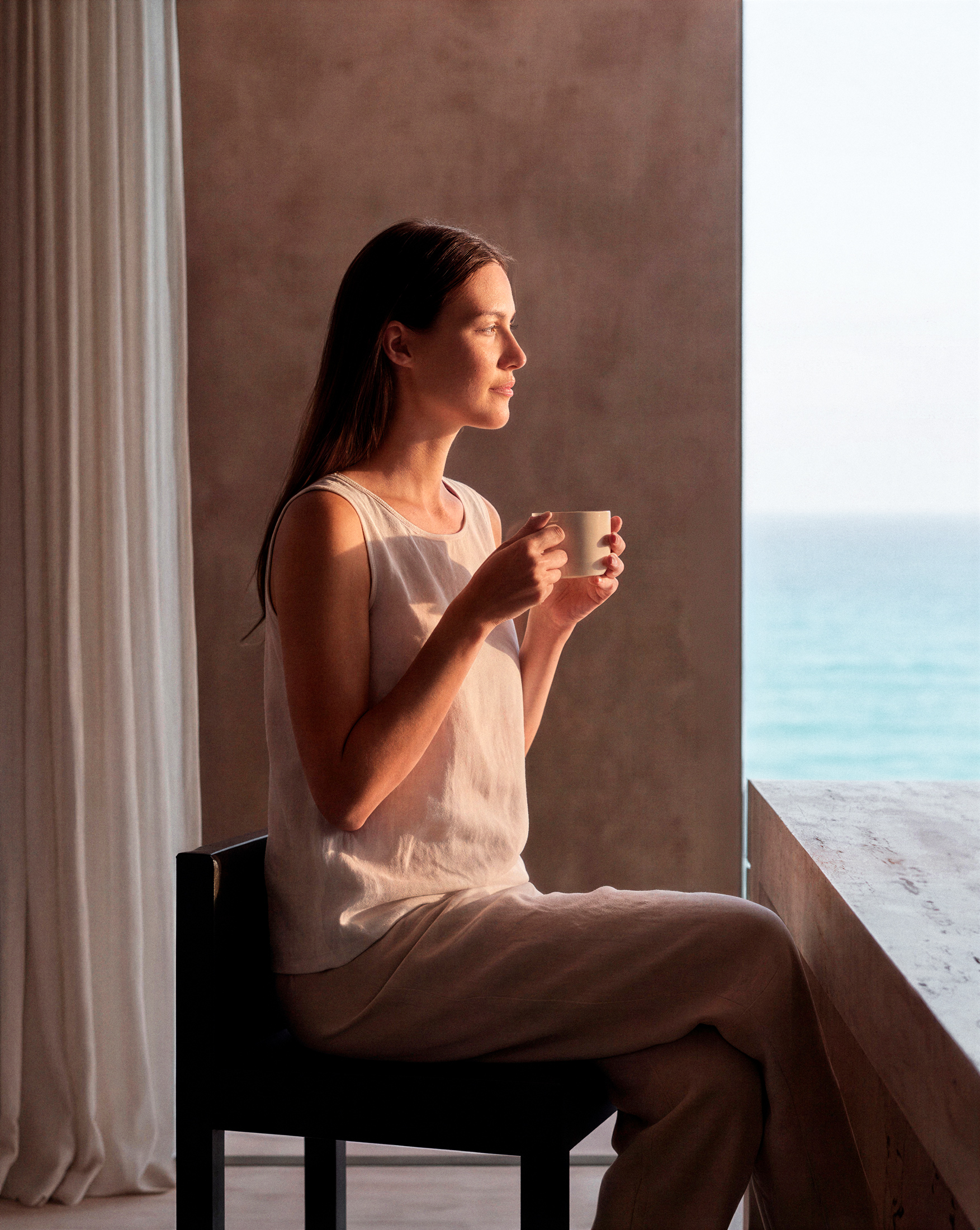
In search of beauty, the house adds nothing and measures everything. What is left is meant to be lived in for decades, and looked at slowly, the way one looks at the few things made with this much care.