A house on the Red Sea coast, for a family that returns across the seasons and across generations. Not a holiday villa, but a permanent setting: a building that holds the life of a family when it is present, and holds its own dignity when it is not.
The plot faces two opposite conditions. To the northeast, the open sea and the long horizon. To the southwest, a road and the dense, low fabric of El Gouna. The house belongs to both, and the tension between the two responses is the foundation of the design.
It must hold two states without privileging either: full, with the family and its guests moving through every room at once, and empty, for the long stretches when no one comes. How a single house can be true to both is the question the project sets out to answer.
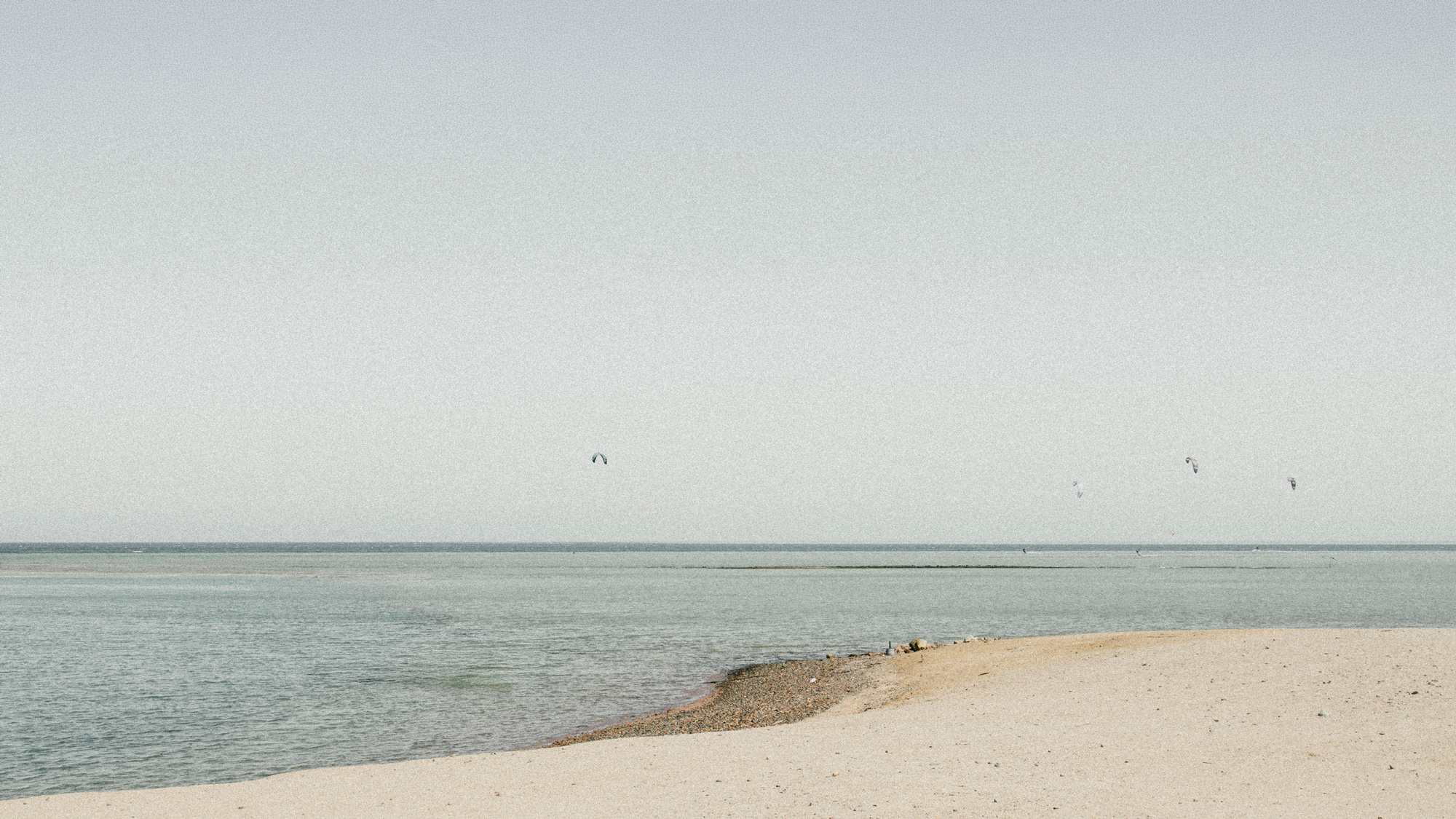
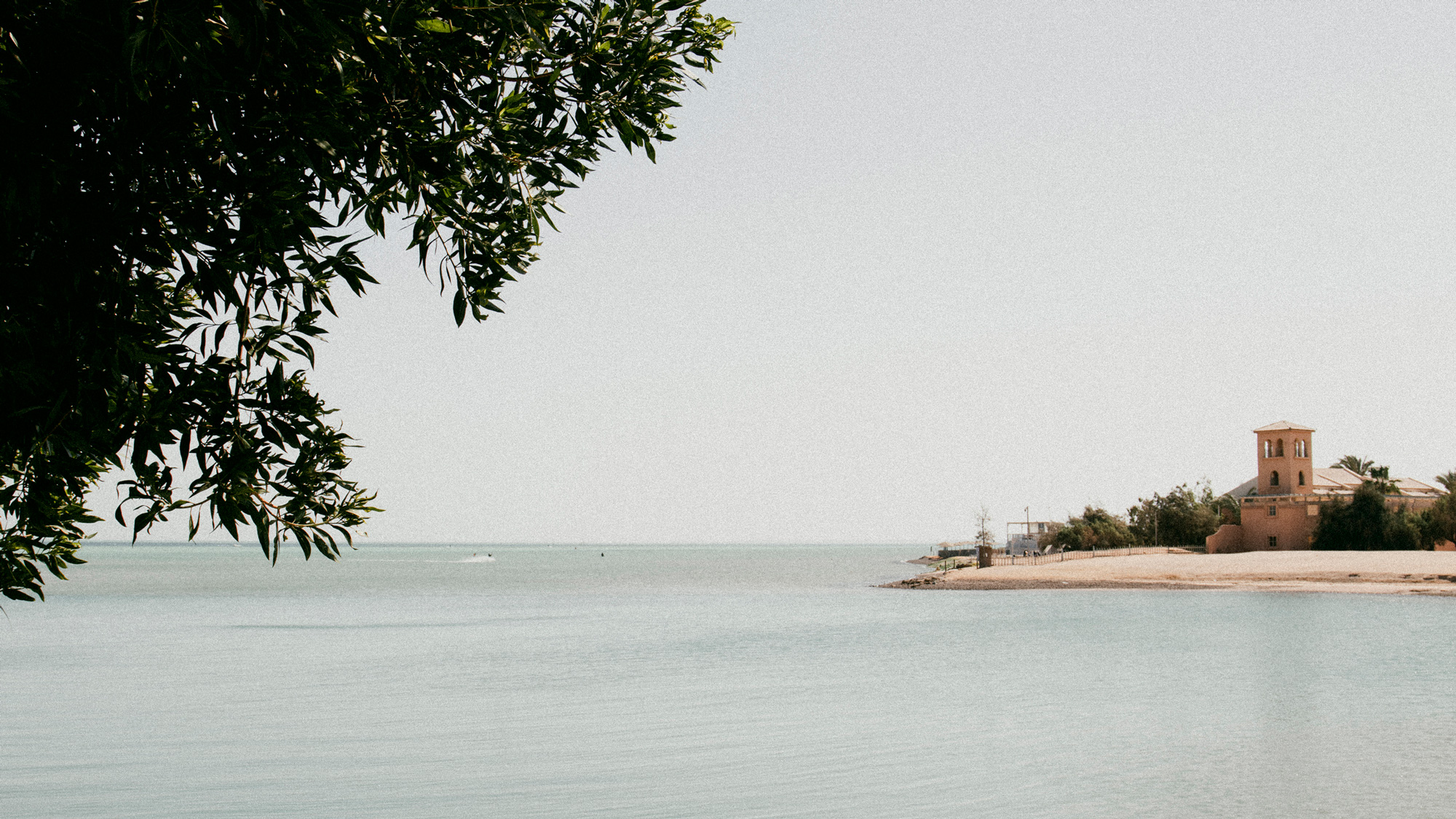
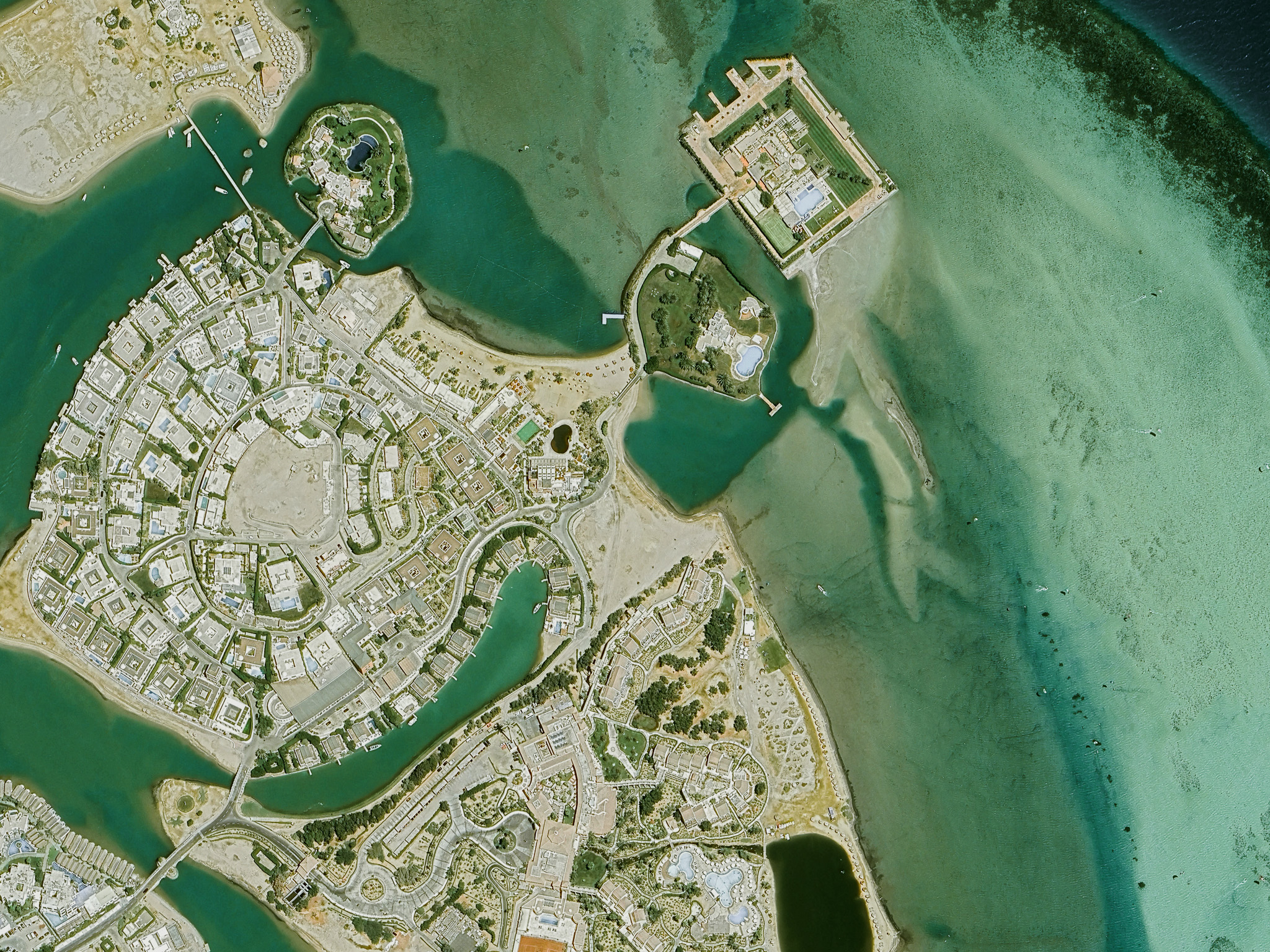
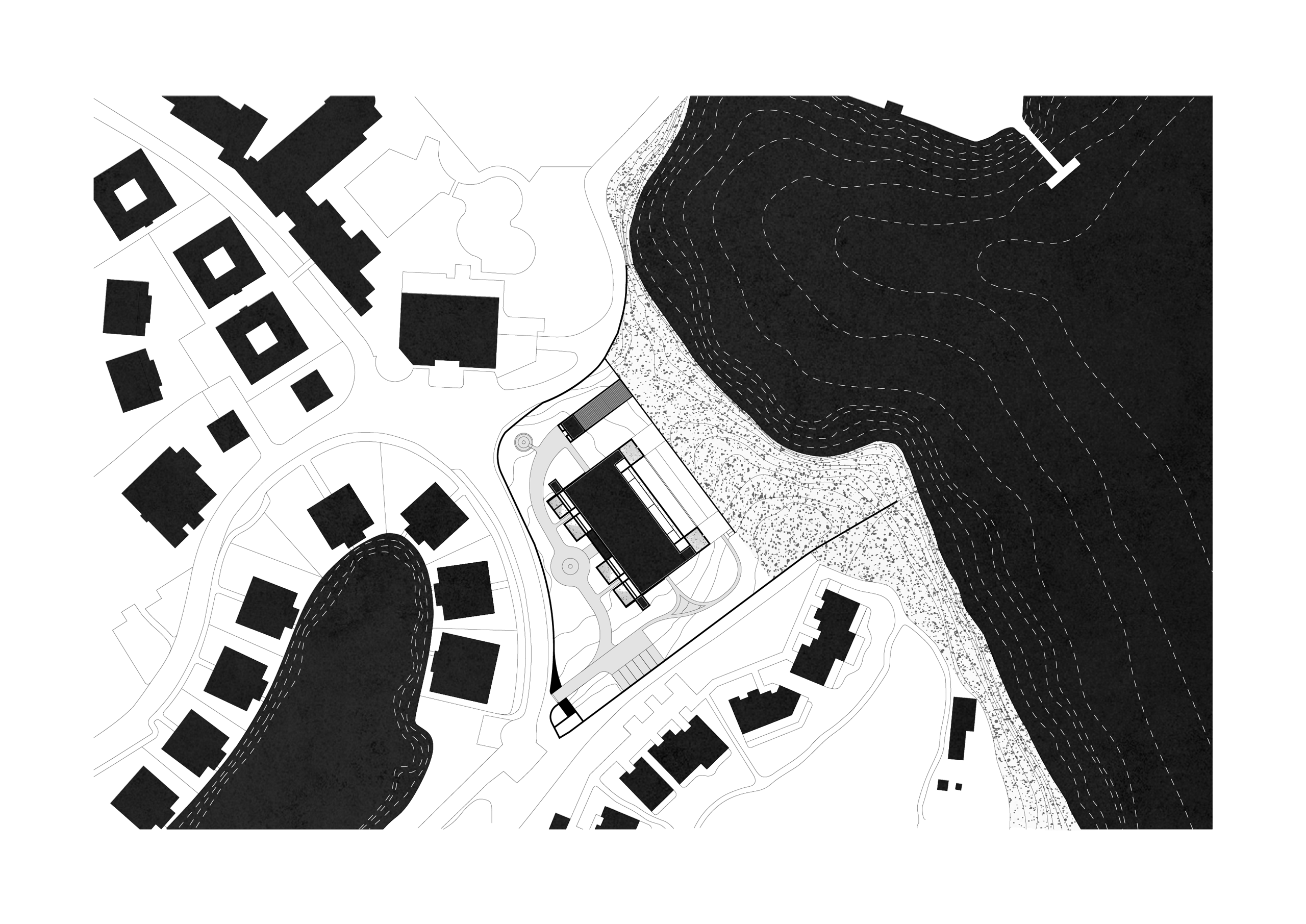
Before the building, the ground. The plot of 7,895 square metres sits where the open sea meets an interior lagoon: the sea to the northeast, the lagoon and the road to the southwest. There is no road between the house and the beach; the shoreline is the eastern edge of the garden. Nearby, on a peninsula in the Red Sea, stands the house of the parents of the family.
One house, true to two opposite states:
full and empty, open and closed.
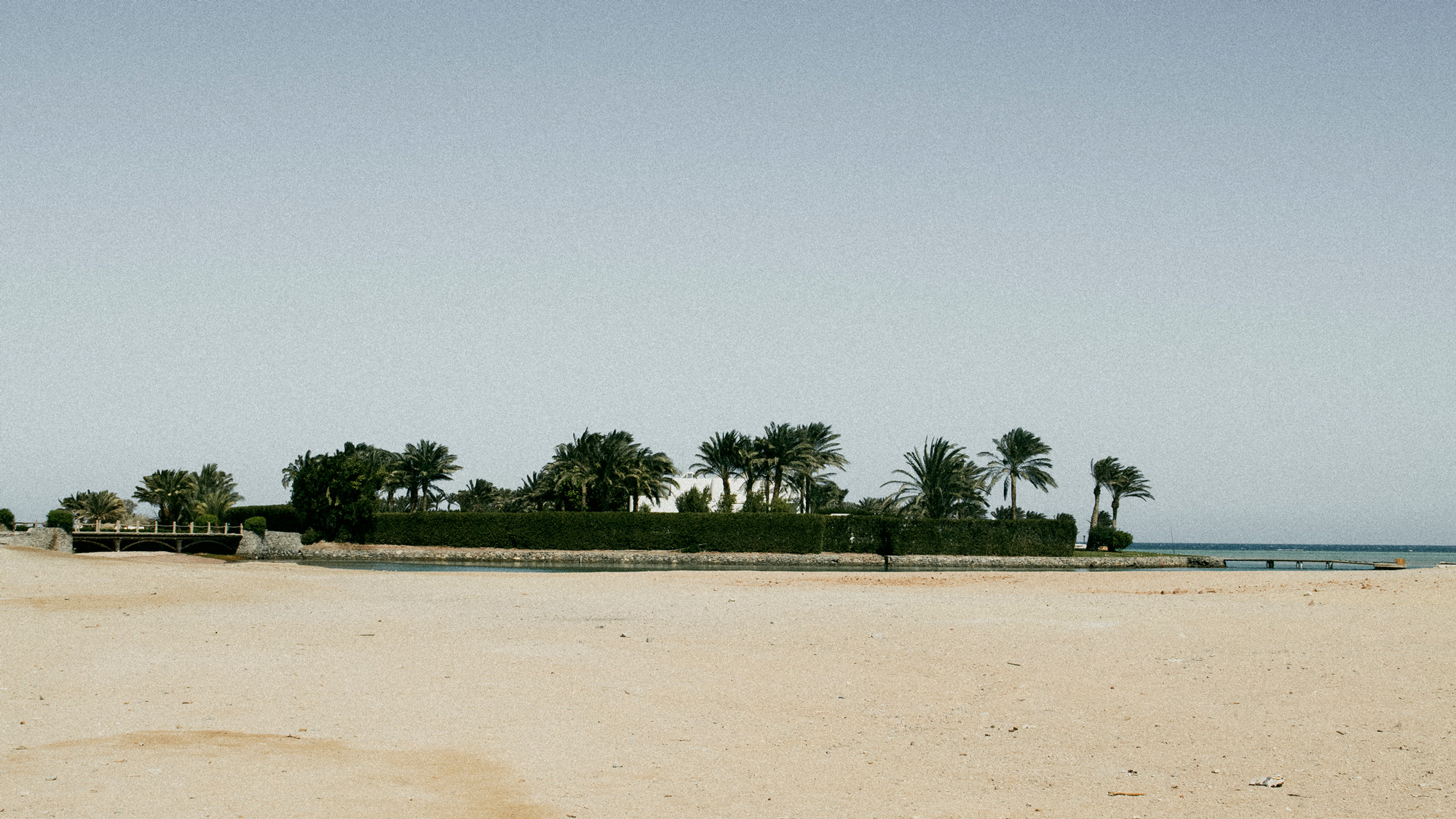
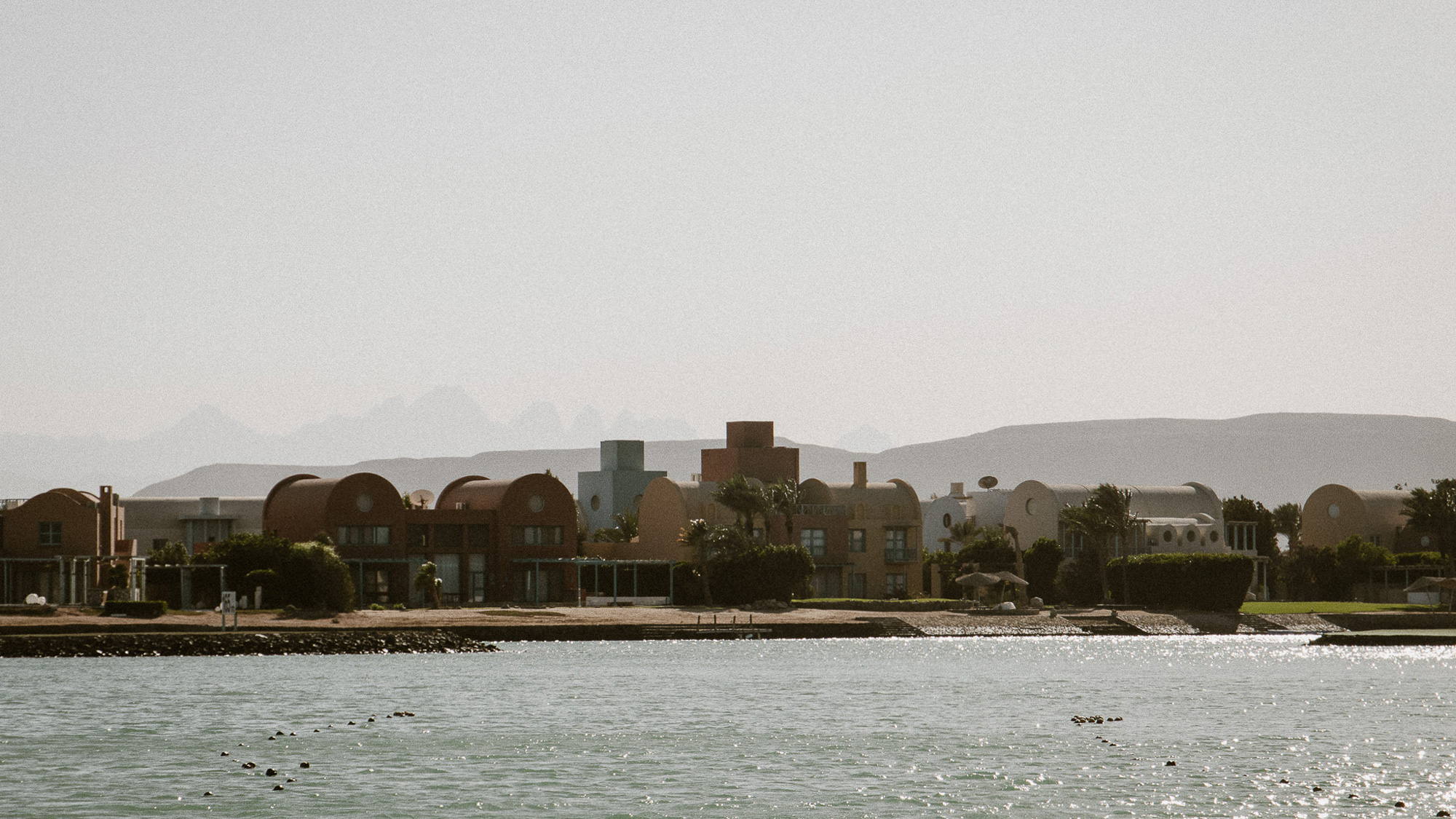
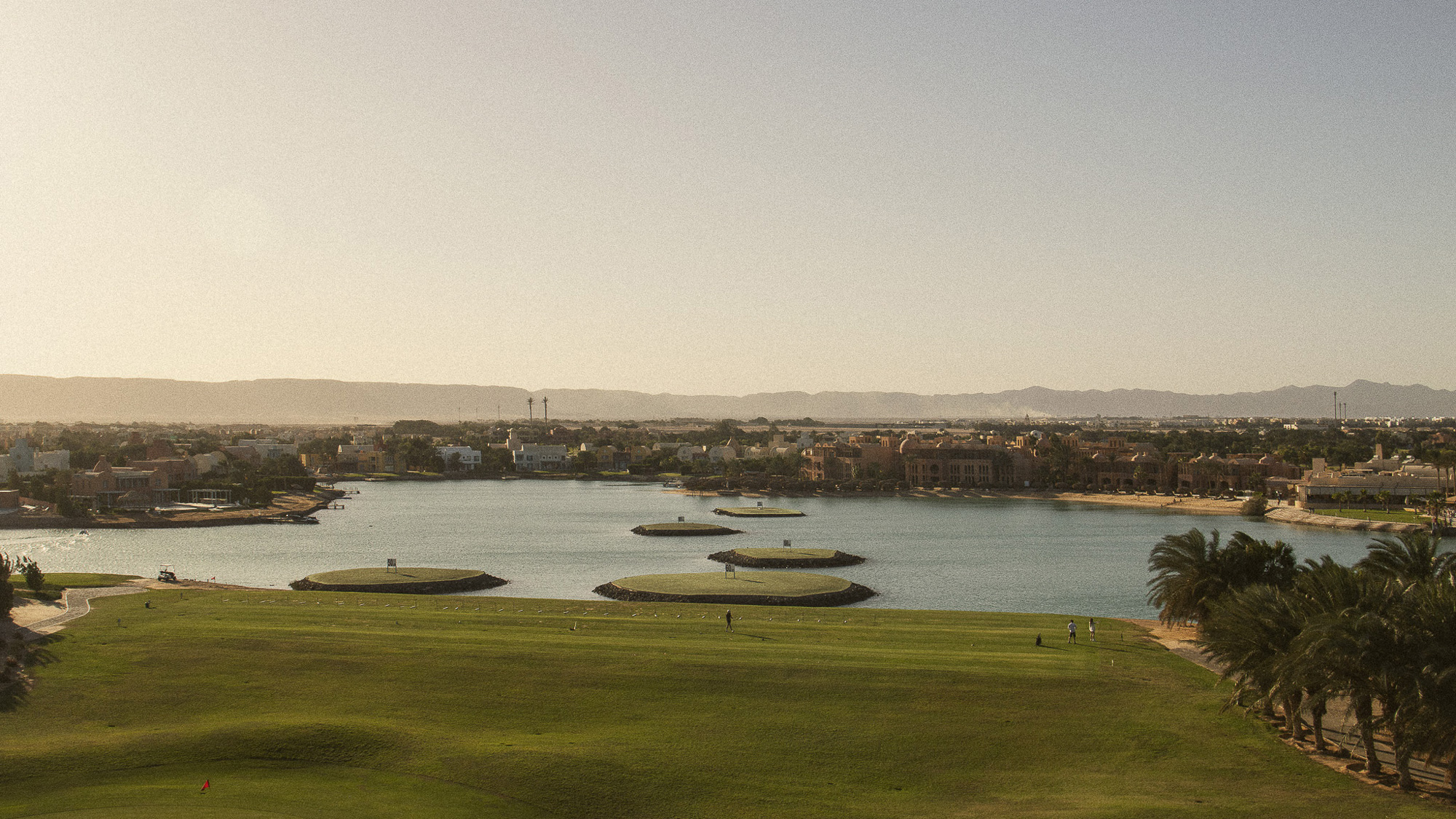
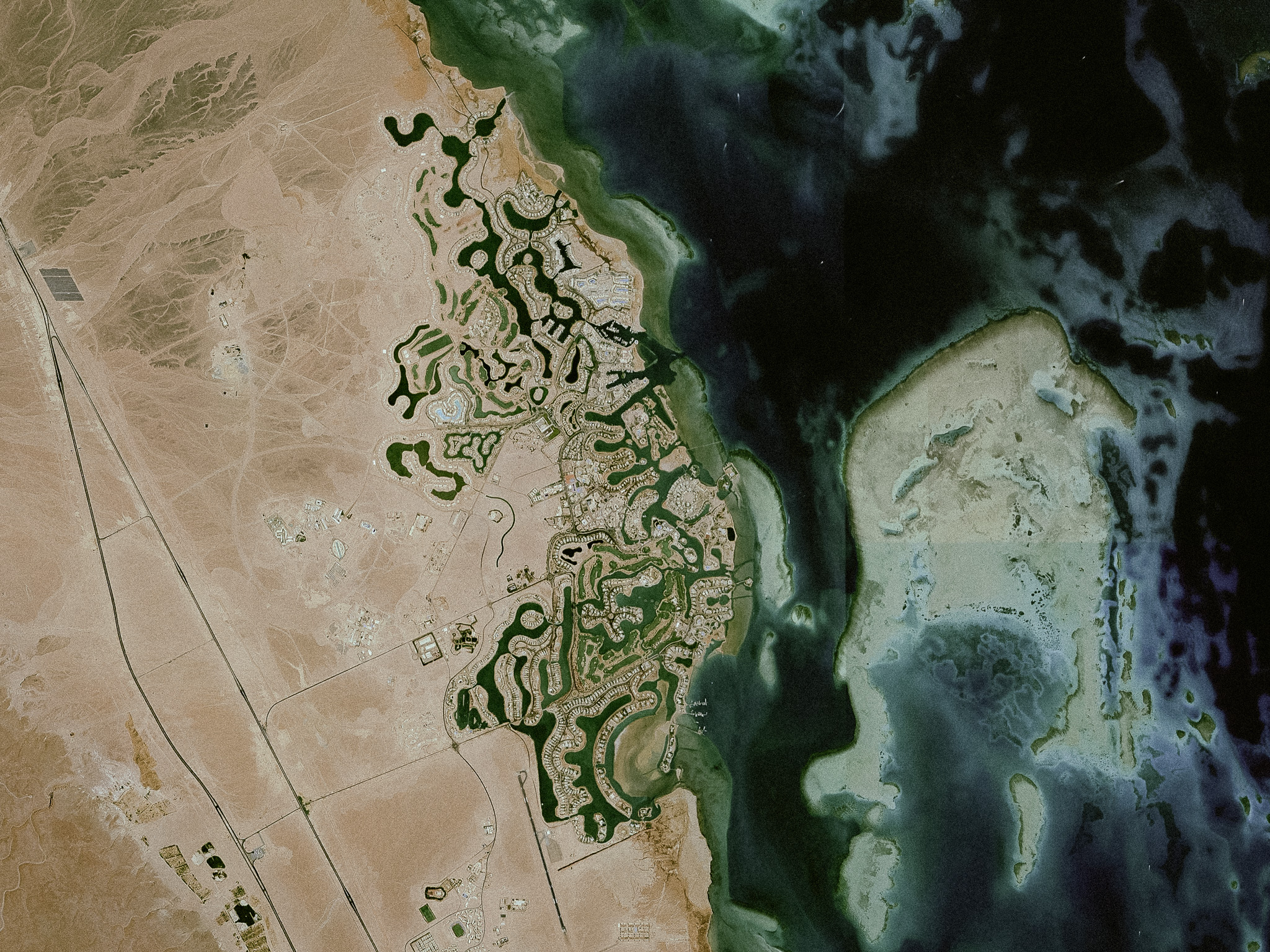
El Gouna sits where the Eastern Desert meets the Red Sea. It was built from nothing at the end of the 1980s, on a strip of desert shore, around a system of lagoons and islands. The land is flat and dry, the wind constant from the north, the light severe.
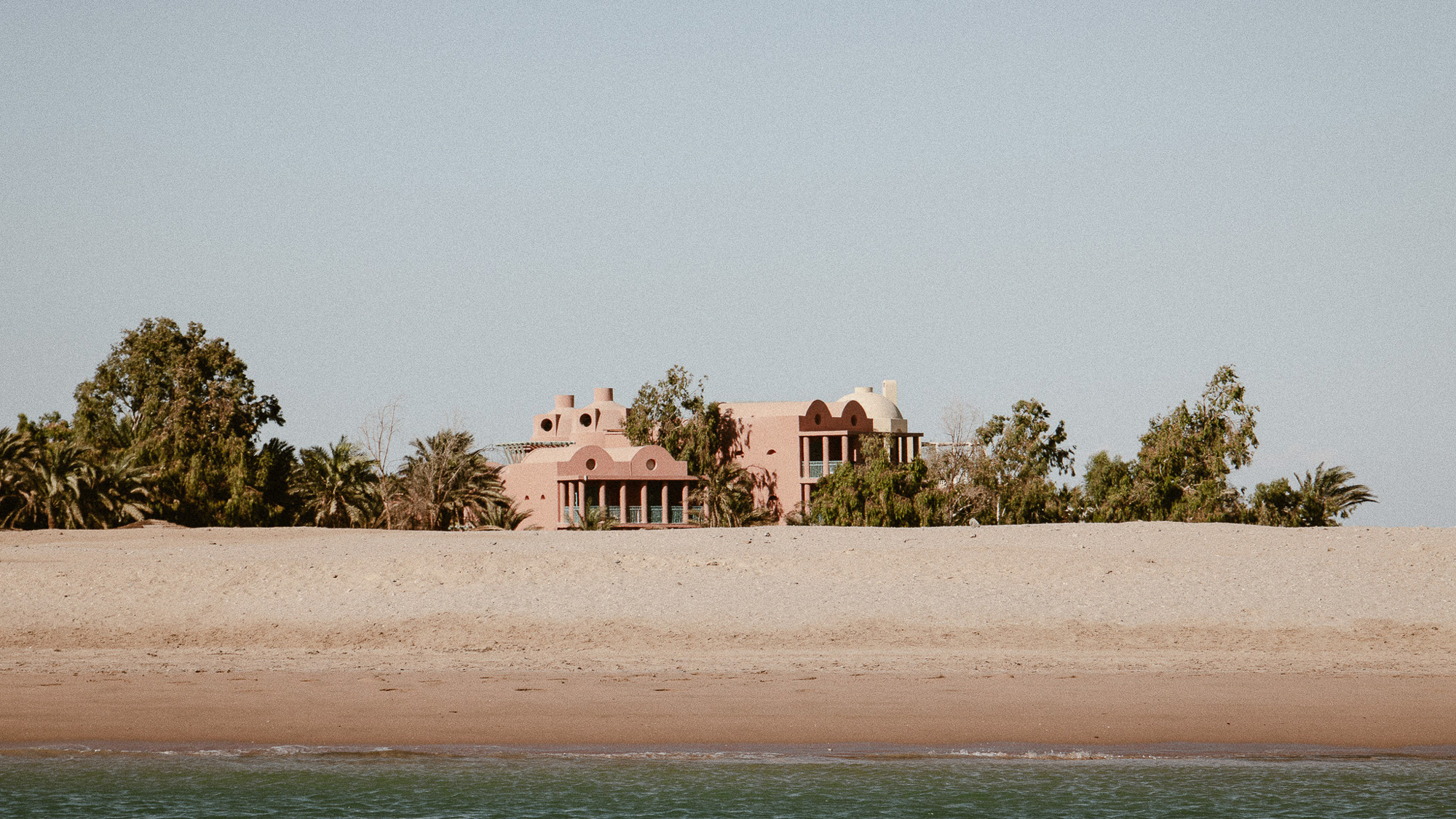
At its best the town still works in an inherited language: the mass wall, the courtyard, the colour of the earth, the response to the sun. The shadow of Hassan Fathy lies across the coast. That language is the inheritance, and the question is not whether to continue it, but how.
Read as a whole, the town is a constructed landscape: low-rise fabric threaded by water, the desert behind it, the sea in front. The house begins by understanding where it stands, before it decides what to be.
At ground level, the conditions that shape every building here: flat land, the constant north wind, the severe light, the line of the sea. These are the facts the architecture answers, the same facts the vernacular has always answered.
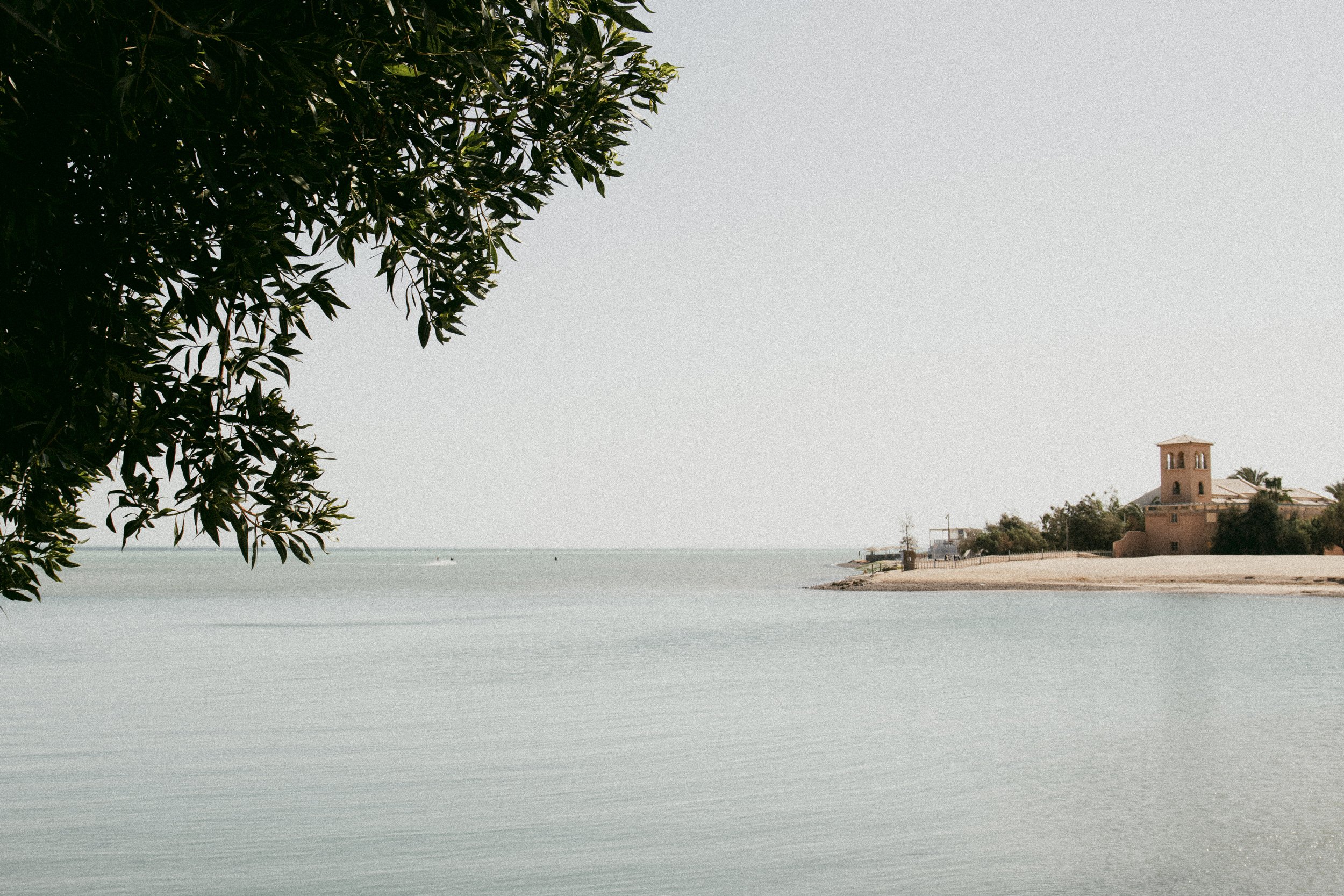
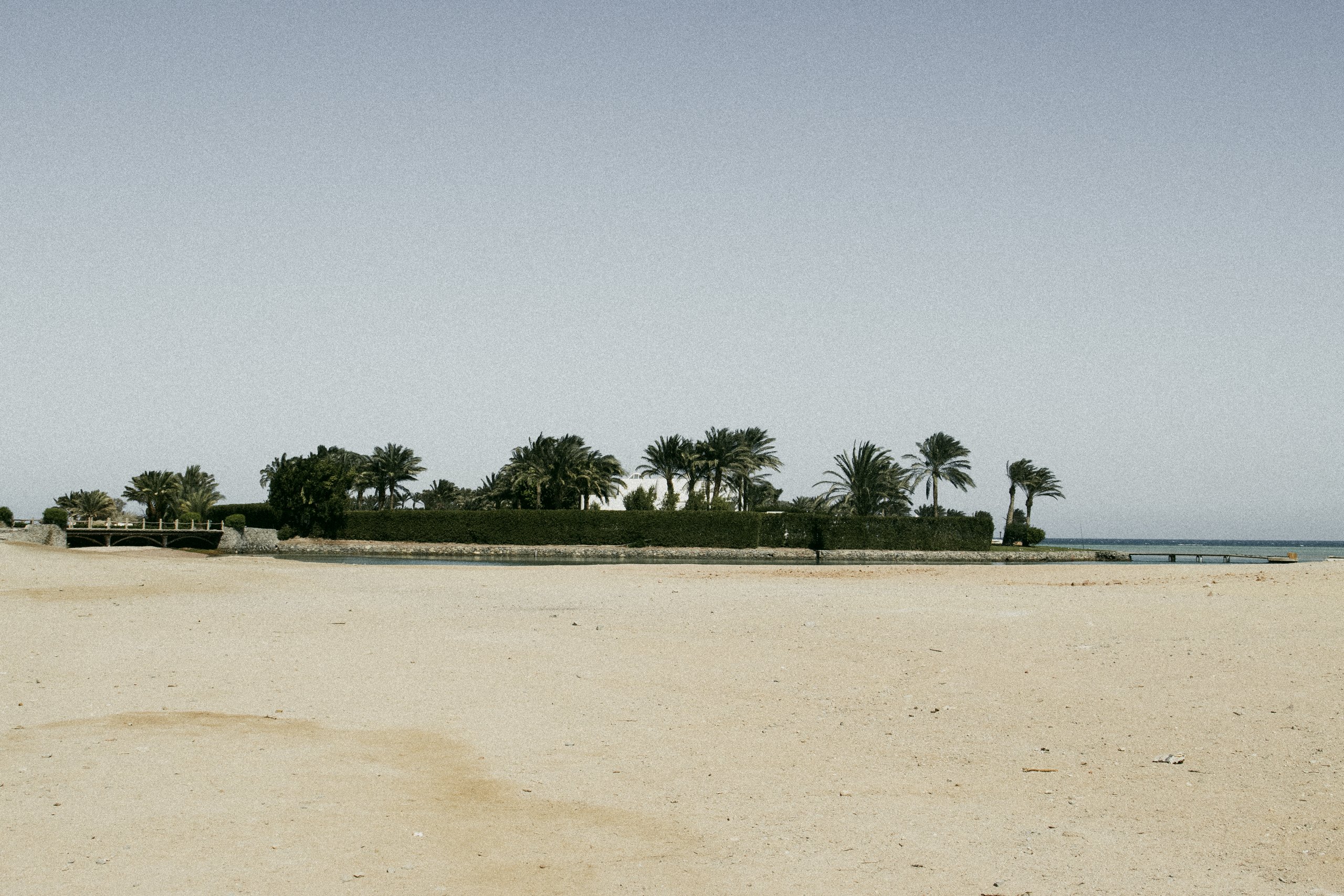
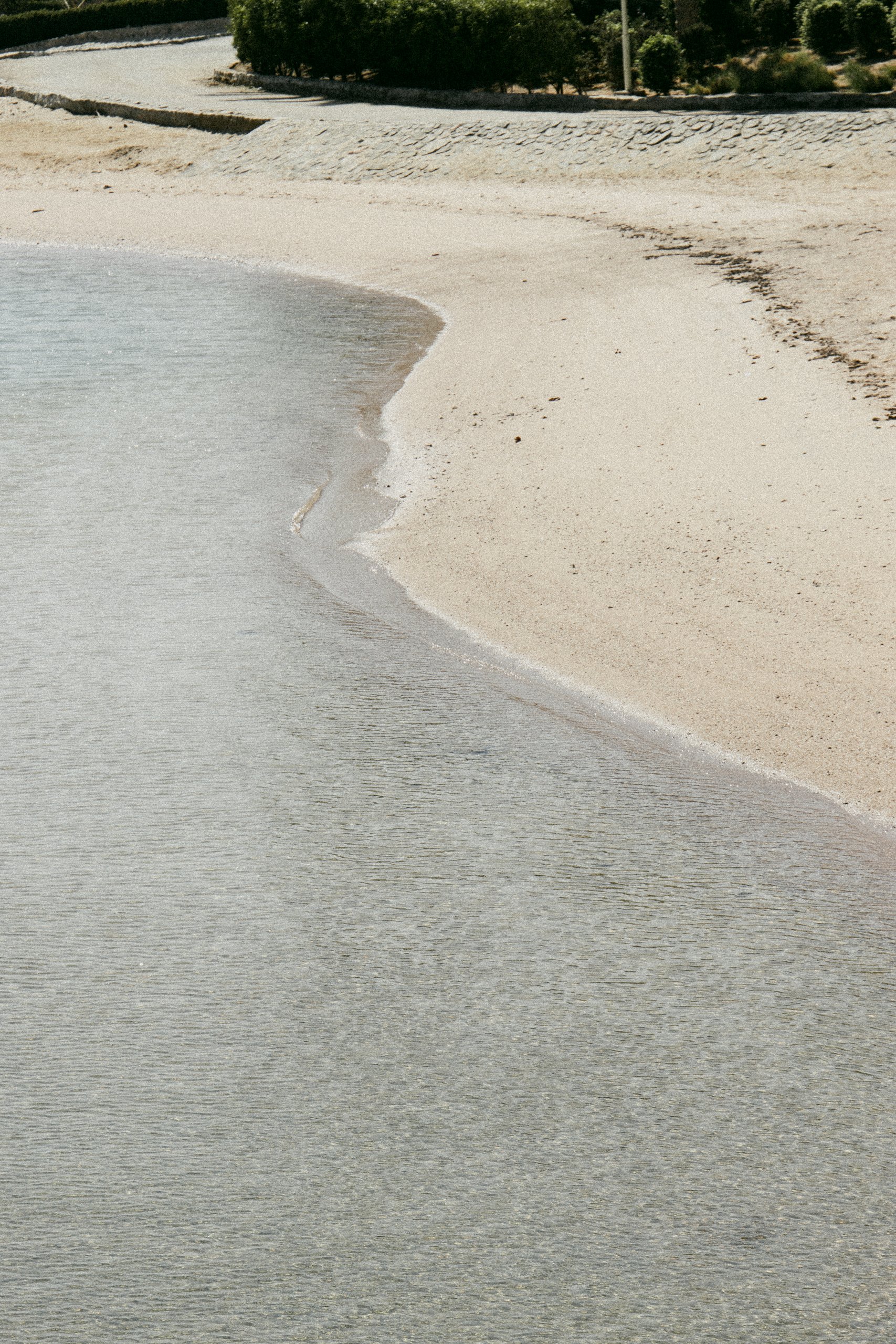
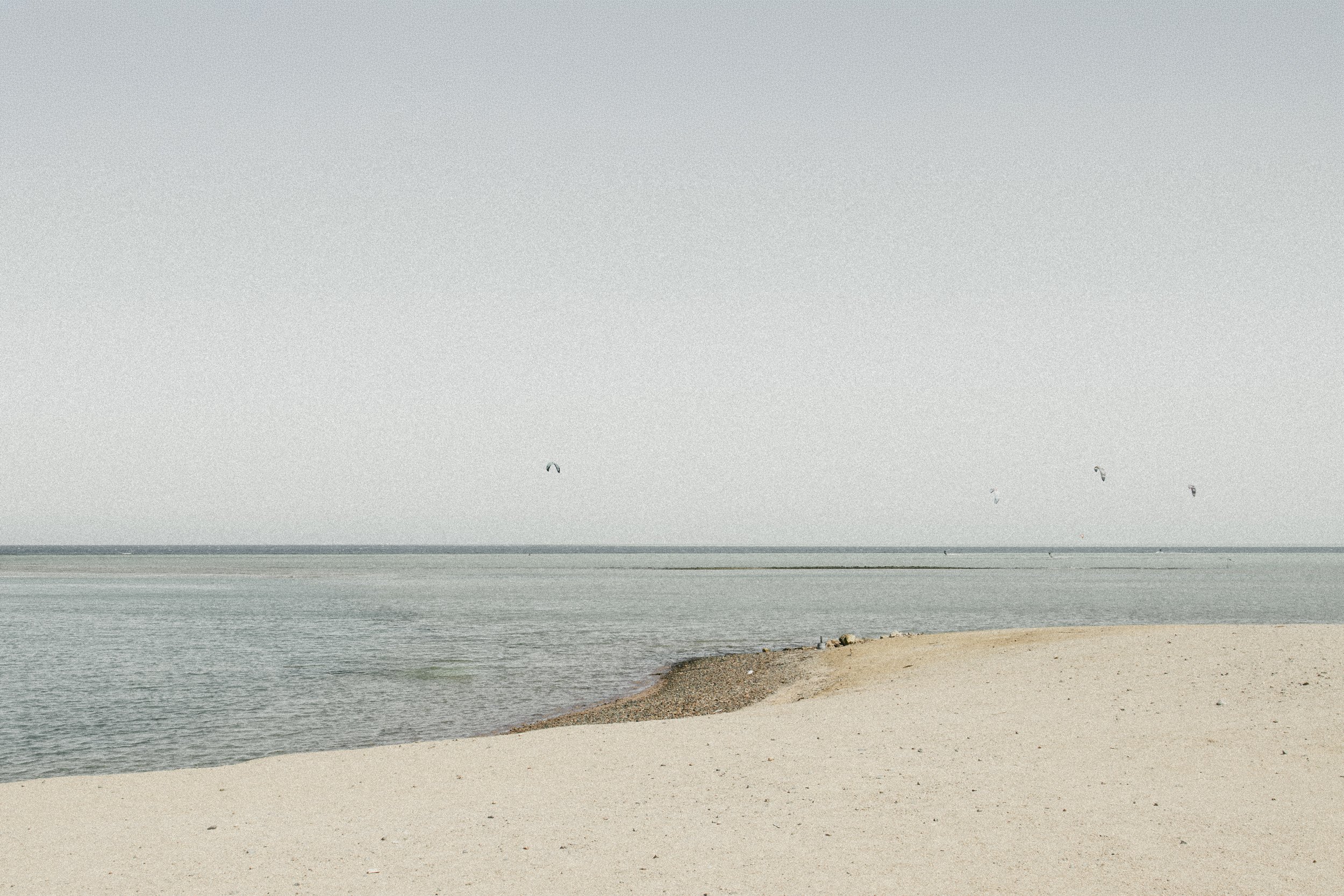
It takes from Egypt what is fundamental:
not its forms, but its method.
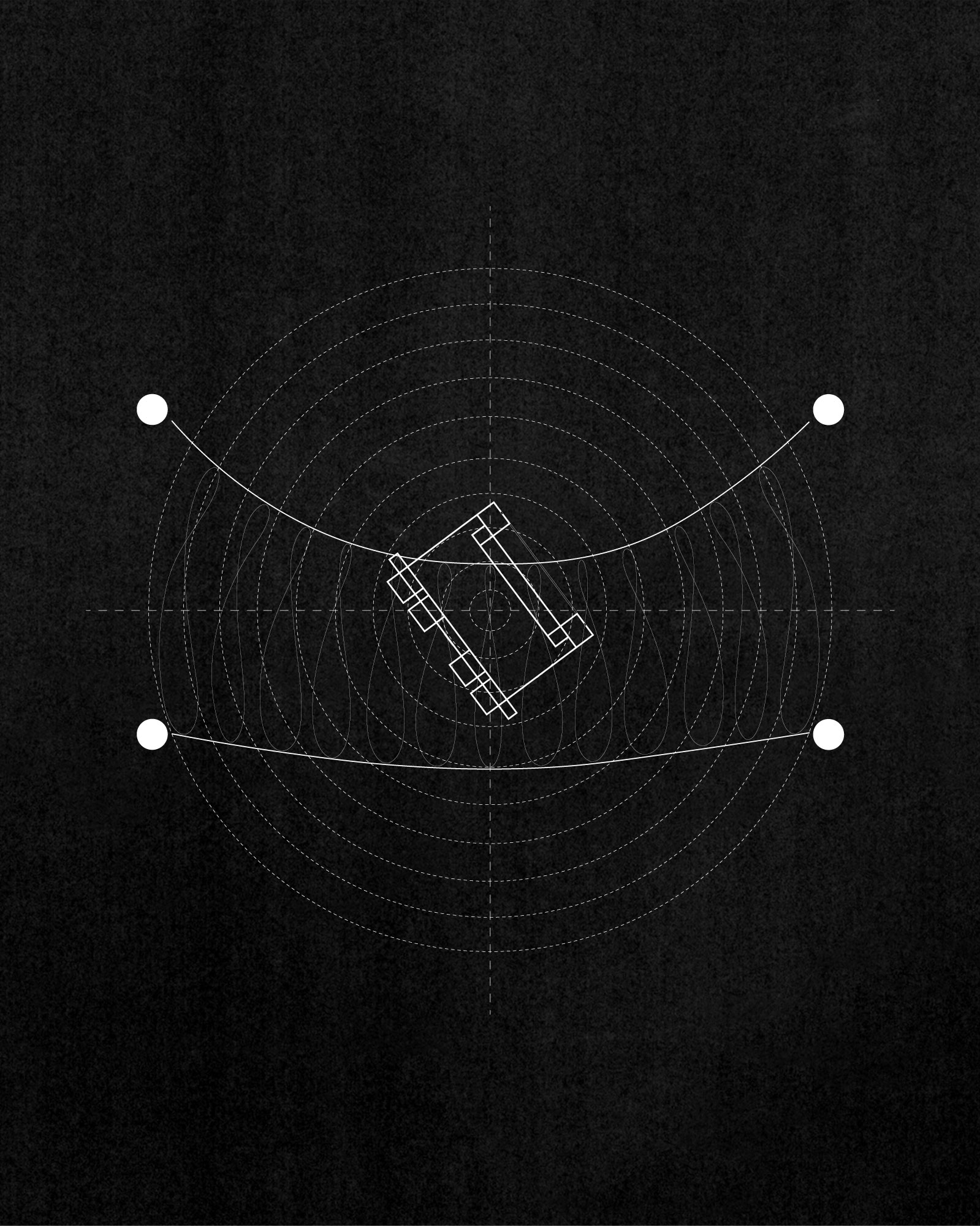
The house has two faces, because the site has two conditions. They are not front and back. They are two different responses to two different realities, and the tension between them is the argument of the project.
A closed face gives weight to an open one; an open face releases the pressure of the closed one. The line between them is the central axis. The house lives in that tension, and in the precision with which each face is held to its own logic.
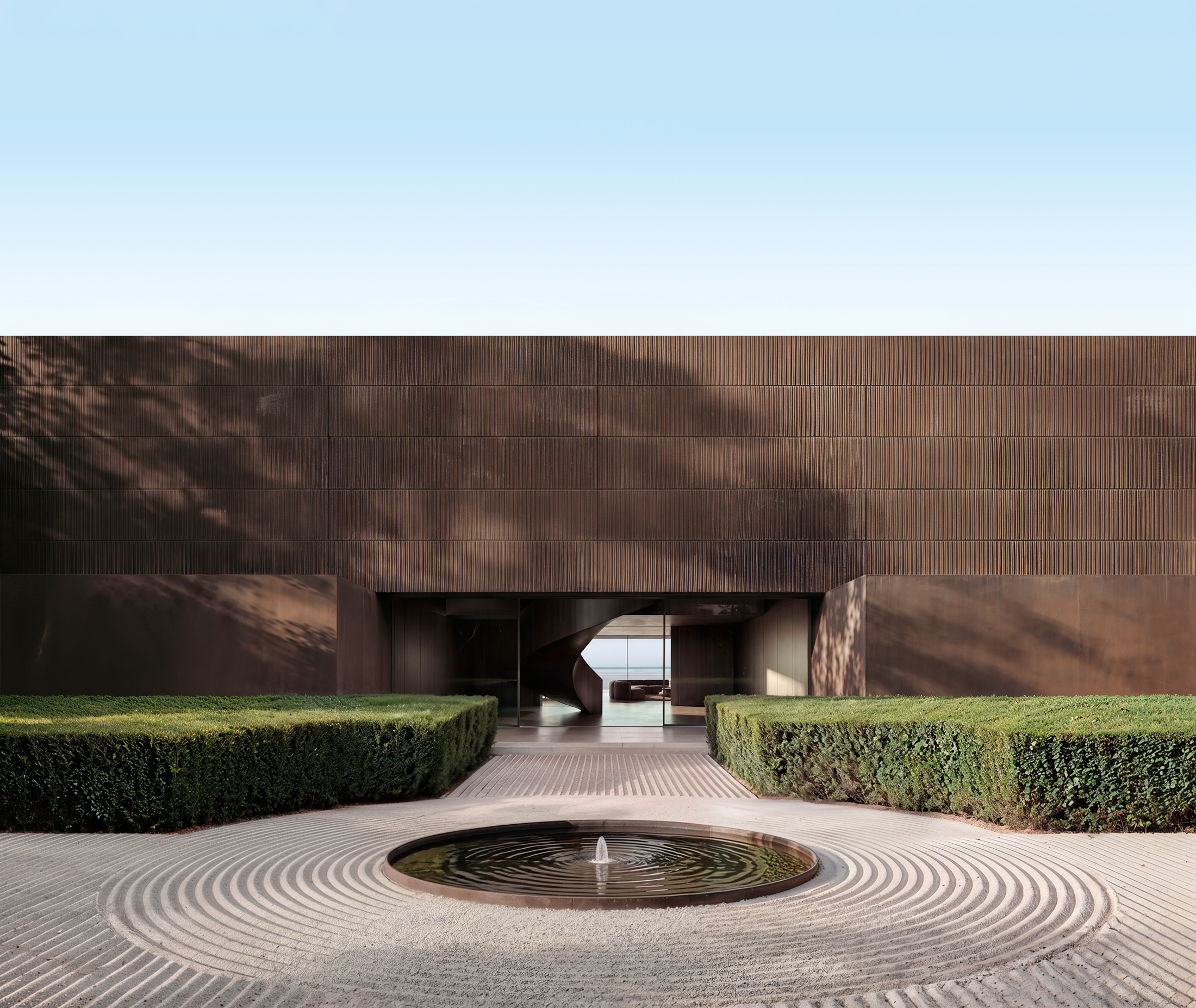
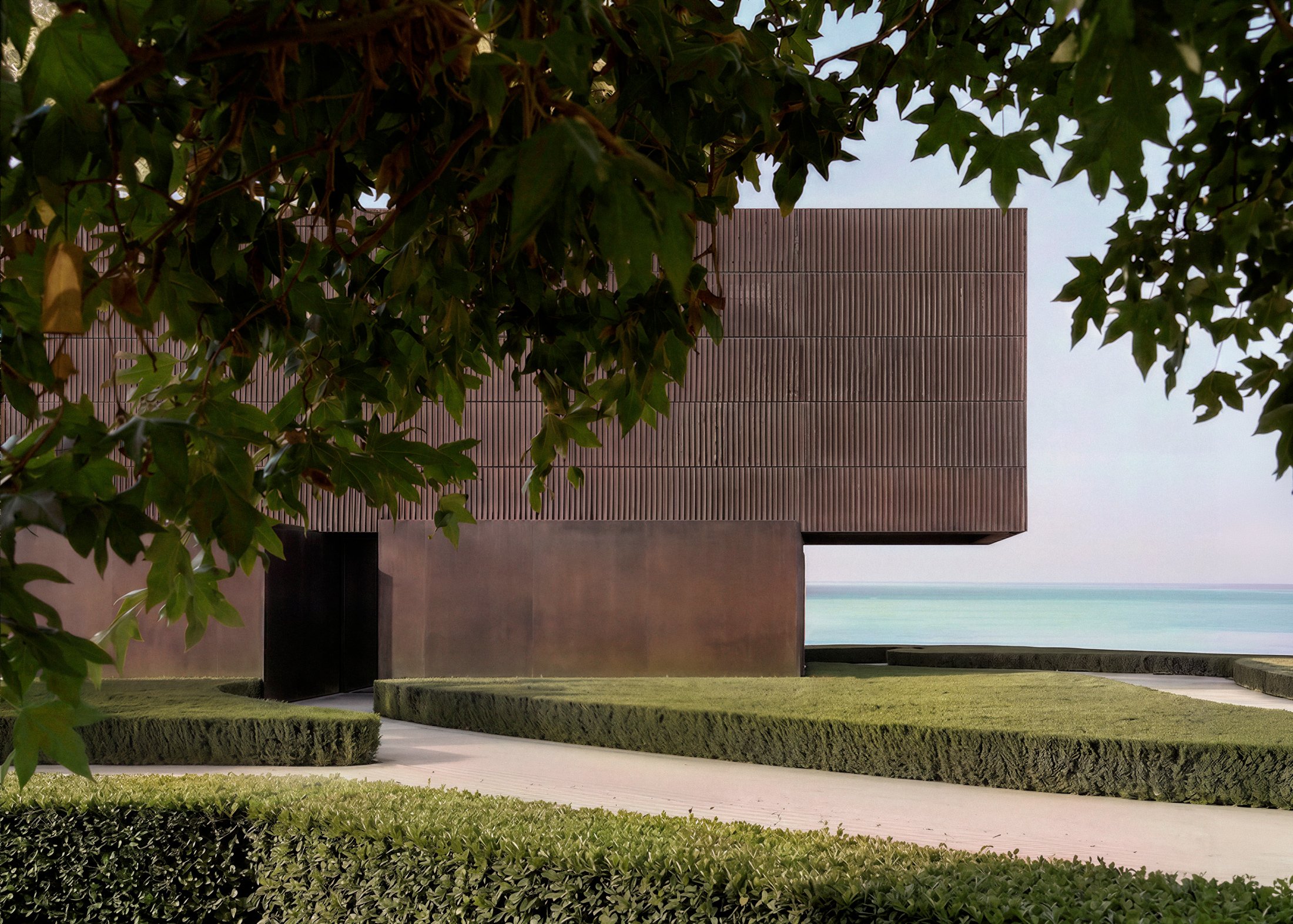
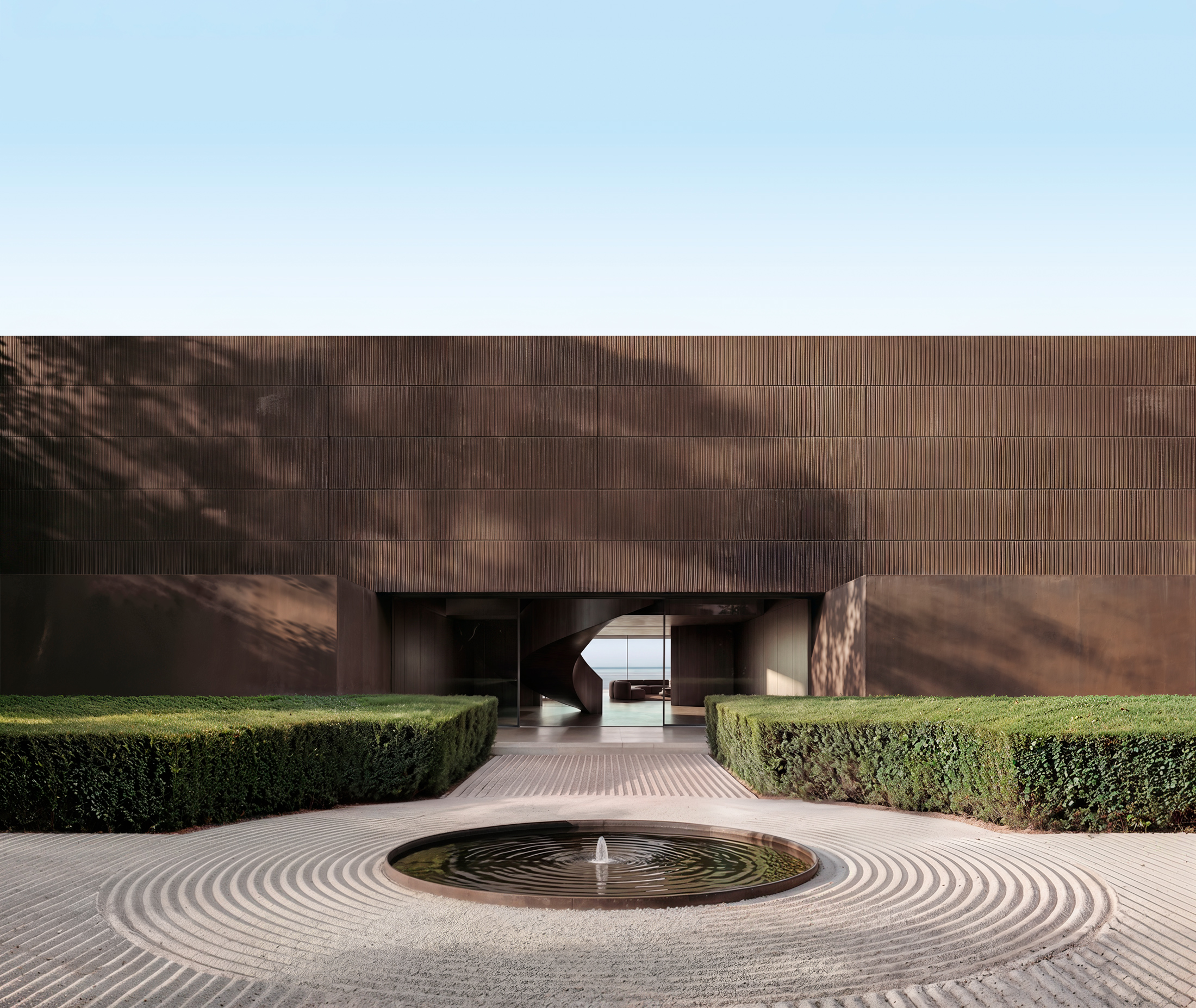
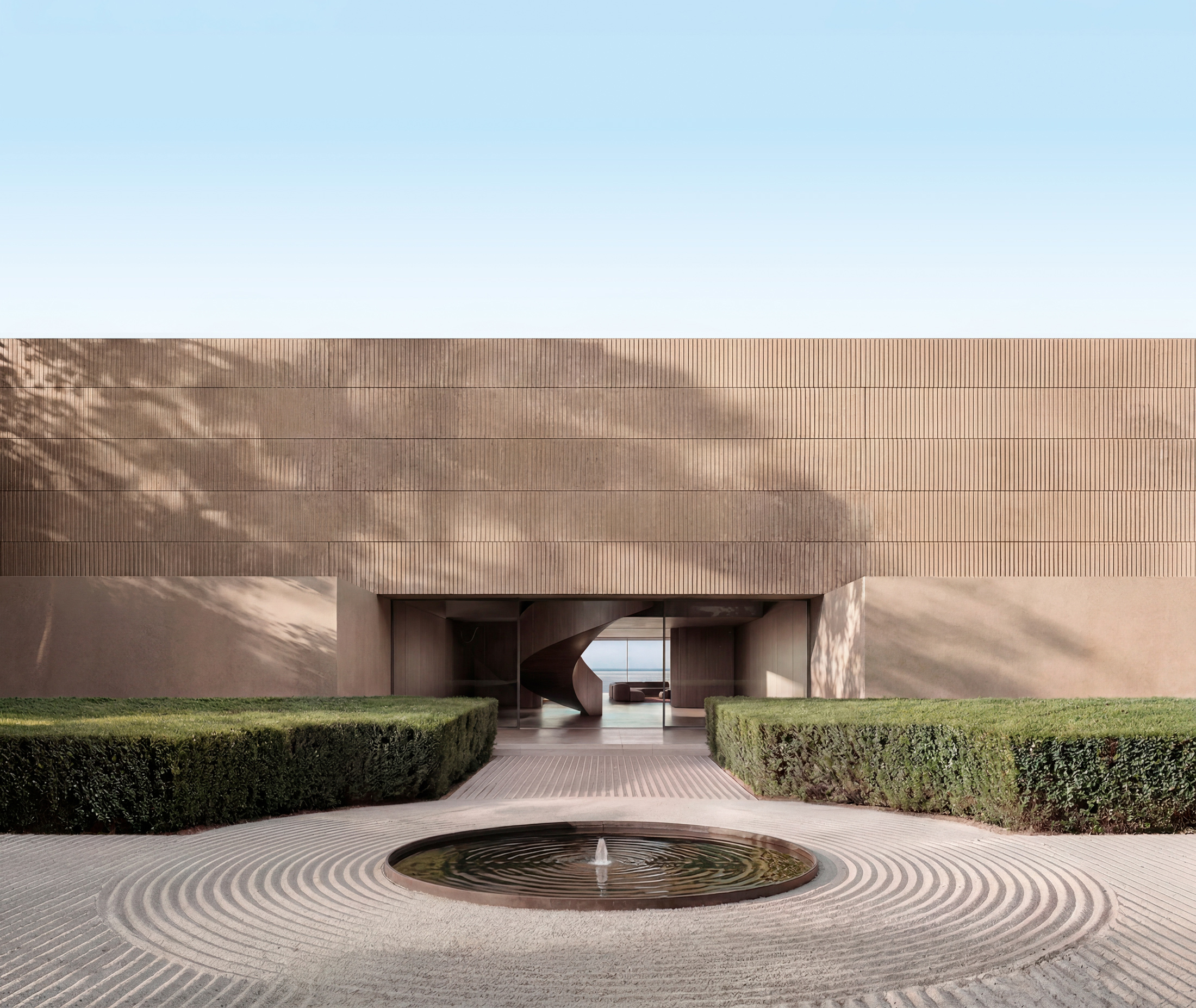
To the road, the house presents a continuous wall, forty-five metres long and two storeys high, with a single opening on the axis. It protects the interior from the afternoon sun, the dust, the noise and the gaze of the neighbours. It is the most worked surface in the project, not a back.
Behind the wall, the rooms turn inward. Each opens with a wide window onto an interior patio, drawing its light and air from a private courtyard rather than from the street. The openness is generous, and the privacy is complete.
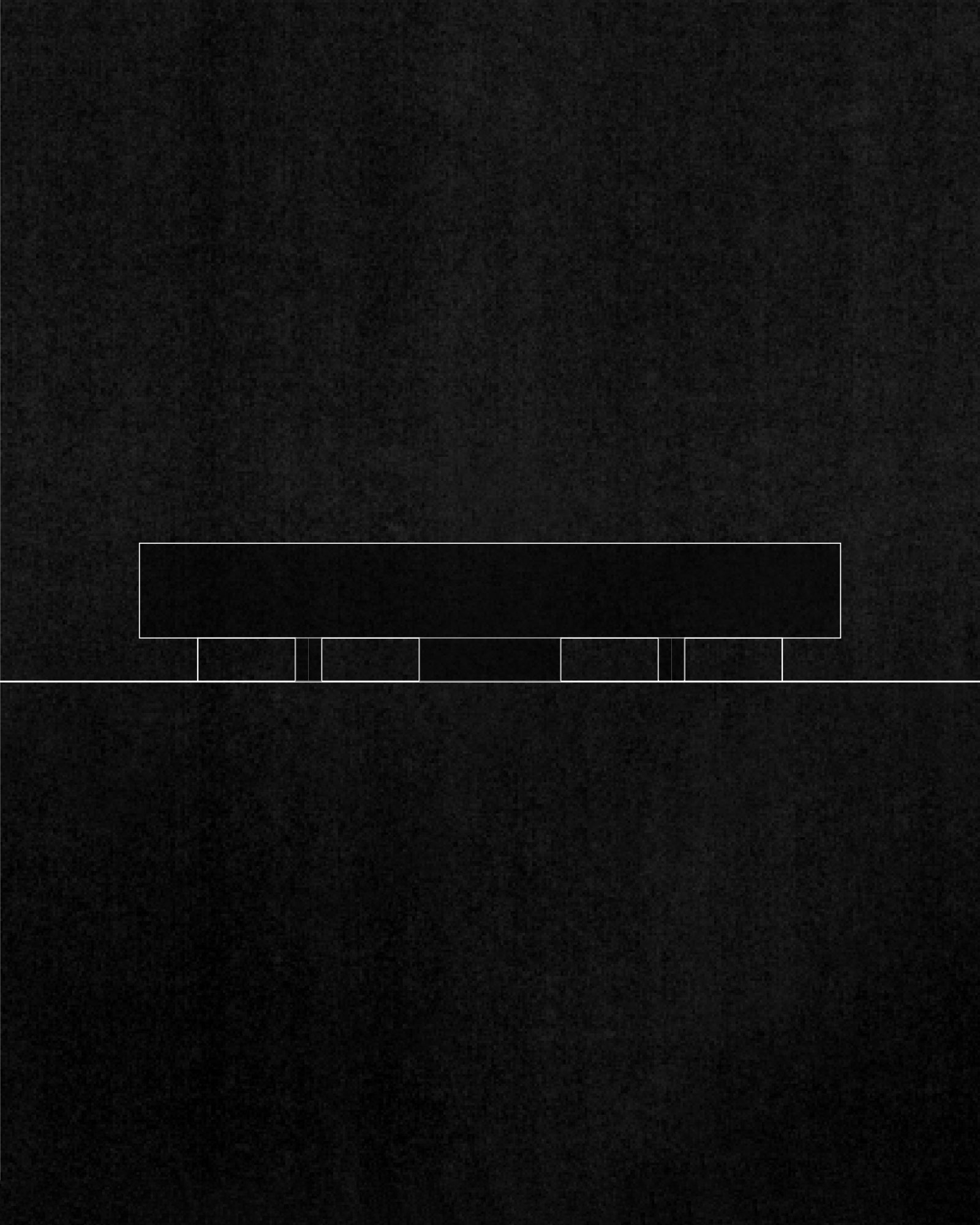
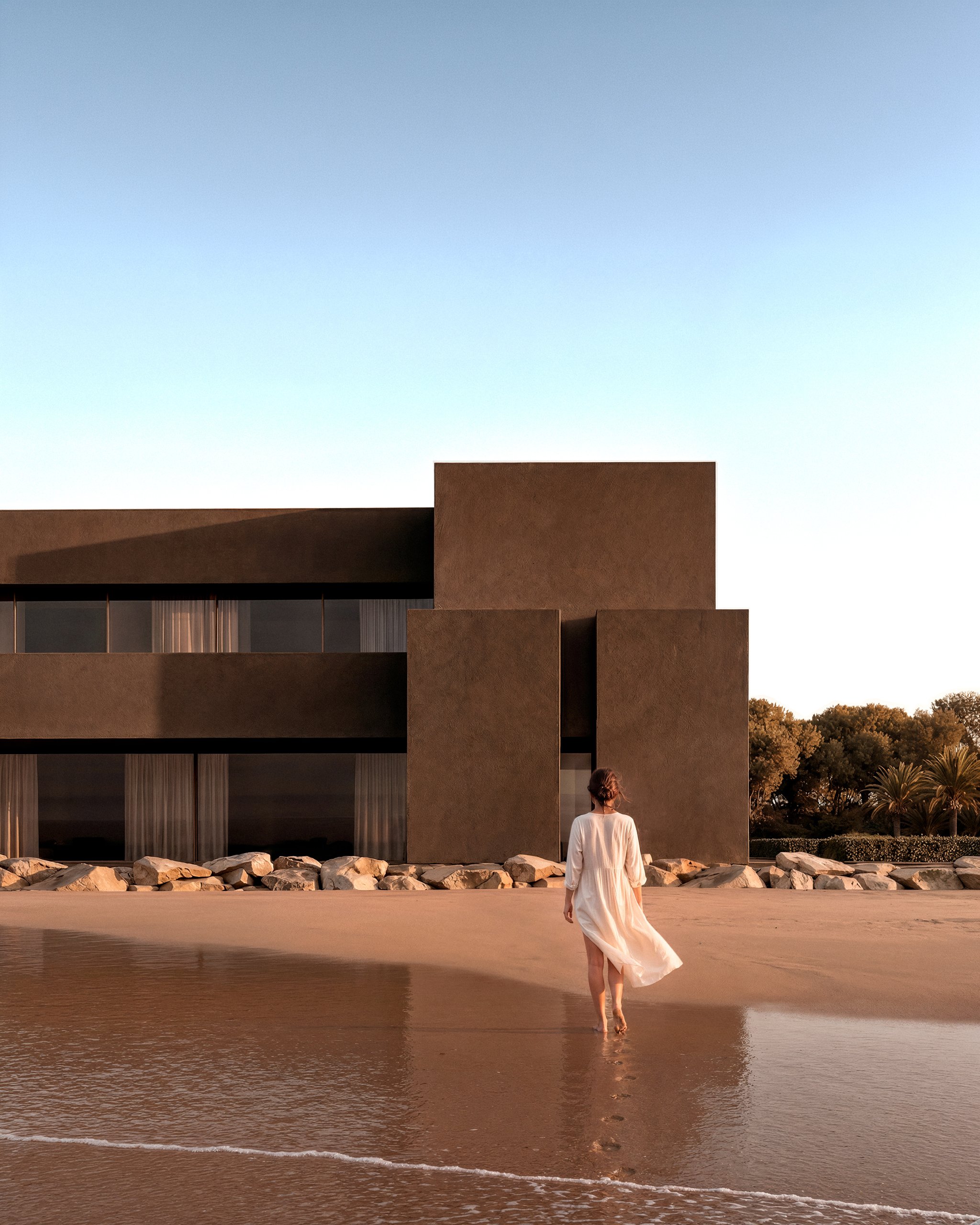
To the sea, the same house opens completely.
The threshold is a gradient, not a line: room, covered terrace, pool deck, sand, water.
The relationship is set room by room. Where the room is made for the horizon, a full glazed wall dissolves into it; elsewhere the sea is held at a measured distance, or reduced to a precise vertical incision. A fragment, exactly cut, can be more present than the whole view, so each room receives the sea calibrated to what it is for.
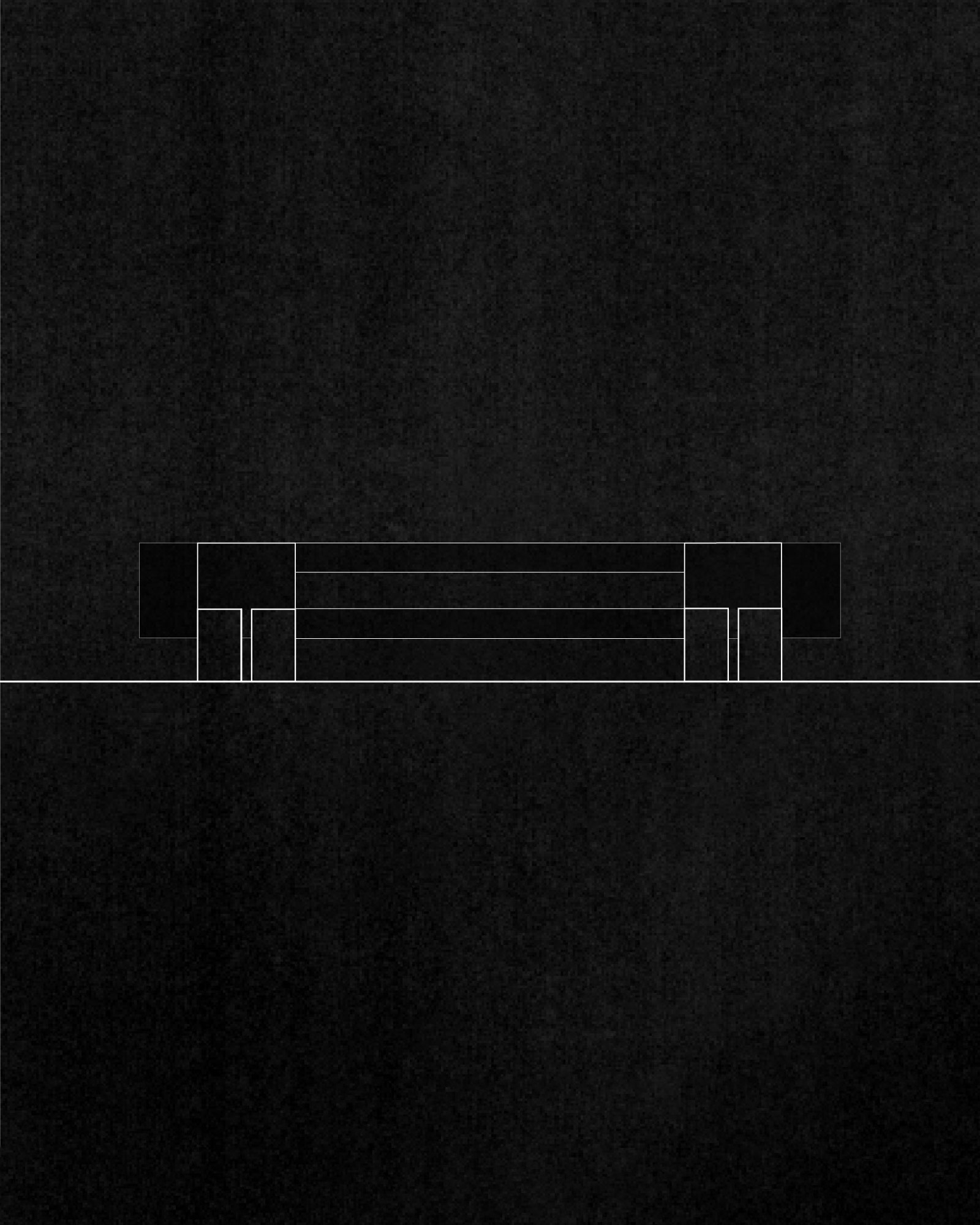
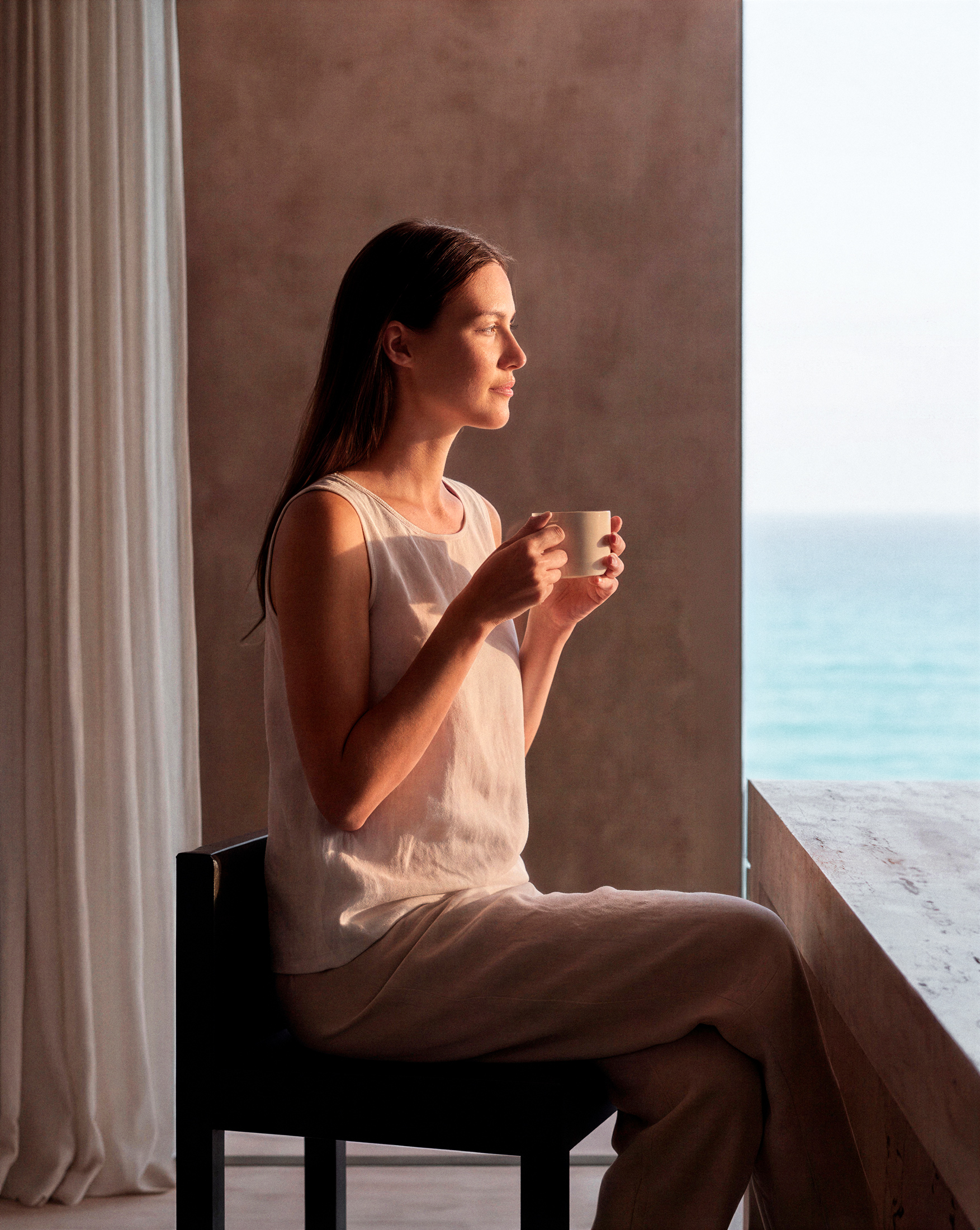
A house that opened on all sides would have no anchor.
A house that closed on all sides would have no horizon.
This house does both.
One architectural decision orders everything. A single axis runs from the entrance on the southwest to the sea on the northeast, and the rooms distribute in mirror on either side: two wings of equal weight, equal programme, equal proportion.
The symmetry is structural, not decorative. A symmetrical plan is legible the moment one enters it, and it is indifferent to fashion, because it is a principle and not a style.
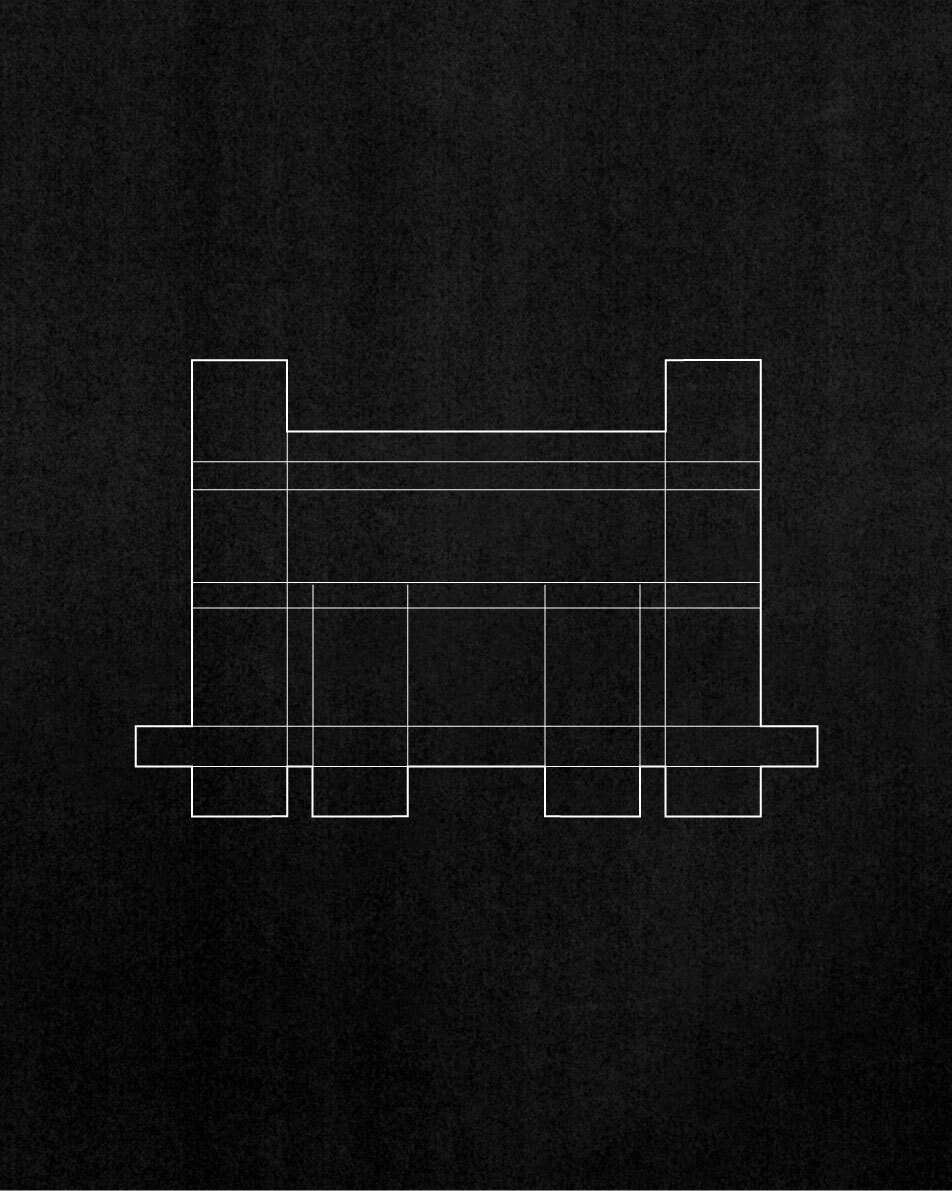
Symmetry resists fashion because it is a principle, not a style.
Arrival is from the south. From the entrance to the plot the sea is already there, a line in the distance beyond the house.
Vehicles are held against the southeast boundary, where the parking sits. From there a path leads to the drop-off on the central axis of the house: a sculptural roundabout in front of the entrance. From it, cars turn back to the parking, or, on the days of outdoor events, service and guests carry on to the open-air dining and barbecue in the north of the plot, beside the pool and close to the kitchens, the family kitchen and the dirty kitchen behind them.
The single axis runs straight from this arrival to the water.
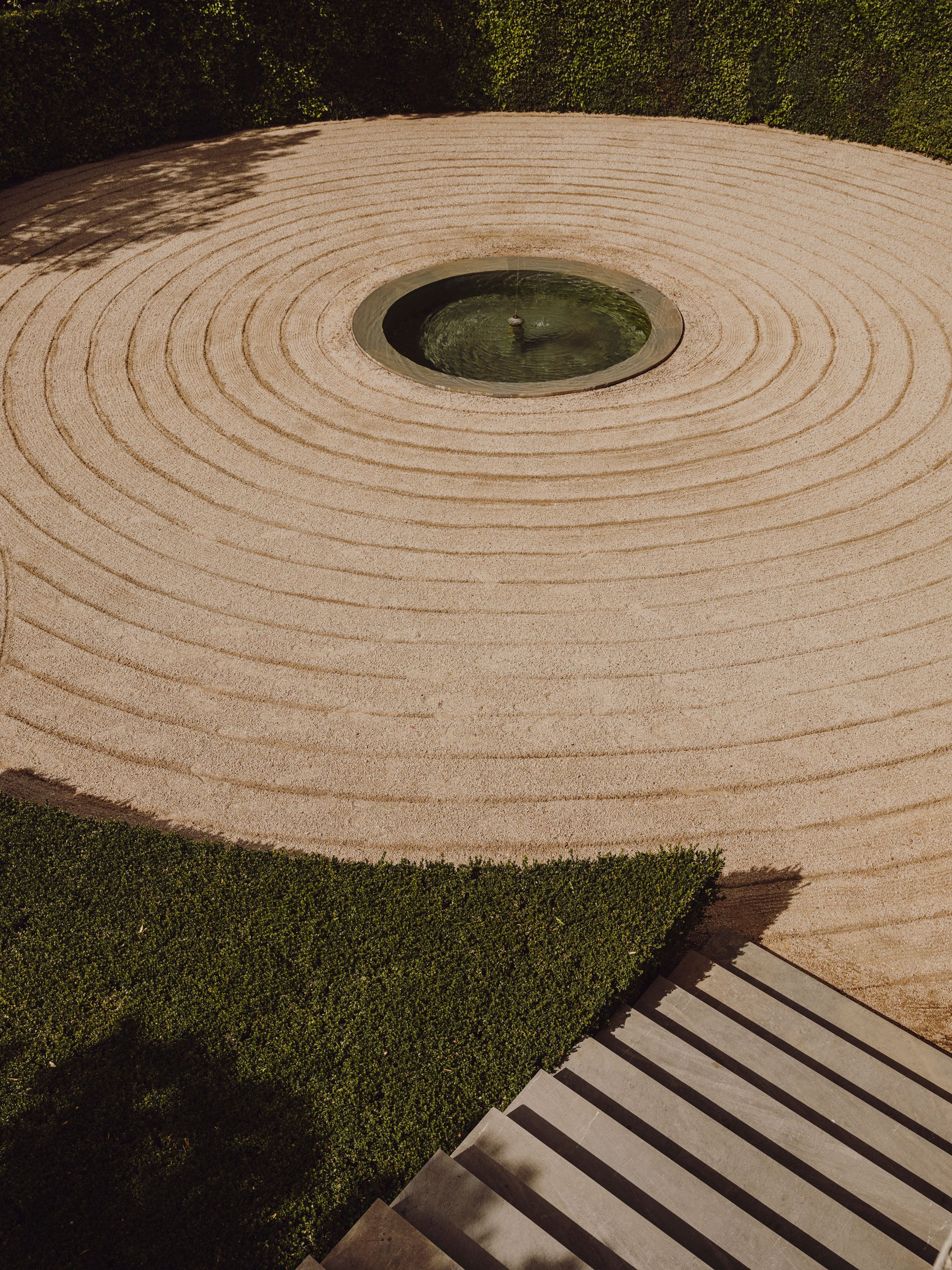
The landscape shown here is illustrative; it will be developed in a later phase with the appointed landscape architect.
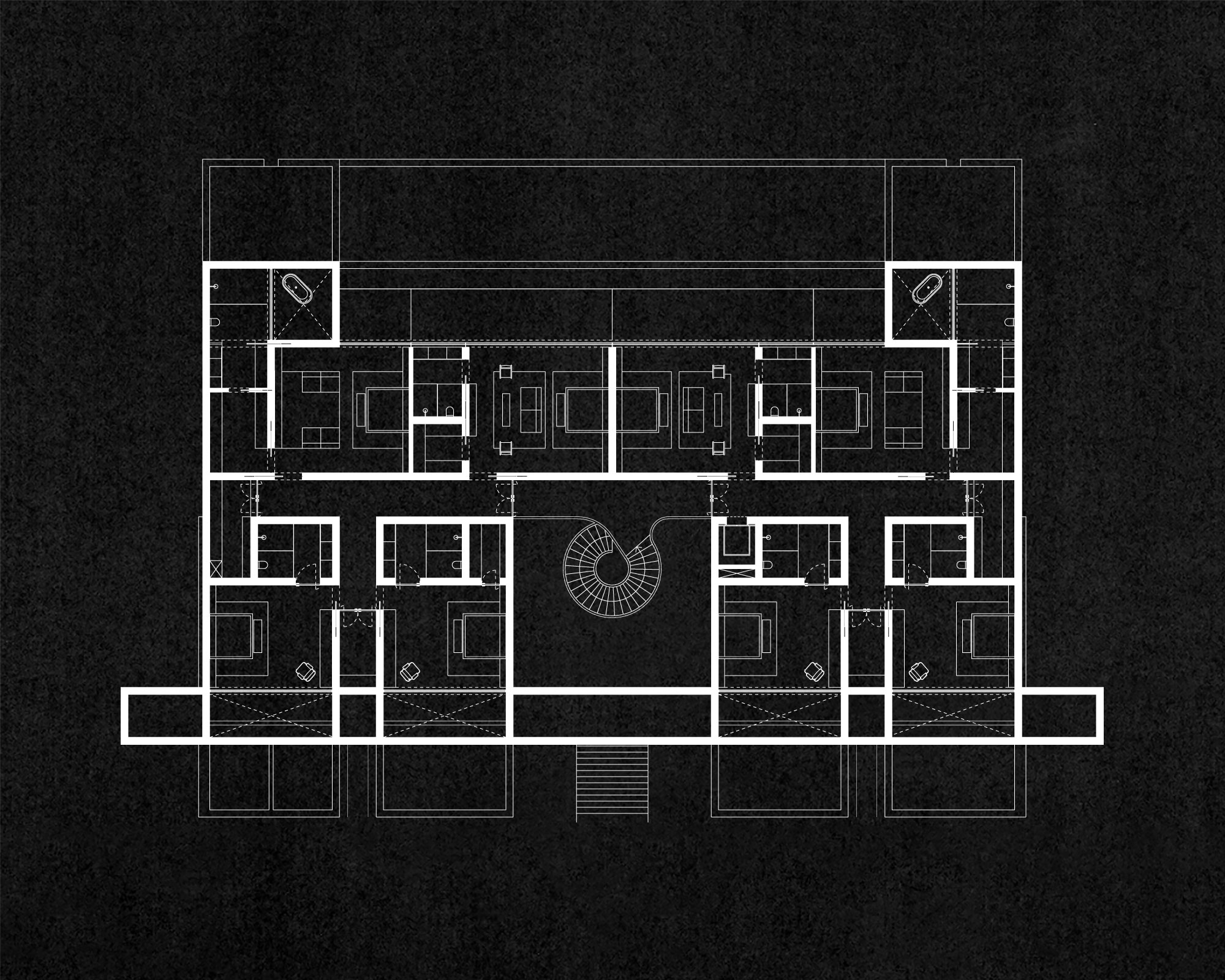
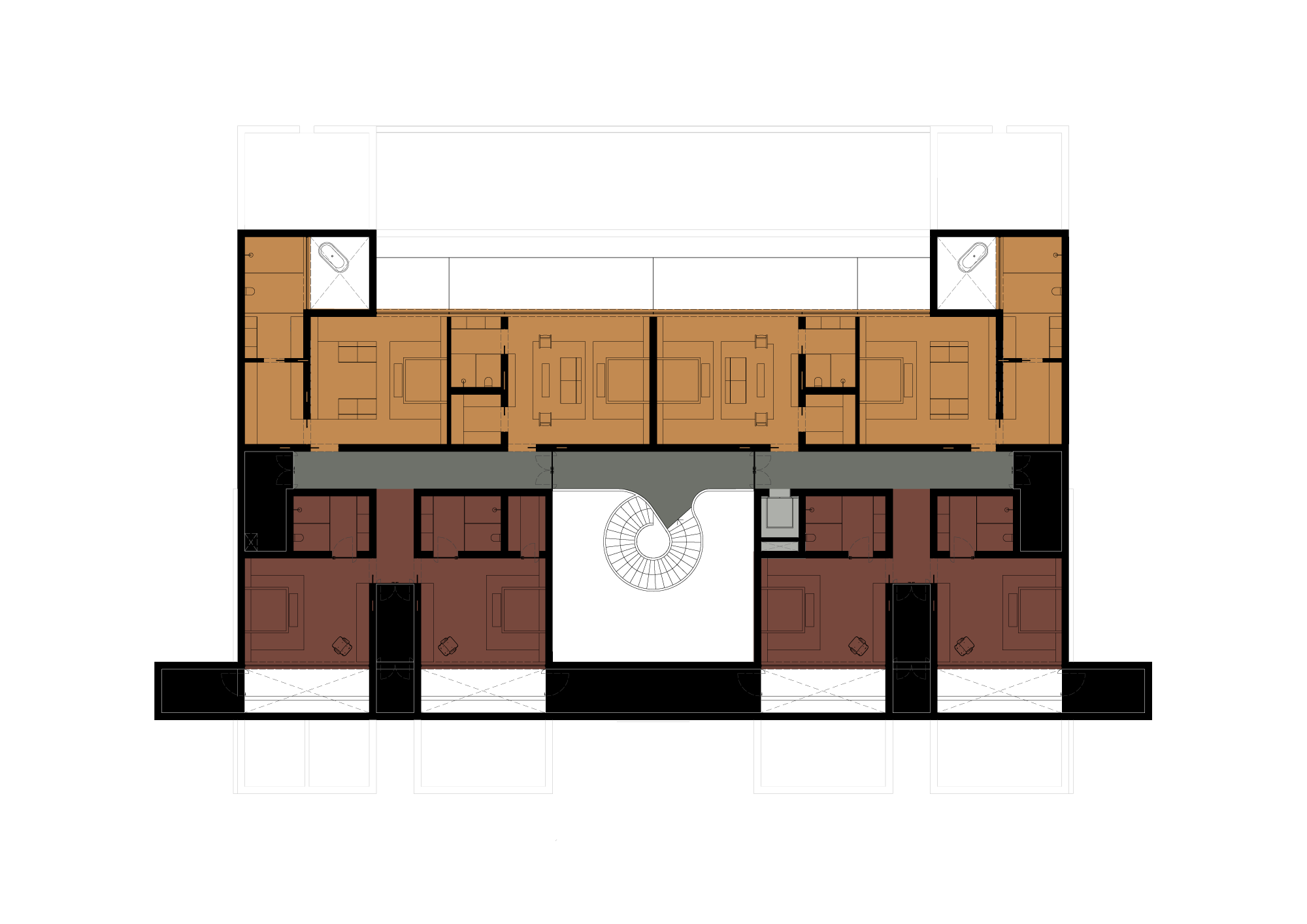
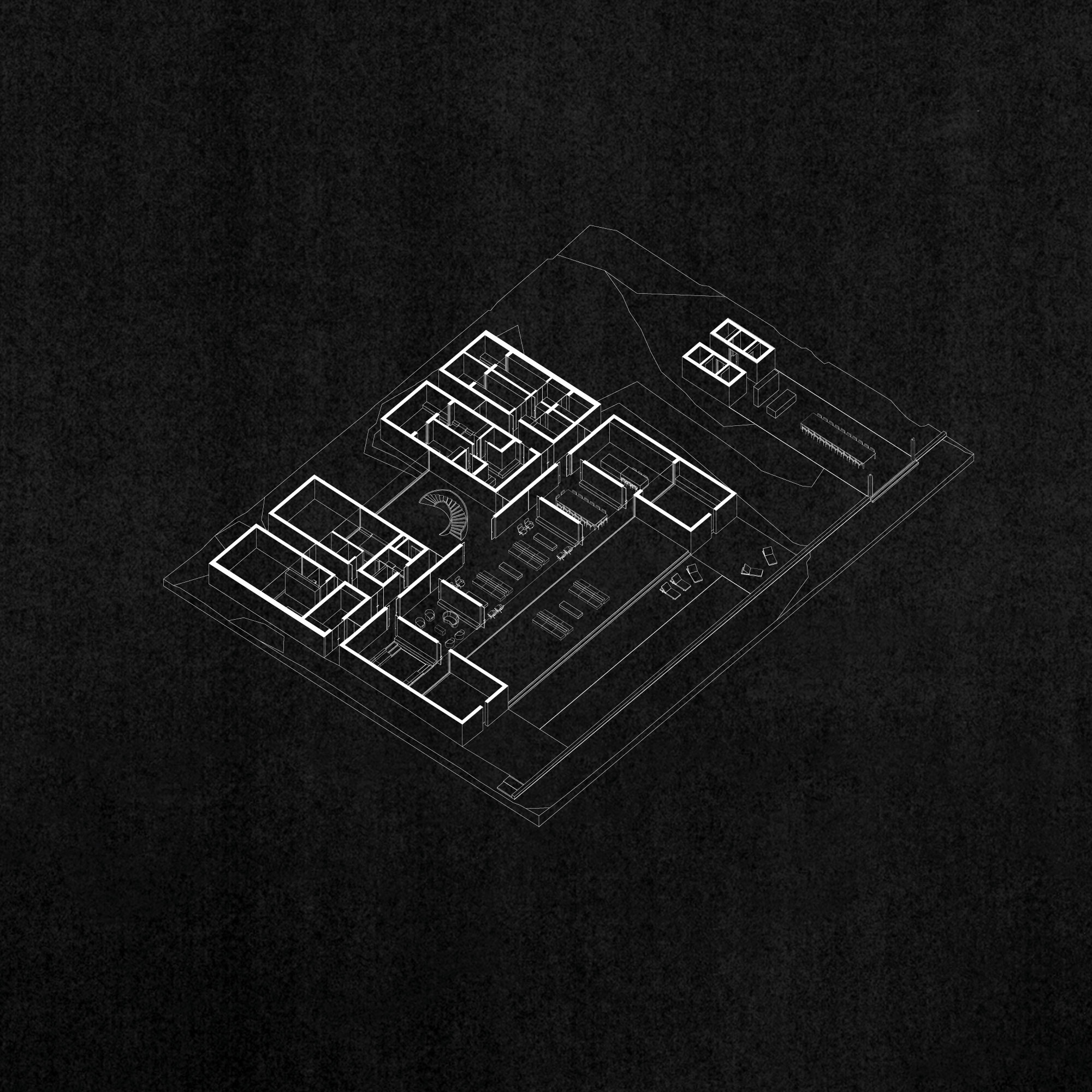
The plan splits along the axis into two bands. To the northeast, facing the sea, the social rooms run in sequence: kitchen, dining, living, games, cinema. To the southwest, behind the closed wall, the protected band holds the guest suites and the service wing, lit by patios.
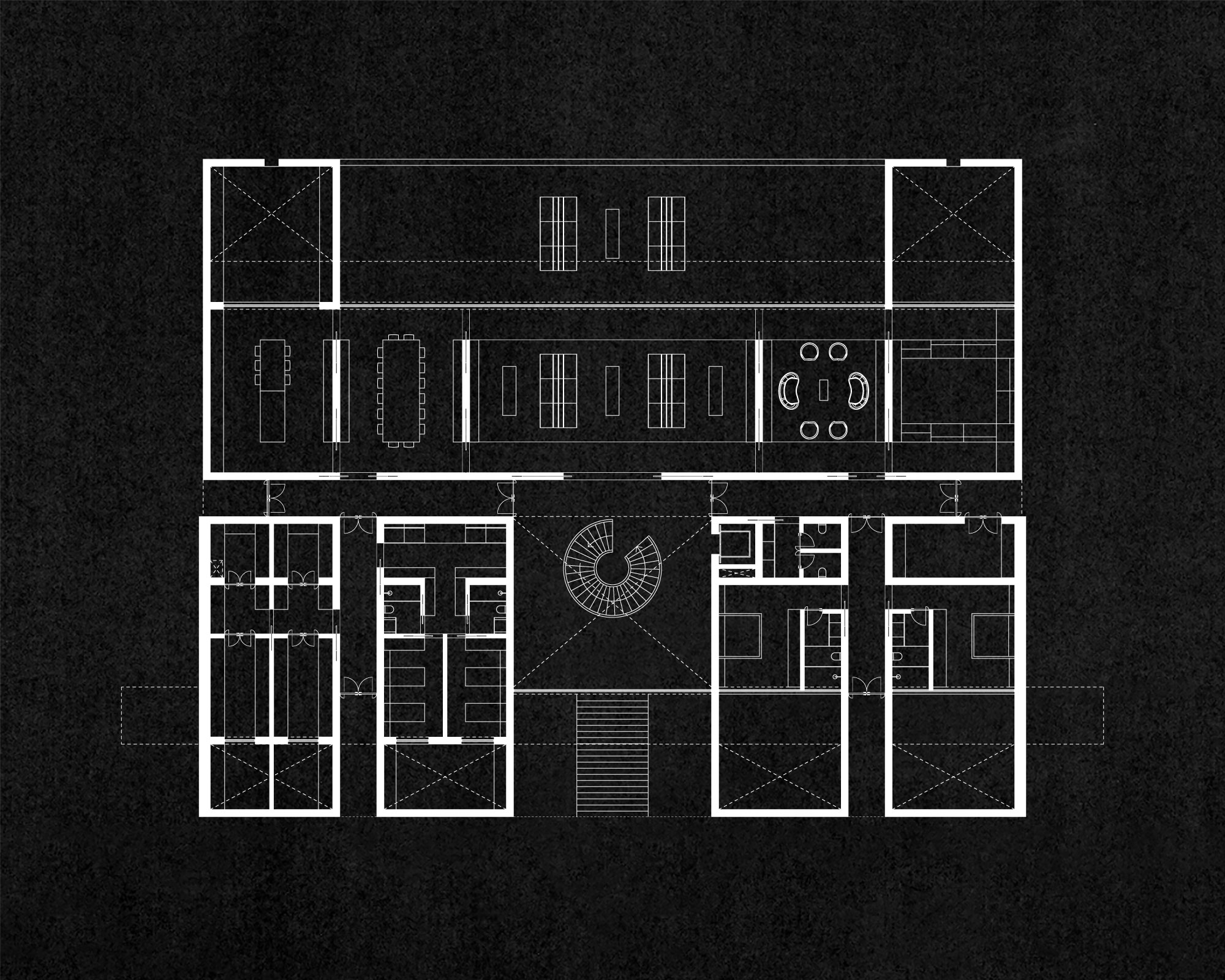
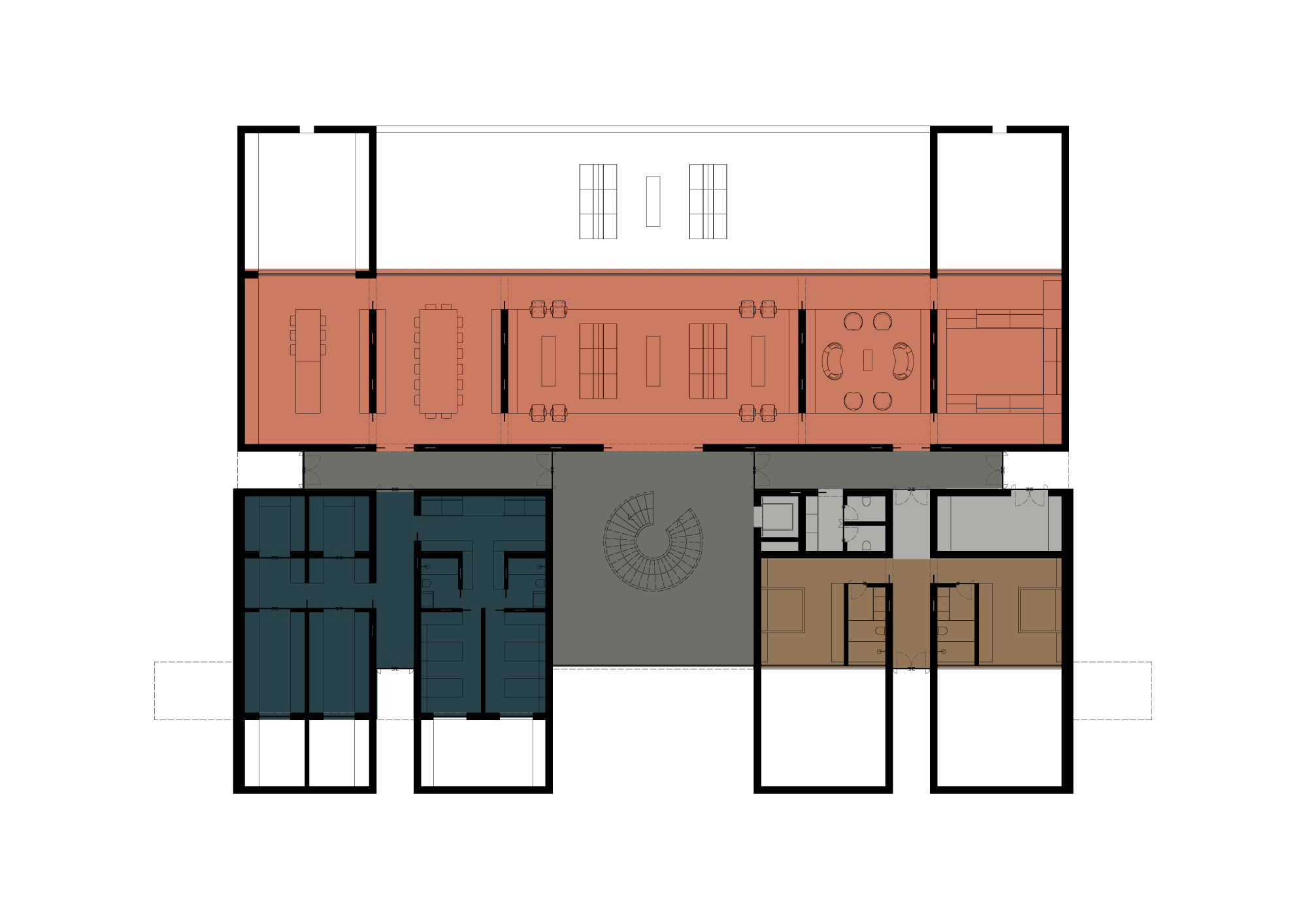
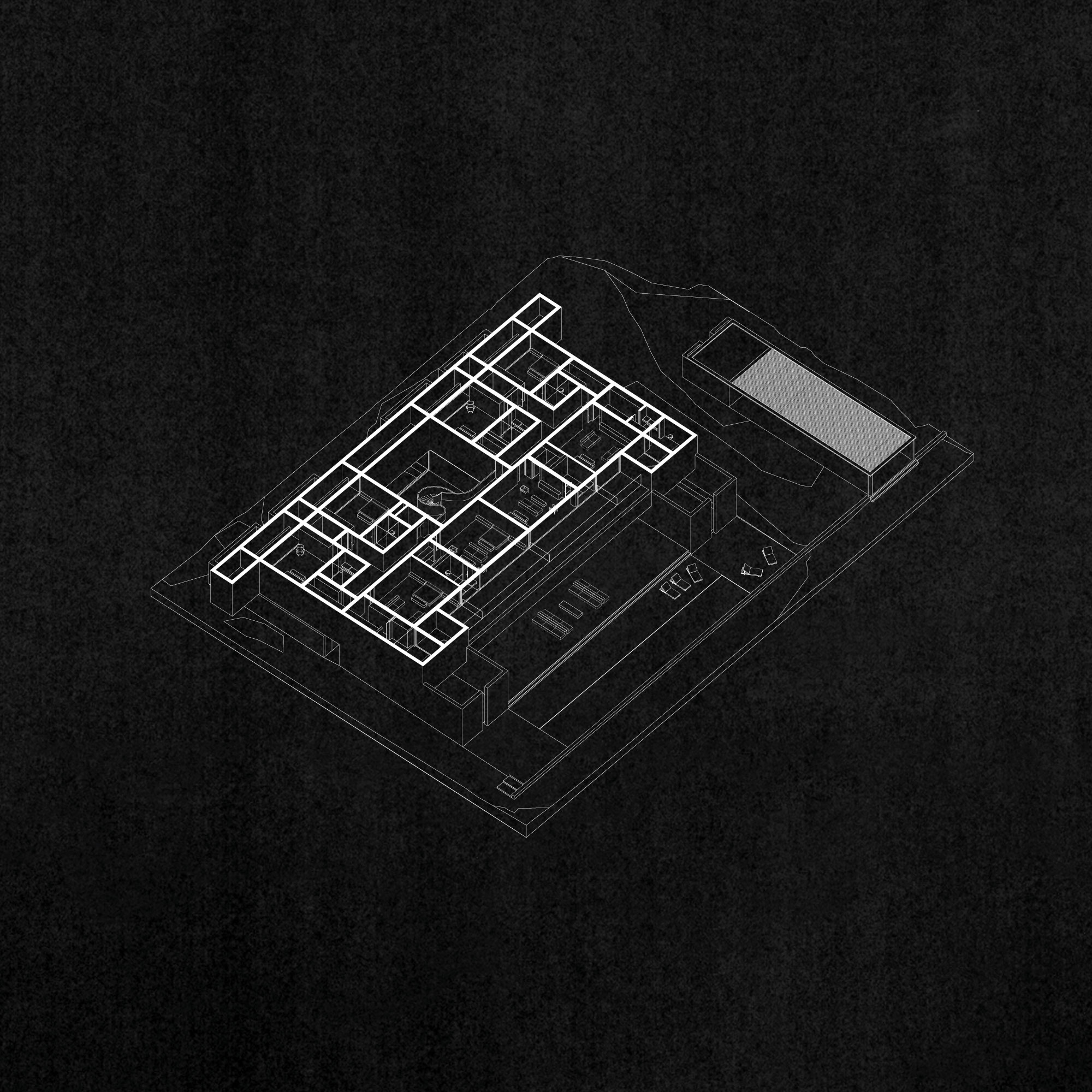
Above, eight suites divide by orientation. The four master suites face the sea, two on each side of the axis, equal in area and proportion. The four junior suites face the interior patios. The helical stair and the lift hold the centre.
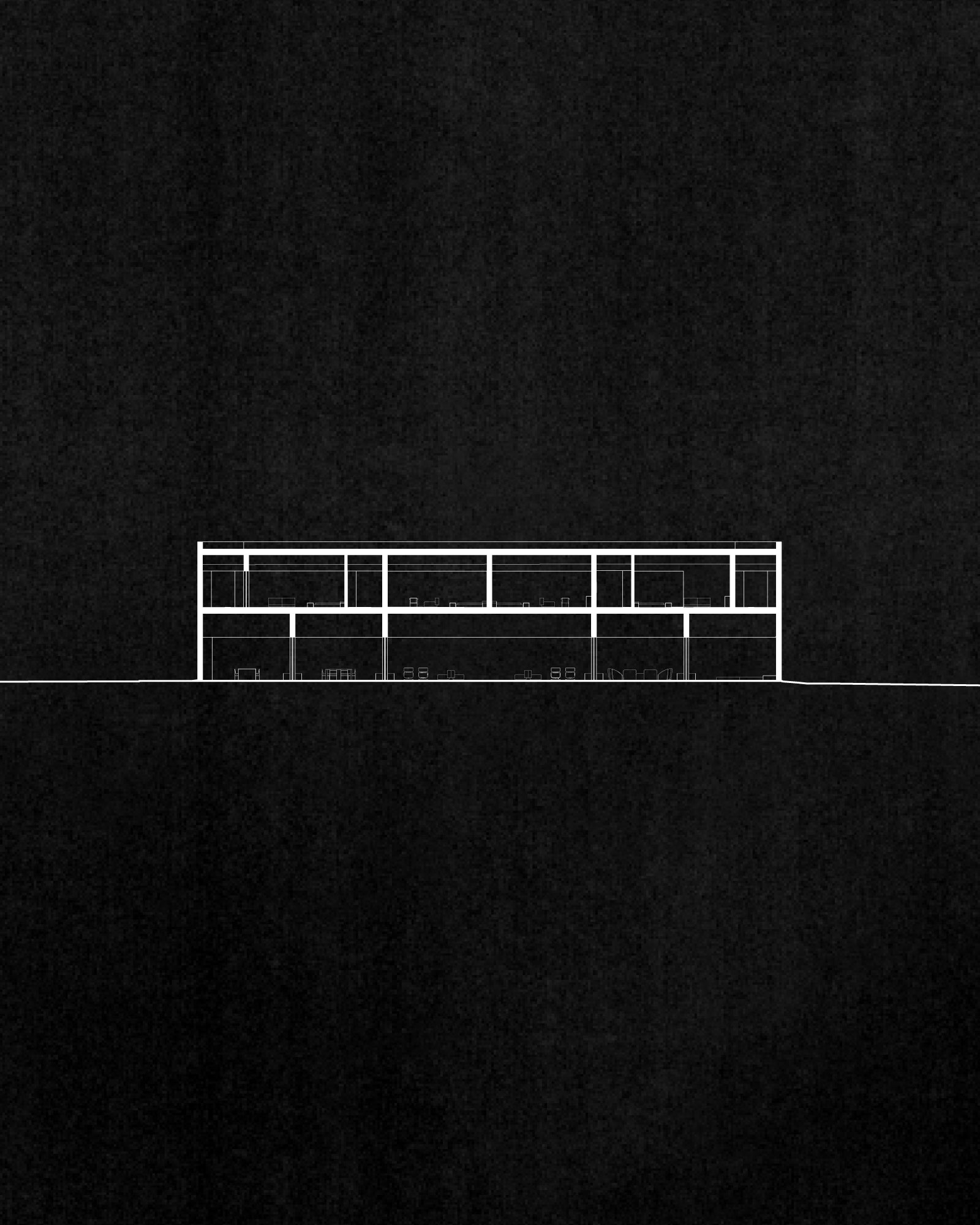
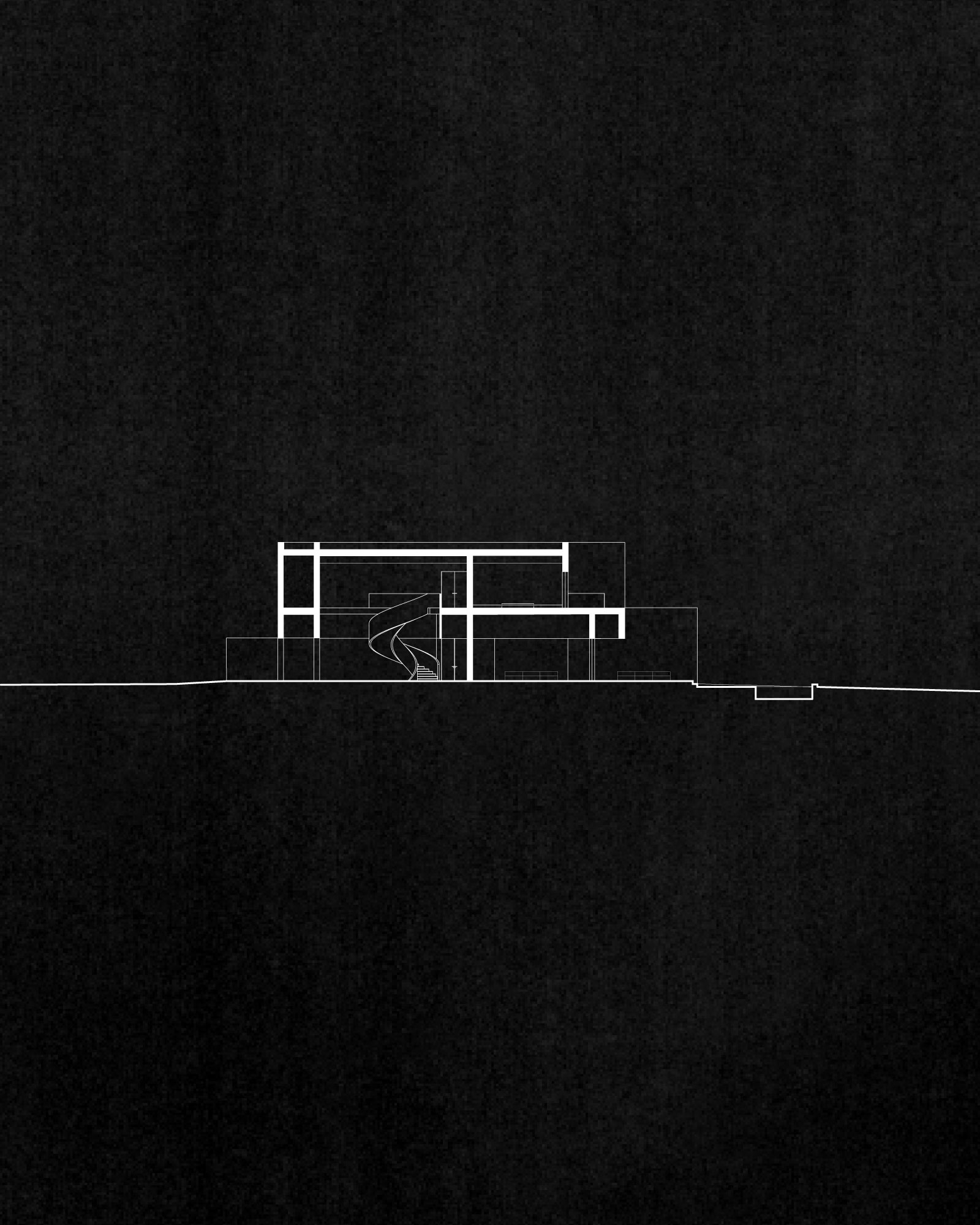
Cut through the depth of the house, the section is where the project is decided. Along the axis it reads as a gradient from the closed wall on the southwest to the open sea on the northeast: mass at one end, horizon at the other, and between them a sequence of layers, room, covered terrace, pool deck, sand, water, that lets the interior reach the sea by degrees rather than at a single line.
The same cut shows how the house meets the sun. The terrace runs deep along the sea face, its overhang set to hold off the high summer light and admit the lower sun of winter. At the centre the hall rises to double height, the helical stair turning within it; the social rooms hold the ground, and the suites take the floor above.
Across the axis, the section reveals the two equal wings and the patios cut into the depth of the plan. These vertical voids bring sky, daylight and moving air to the rooms behind the closed wall, so that mass and openness live in the same building. The section, more than the plan, is where the house is understood.
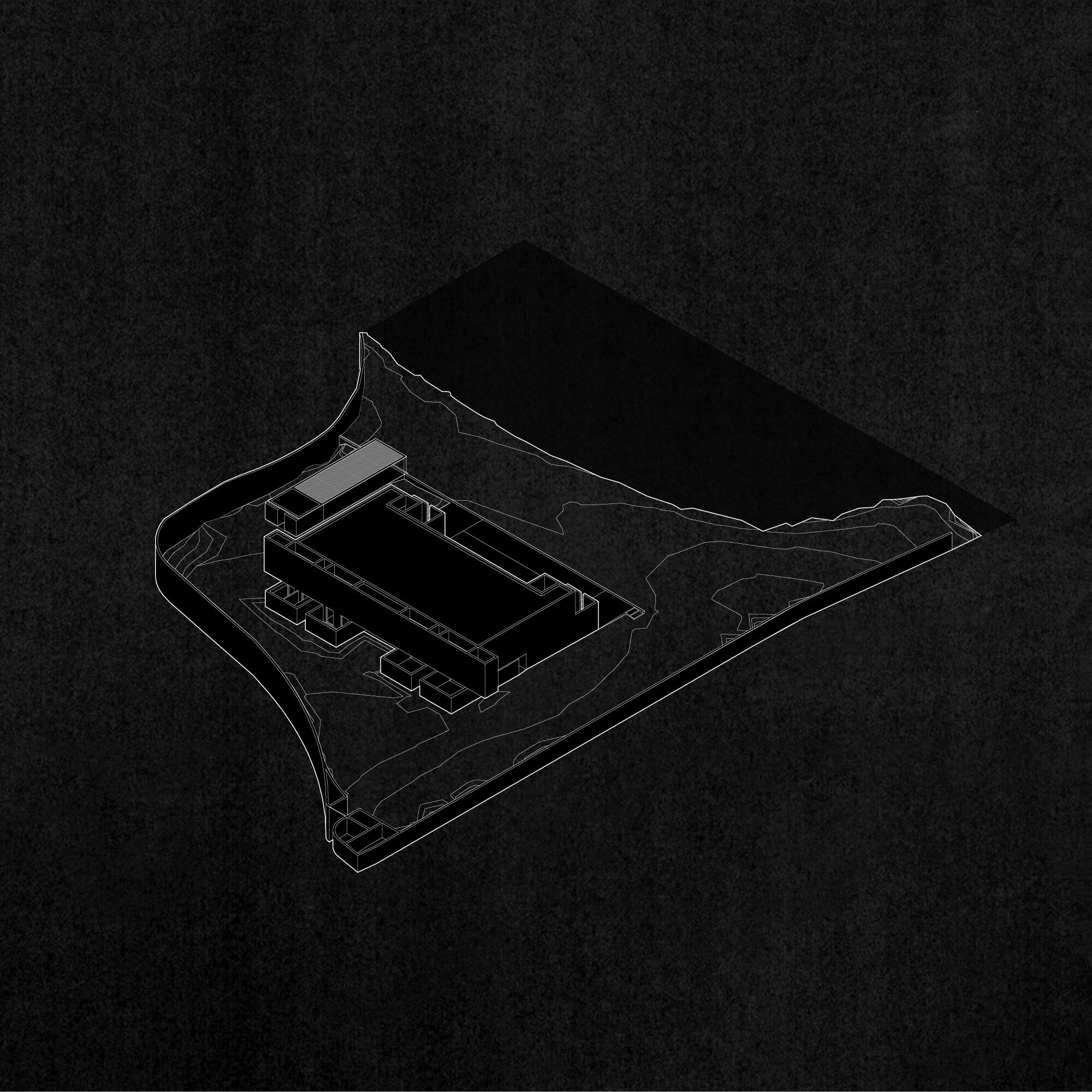
Finally, the whole read in volume: two facades, four patios, the central stair. The drawing that shows, more than any other, that the section is the project.
The closed wall is the most worked surface in the project. It is finished in hand-applied lime mortar, pigmented with iron oxide so the colour runs through the body of the material rather than over its surface. It does not fade and needs no repainting; the choice is a choice in favour of time.
The wall is built to look better in forty years than on the day it is finished.
The surface carries a hand-scored vertical relief in pigmented lime. A painting of the same earthen relief was the reference for the texture: the vertical grooves that give the closed wall its surface.
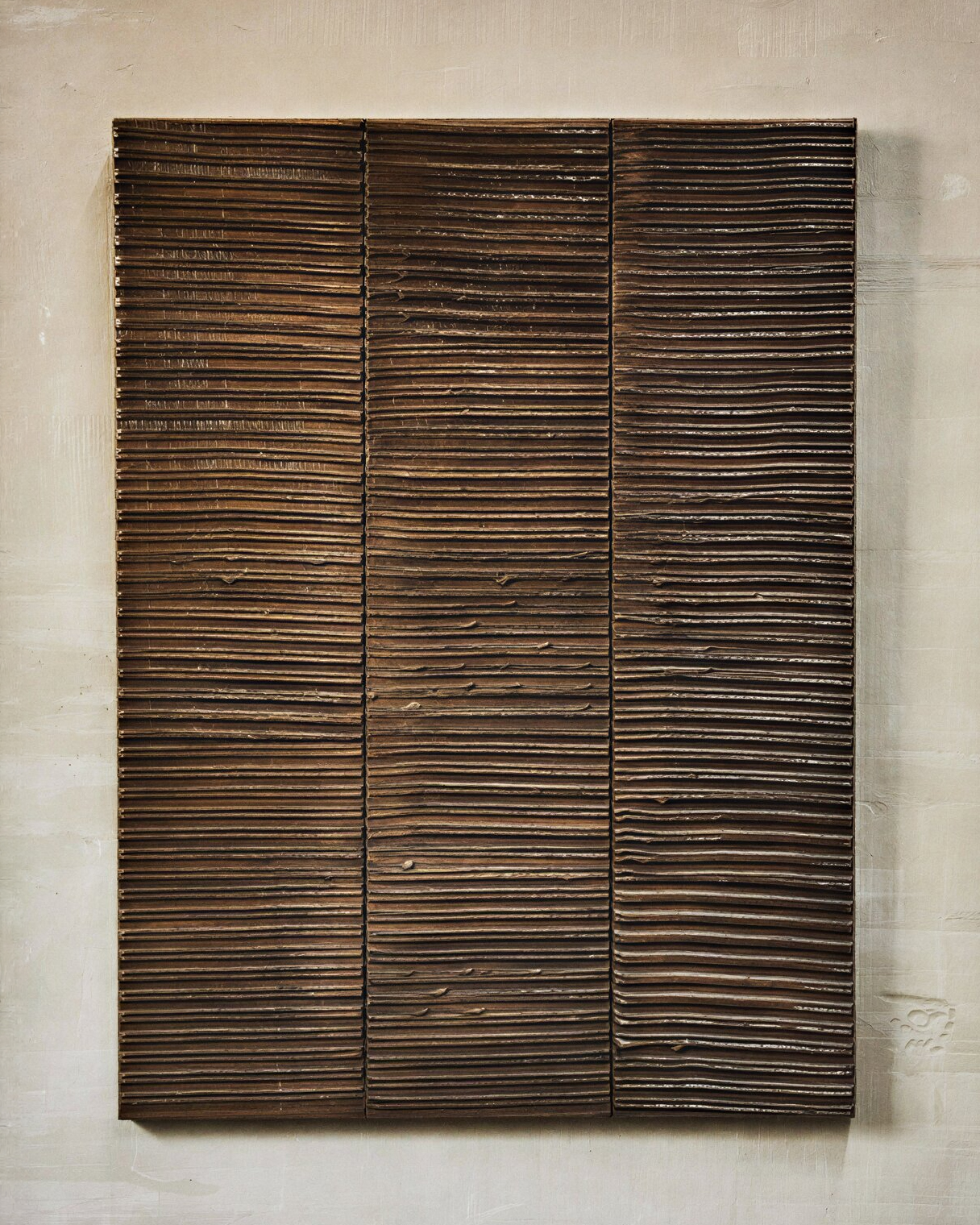
The wall is scored vertically for a reason that is technical before it is aesthetic. The prevailing winds carry fine sand off the desert, and vertical grooves drain dust, water and salt downward rather than holding them on a ledge. What begins as a way to keep the surface clean becomes the way the surface reads.
Across the day, the wall registers the sun. In the raking light of morning the grooves stand in sharp relief, a fine parallel shadow running the length of the facade. At midday the shadows compress and the wall quiets to a single plane. In the late afternoon the light runs along the grooves and the whole surface glows, warm and even.
And it improves with time. The lime keeps hardening for decades as it carbonates, and the surface gathers a fine patina of dust and salt that the rain works into it rather than washing away. The wall ages by deepening. In forty years it will not look new, and it will not look worn; it will look as though it had always been there.
The sun reads it by day, the years deepen it.
The wall is finished only by time.
The house is one colour, the colour of sand, and that colour is studied in two tones, the two the beach itself holds: wet sand and dry sand. The darker, wet-sand register is the proposal; an earthen house recedes from attention and sets the landscape forward, so the blue-green of the sea reads as the only colour in the field. The lighter, dry-sand tone is shown alongside, closer to the familiar register of the coast.
The relationship to the sea is not uniform. Each room receives it differently, calibrated to what the room is for. A single panoramic facade would have produced one relationship to the water; this one produces many, room by room.
From the outside, the open face reads as deep terraces graded between the rooms and the water, the covered terrace working as a primary room through most of the year.
The largest and most open space in the house. A full glazed wall frames the sea as a horizontal band, the horizon held at the height of a seated figure, so the architecture and the landscape compose into a single image.
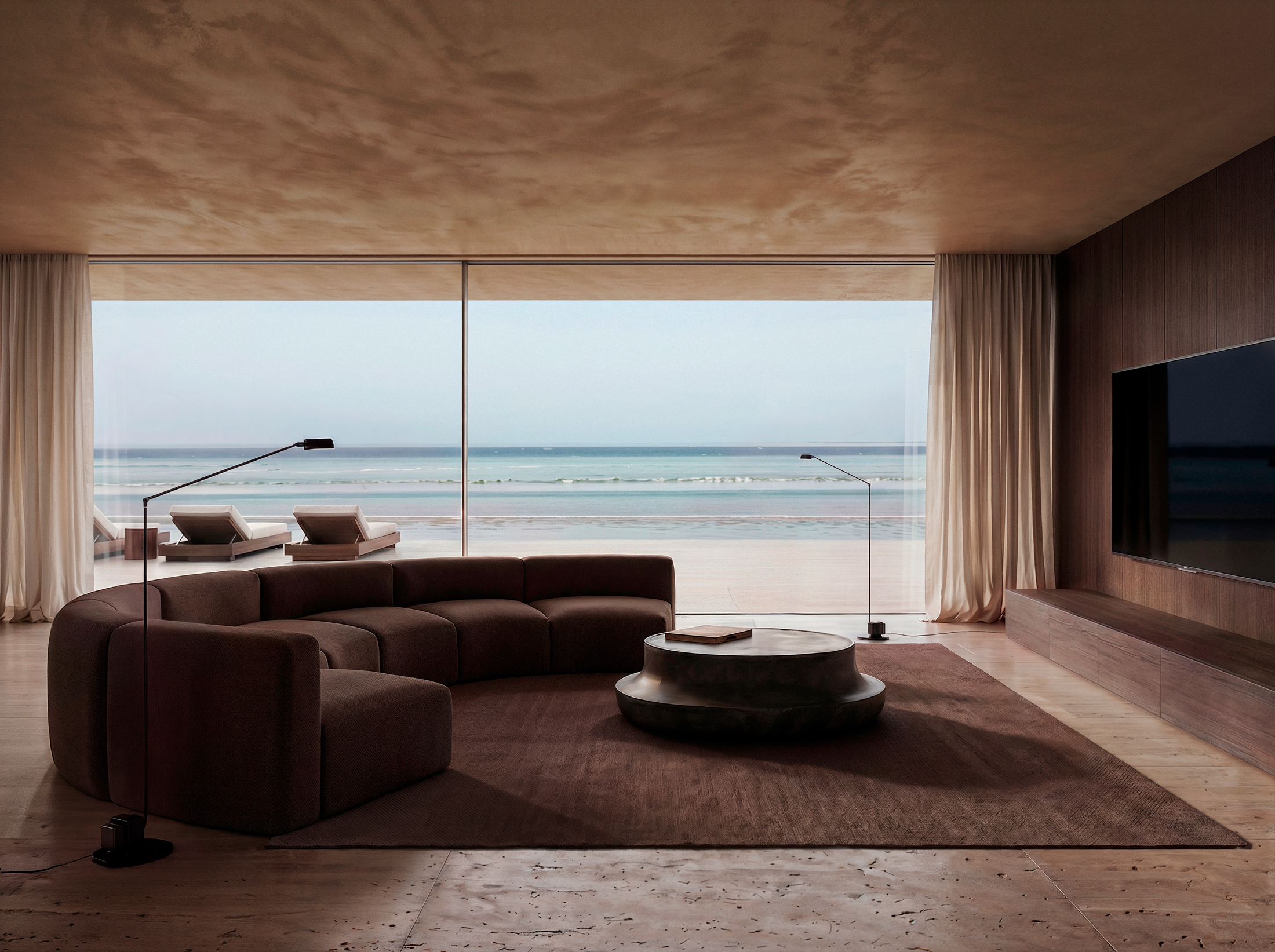
Elsewhere the sea is rationed. At the cinema it enters only as a narrow vertical slit, the width of a passage and the height of two storeys, framed in dark mass. A fragment of horizon, precisely cut, communicates more than a panorama.
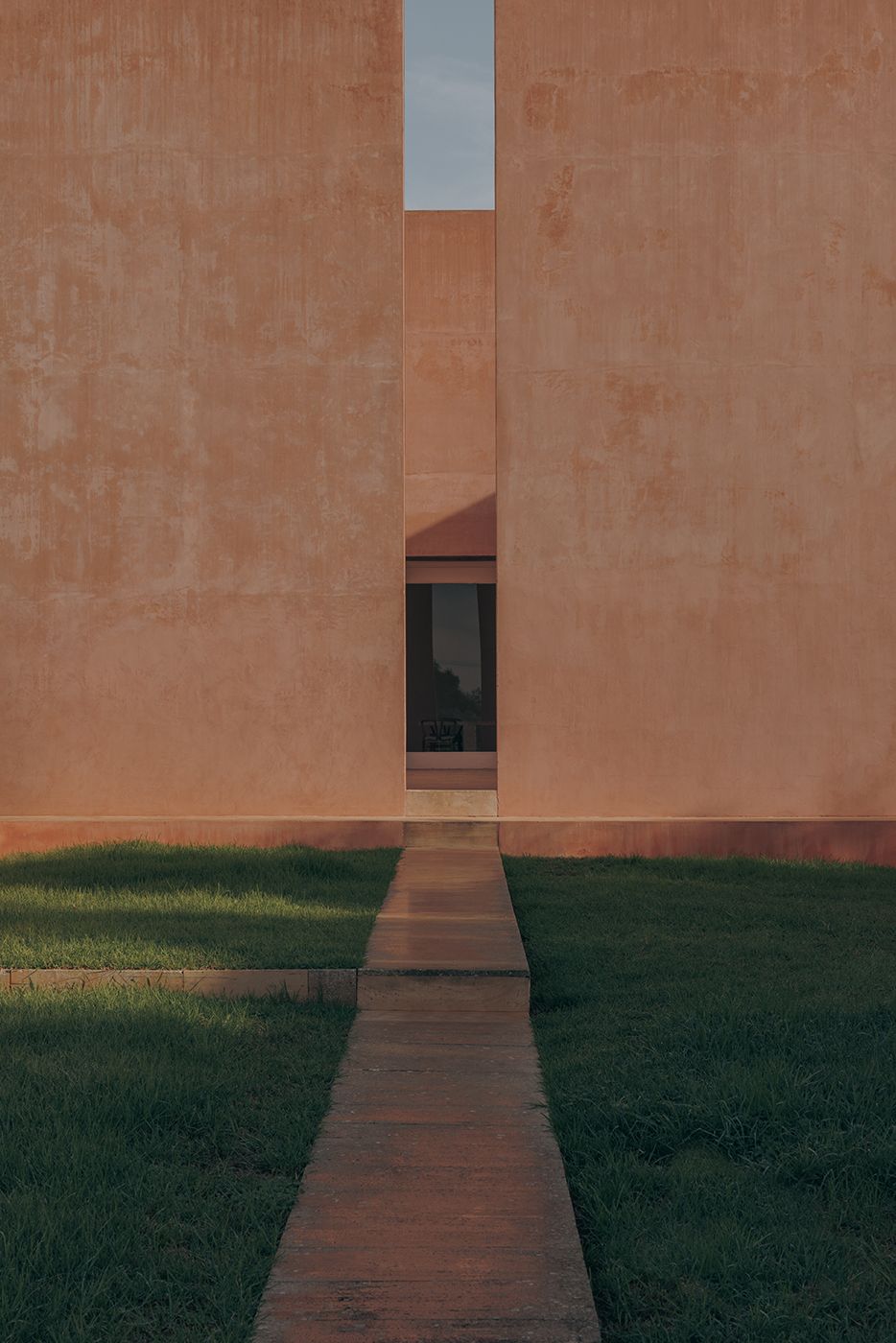
The sea is not a single view.
It is the sum of all the ways the house allows it to be seen.

The house is entered through the one cut in the closed wall. In a single compressed frame, three things appear at once: the helical stair turning in the double-height hall, the dark stone of the floor, and beyond everything a strip of bright sea.
The threshold is deep, and the temperature drops as one moves under it. Each space that follows is shown after the words that explain it.
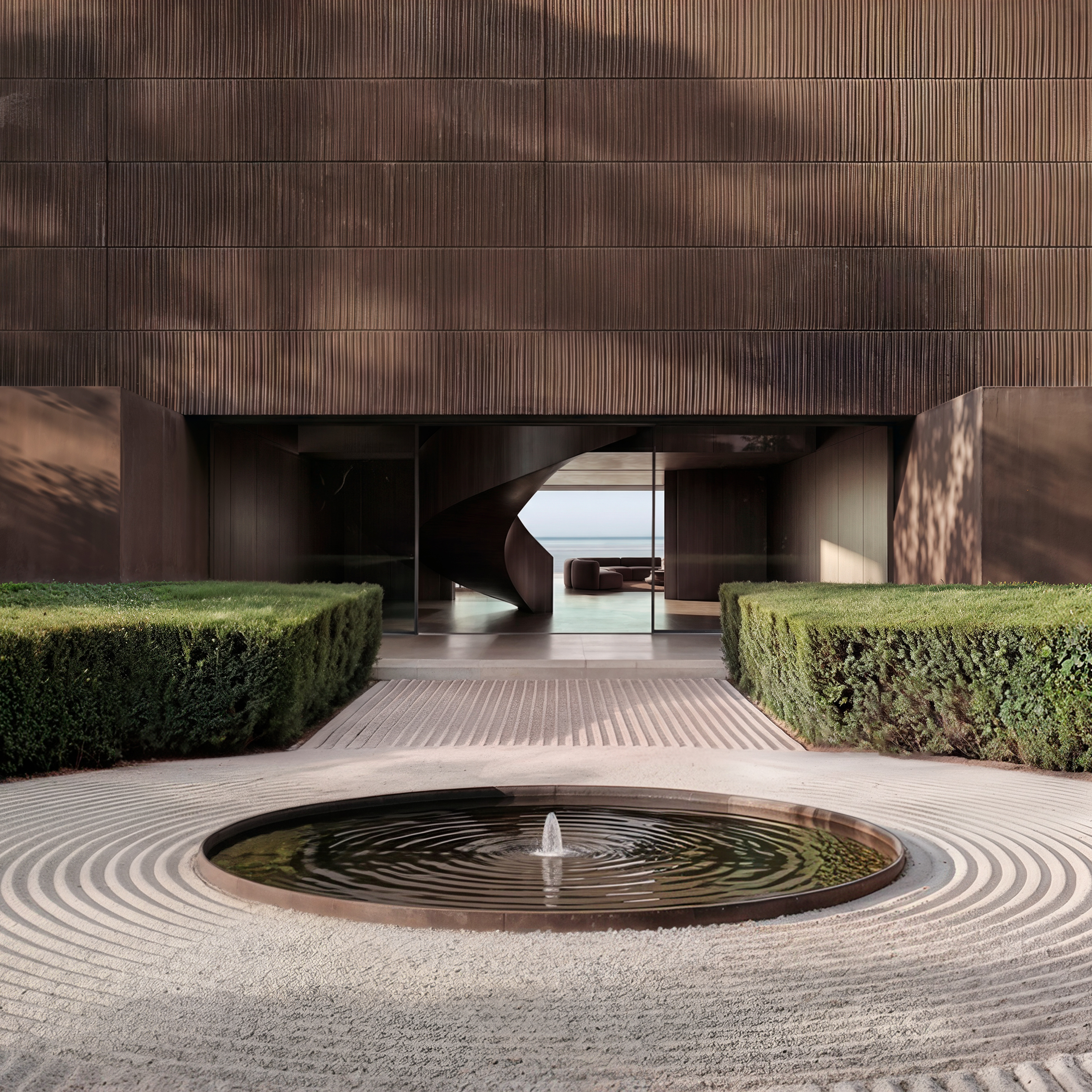
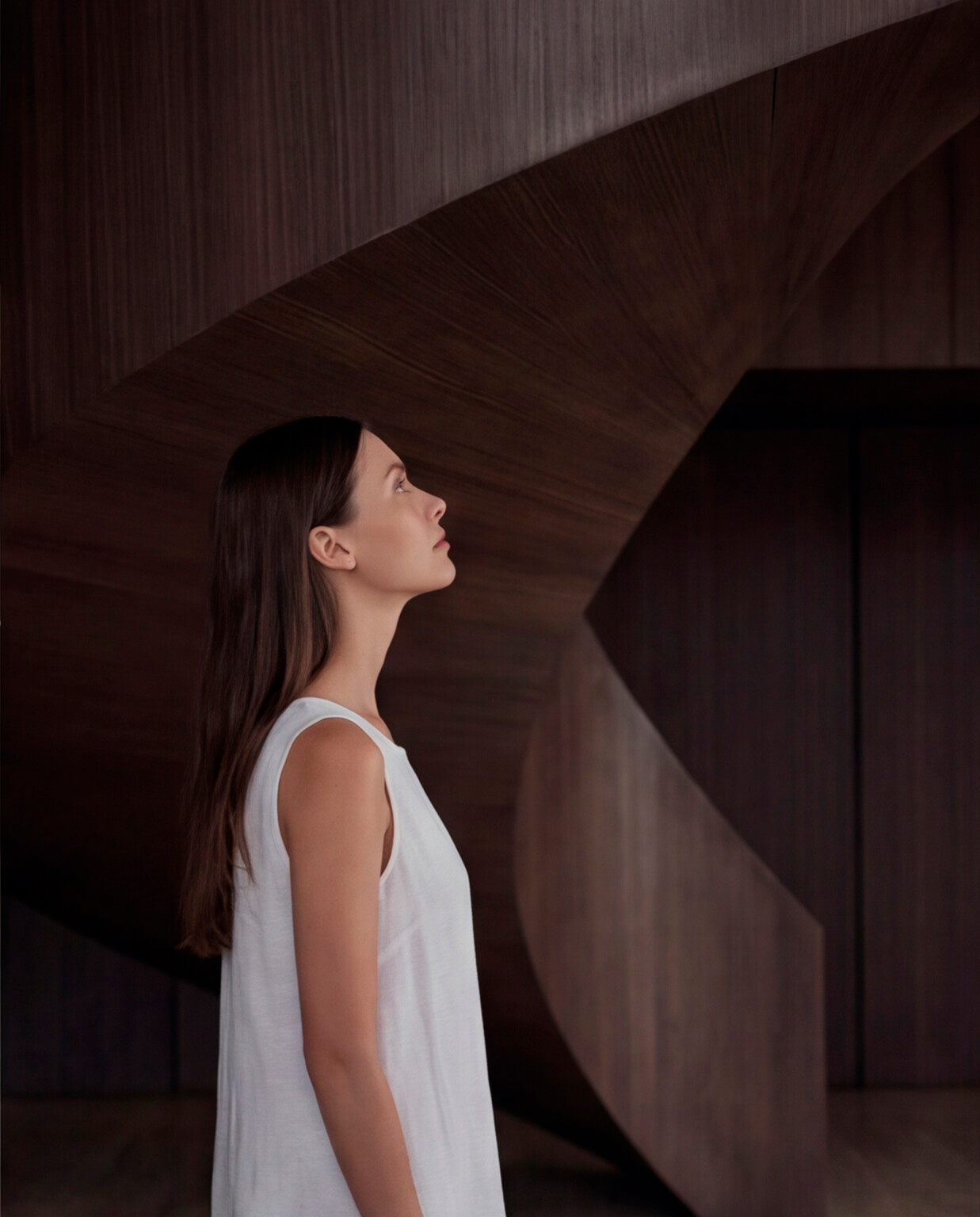
The hall is the hinge of the house: to one side the closed world of the wall and the garden, to the other the open world of the sea. The helical stair anchors the centre the way a column anchors a nave.
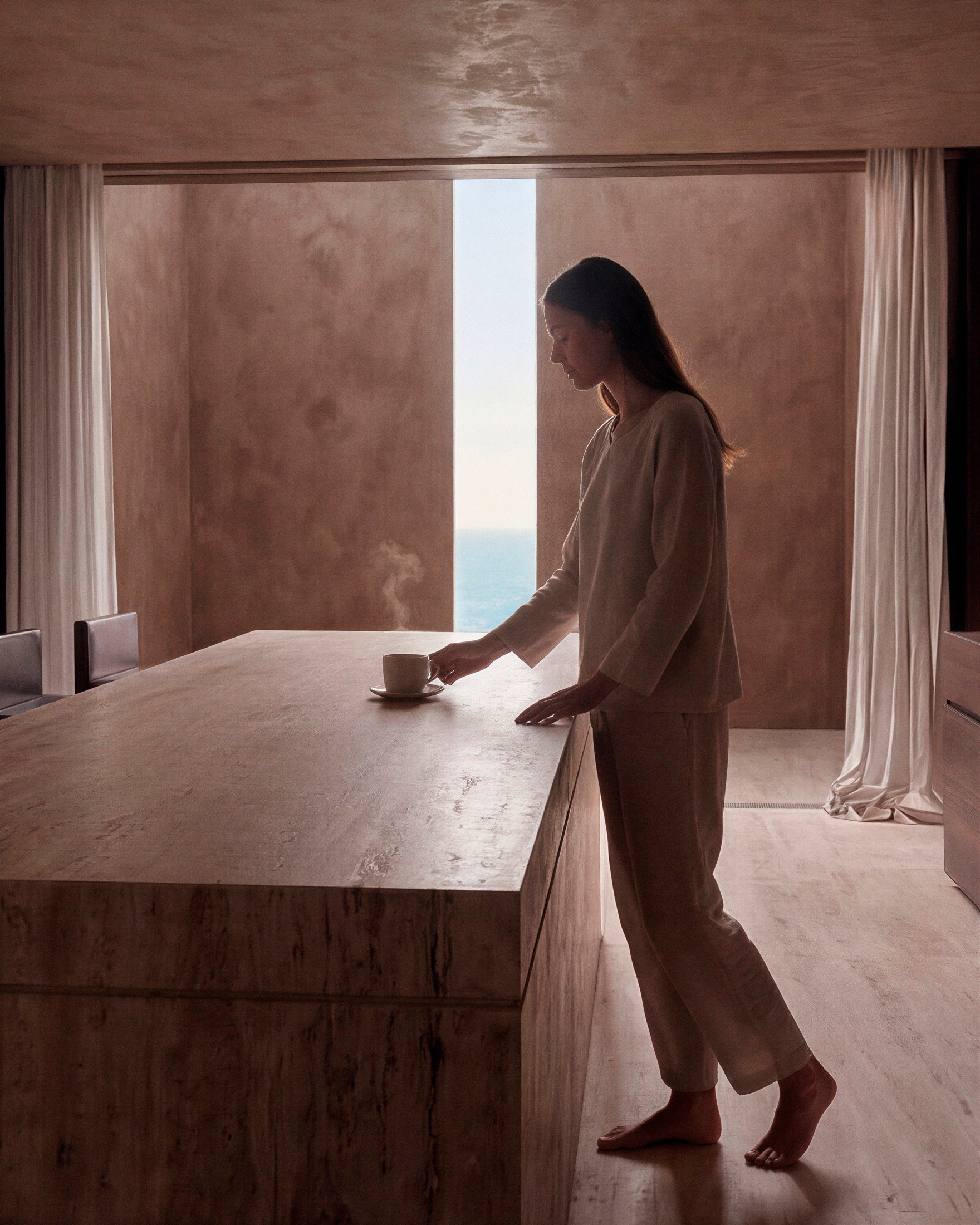
The family kitchen is organised around an island of travertine, the largest single piece of stone in the house. It is lit indirectly from a patio, soft and abundant, and a narrow slit to the sea is a reminder of where the room stands.
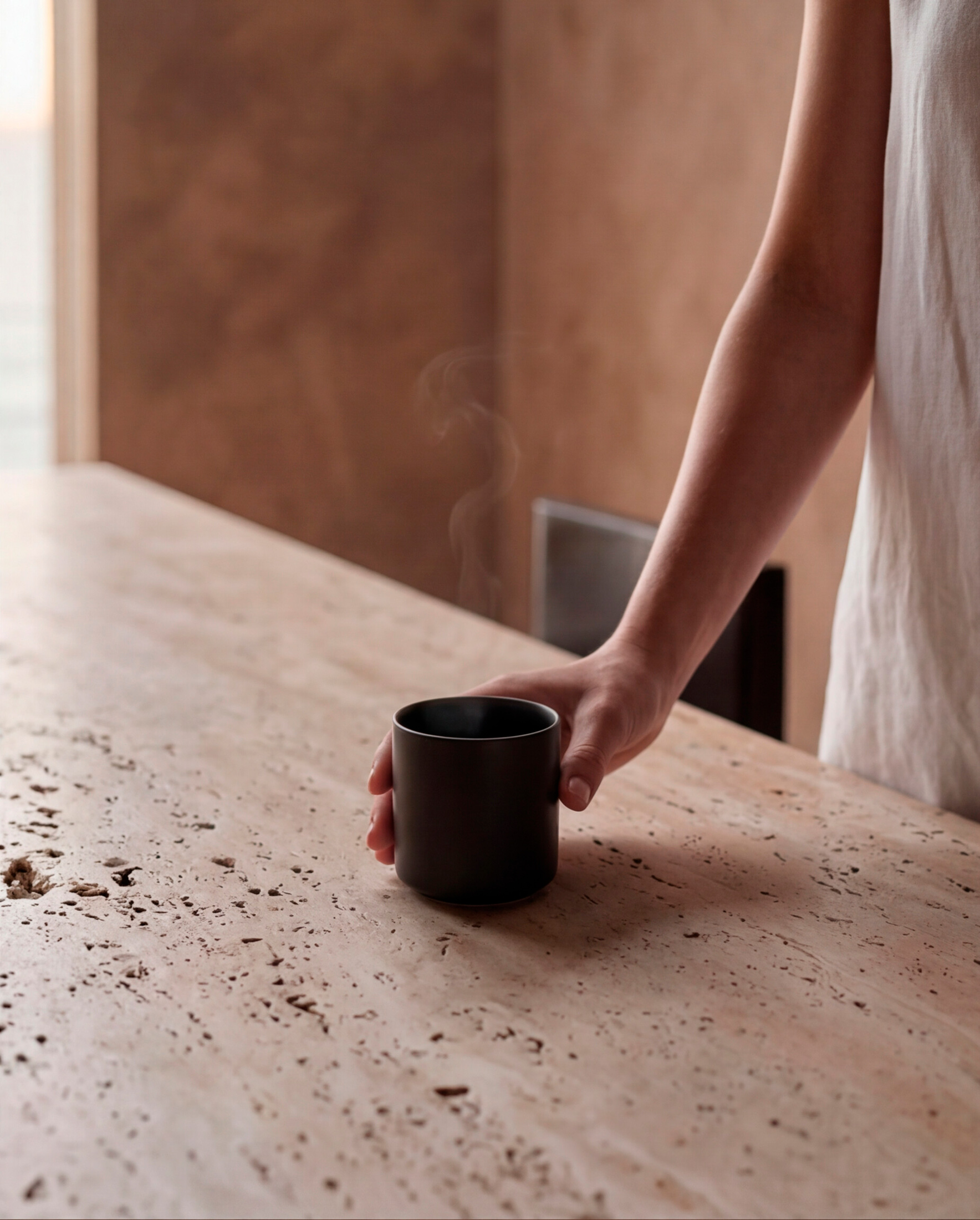
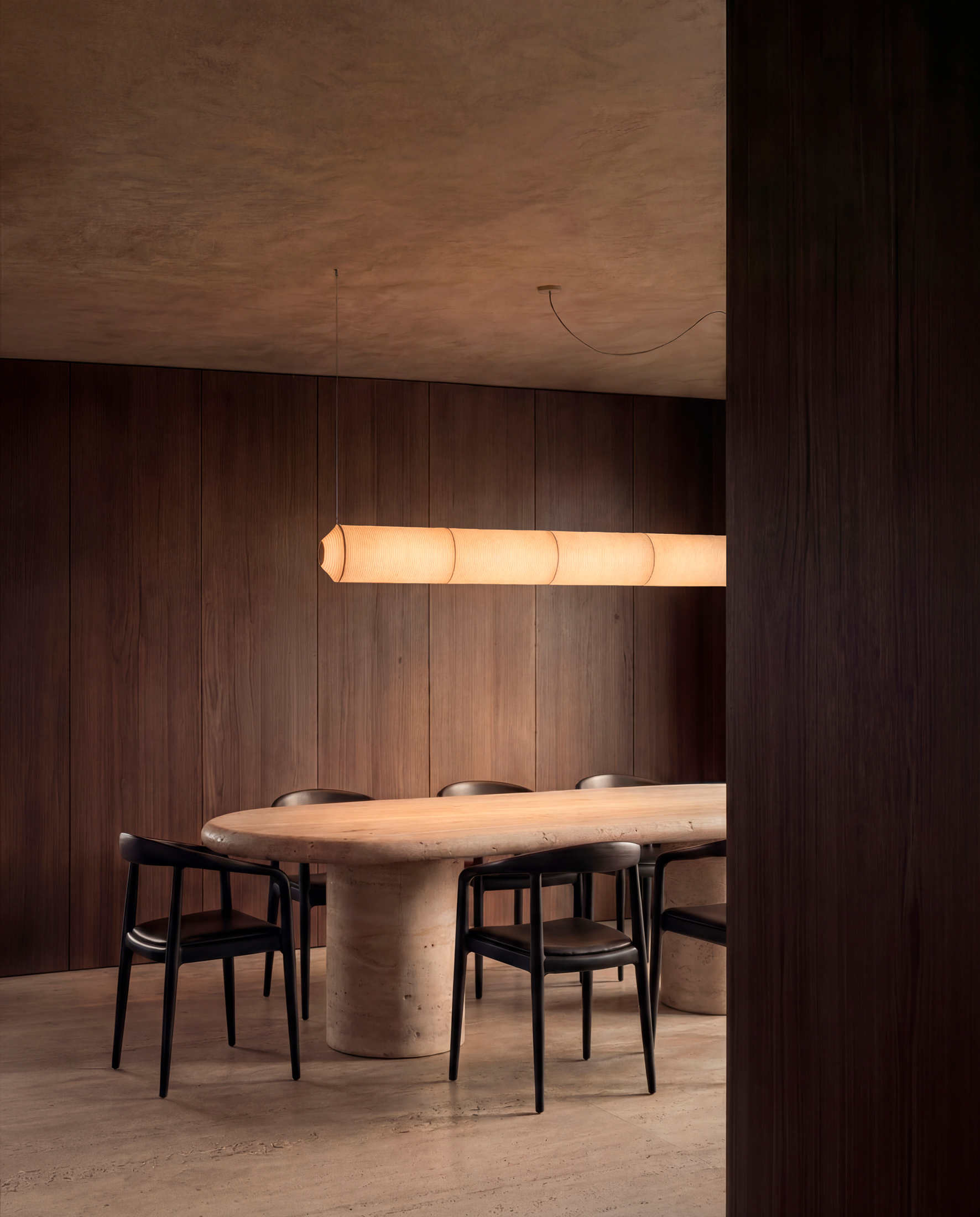
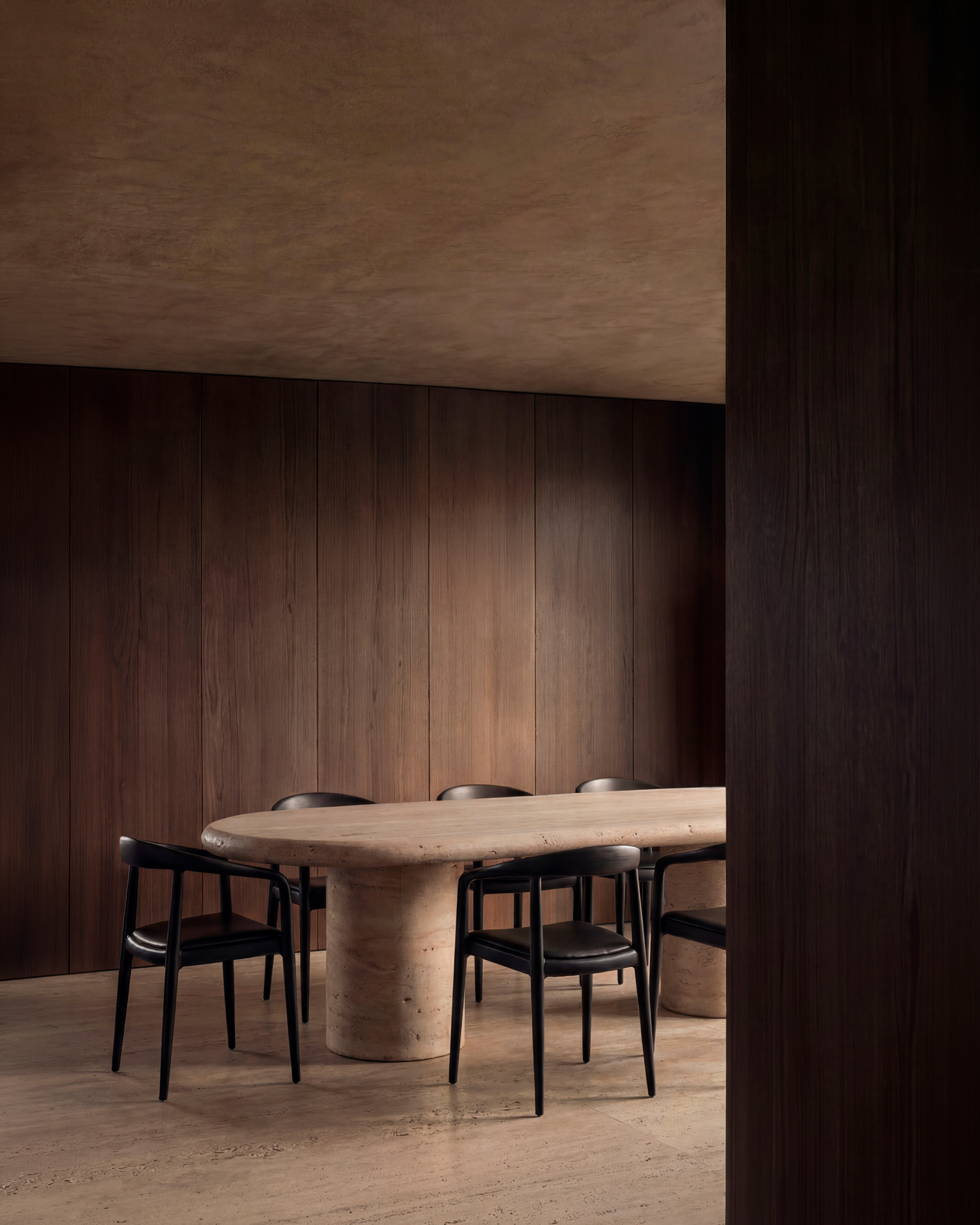
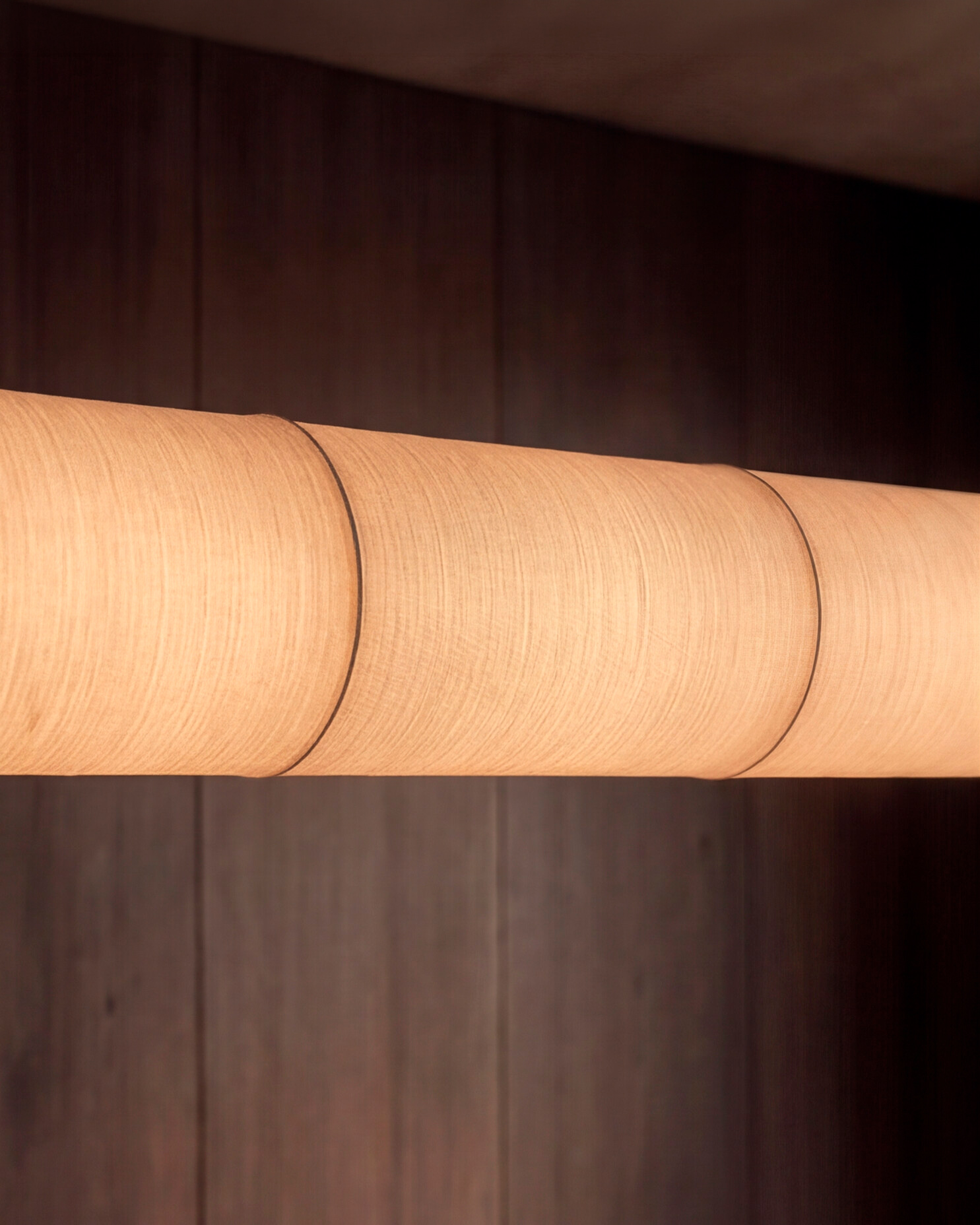
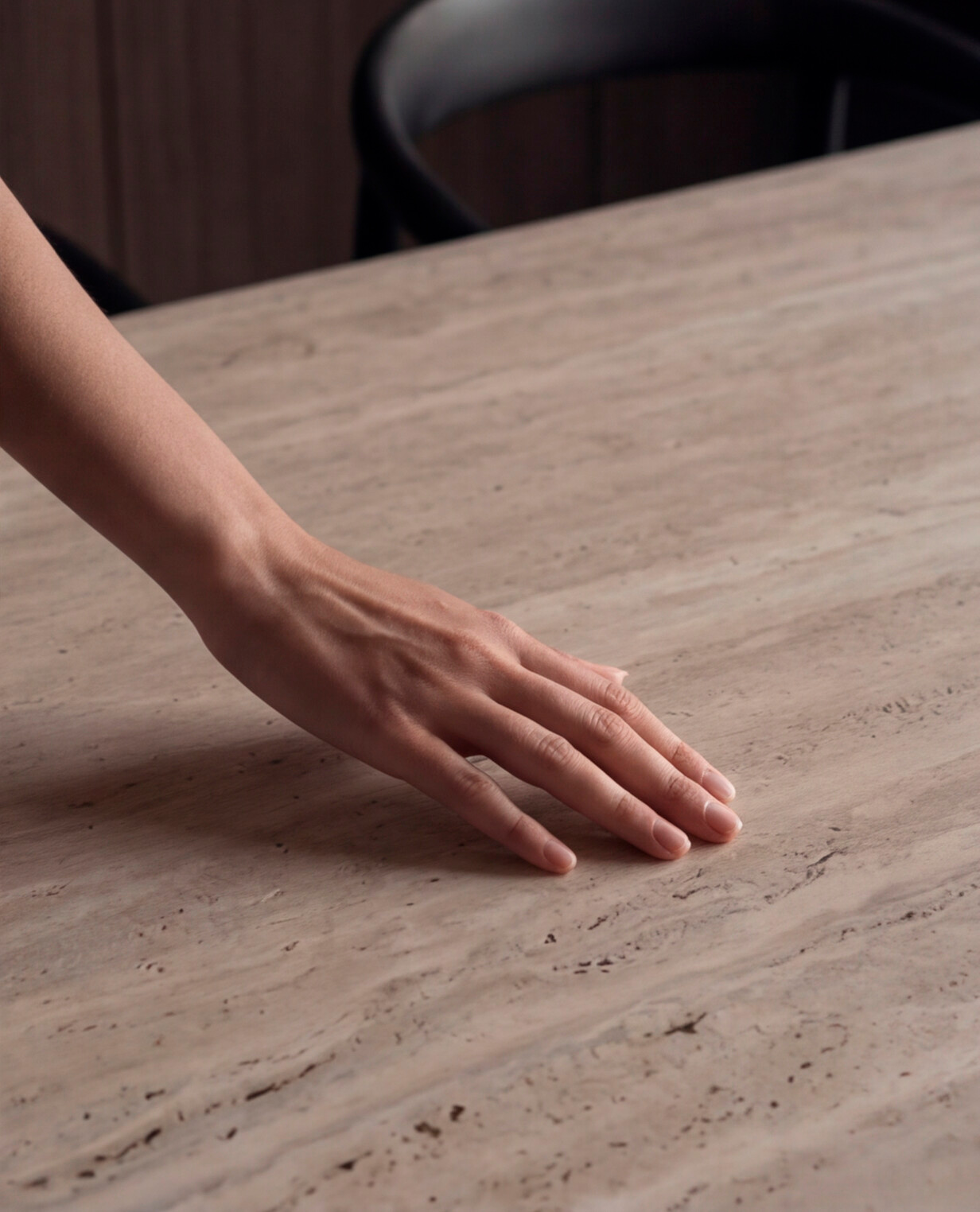
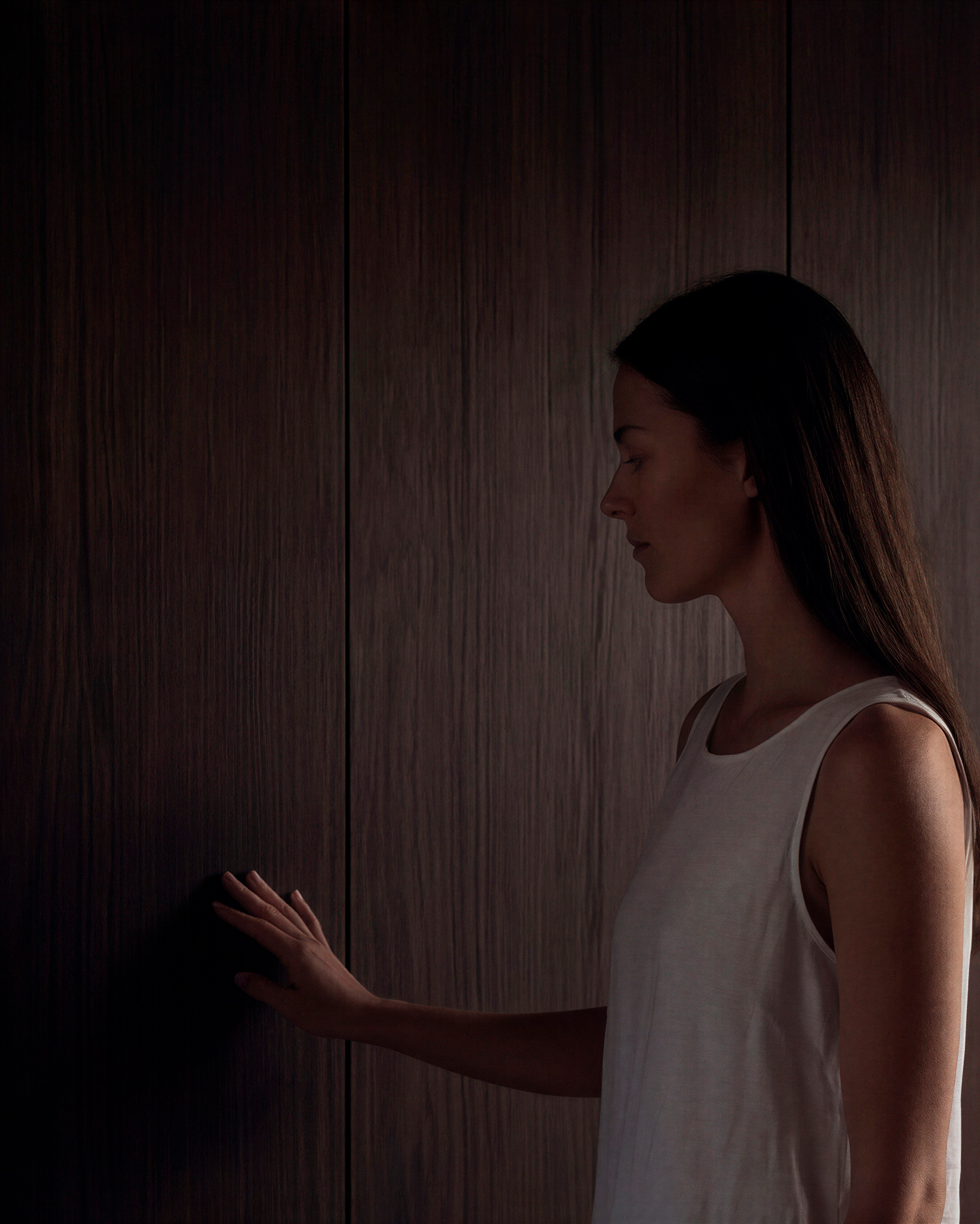
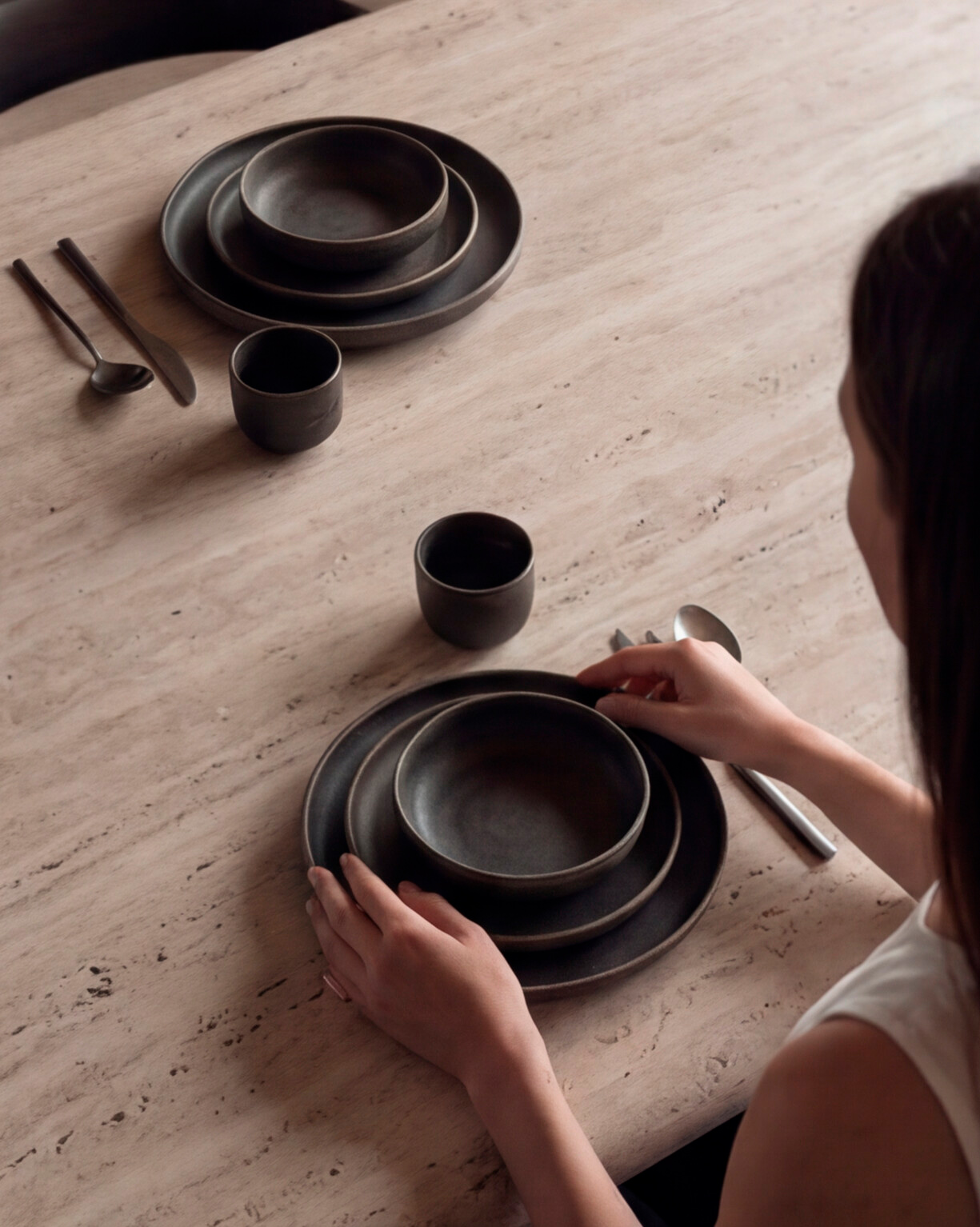
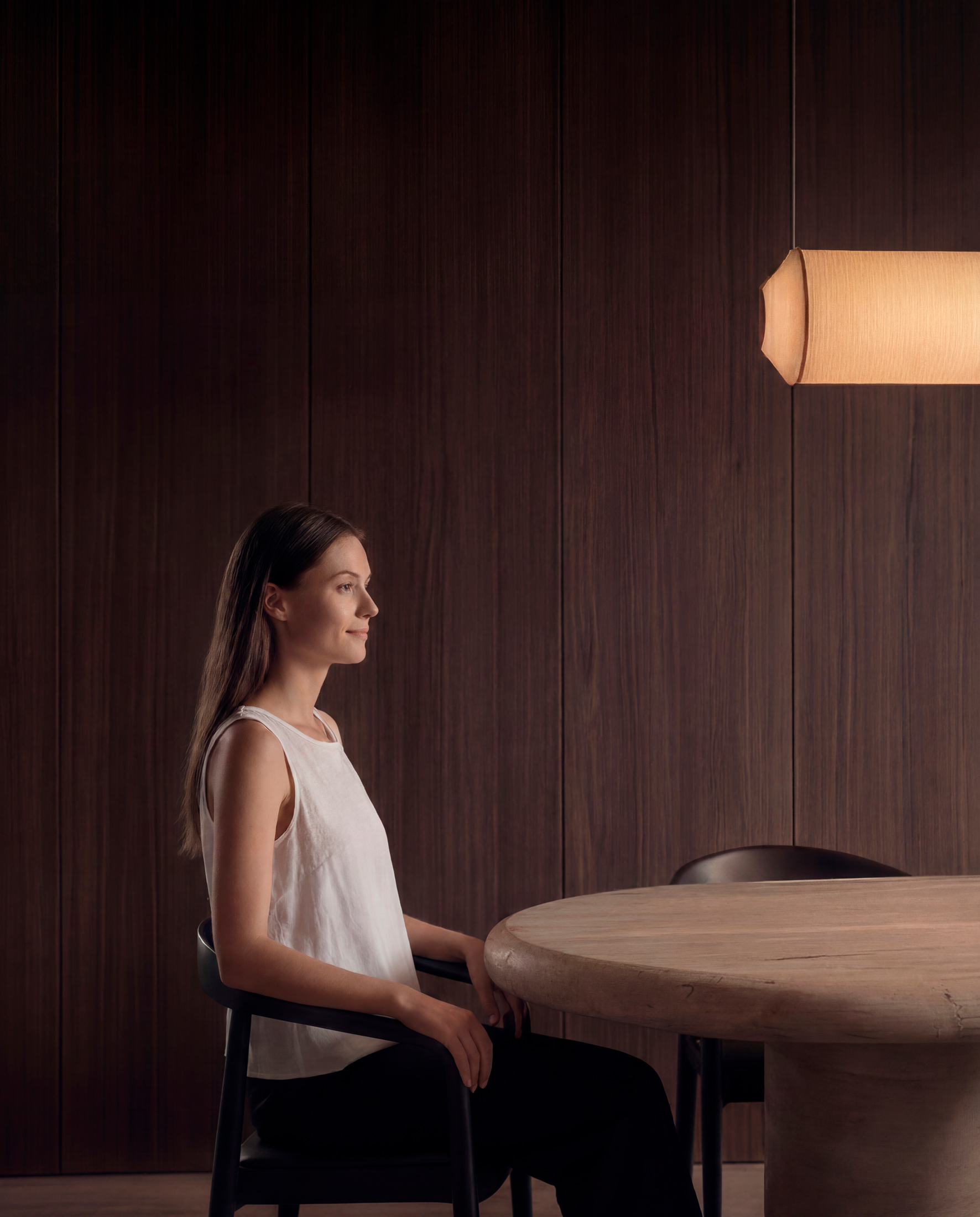
The dining room is shown in two ambiences, with the hung lamp and without, so the room can be read in two moods. The sea is present through the northeast facade, but held at a measured distance beyond the covered terrace, so the eye returns to the table. The detail images then read the matter at close range: the grain of the wood, the edge of the stone, the shadow held in the depth of the surface.
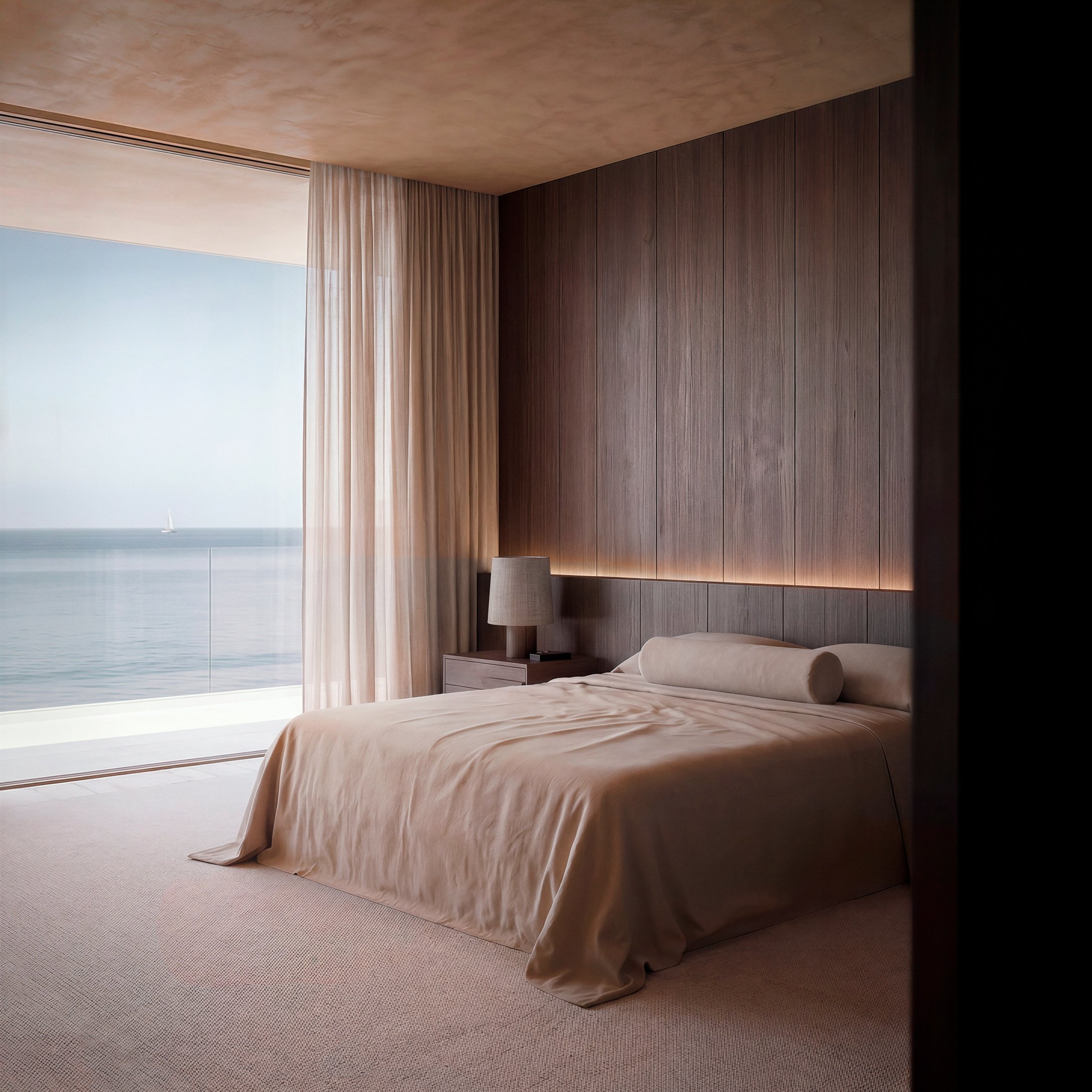
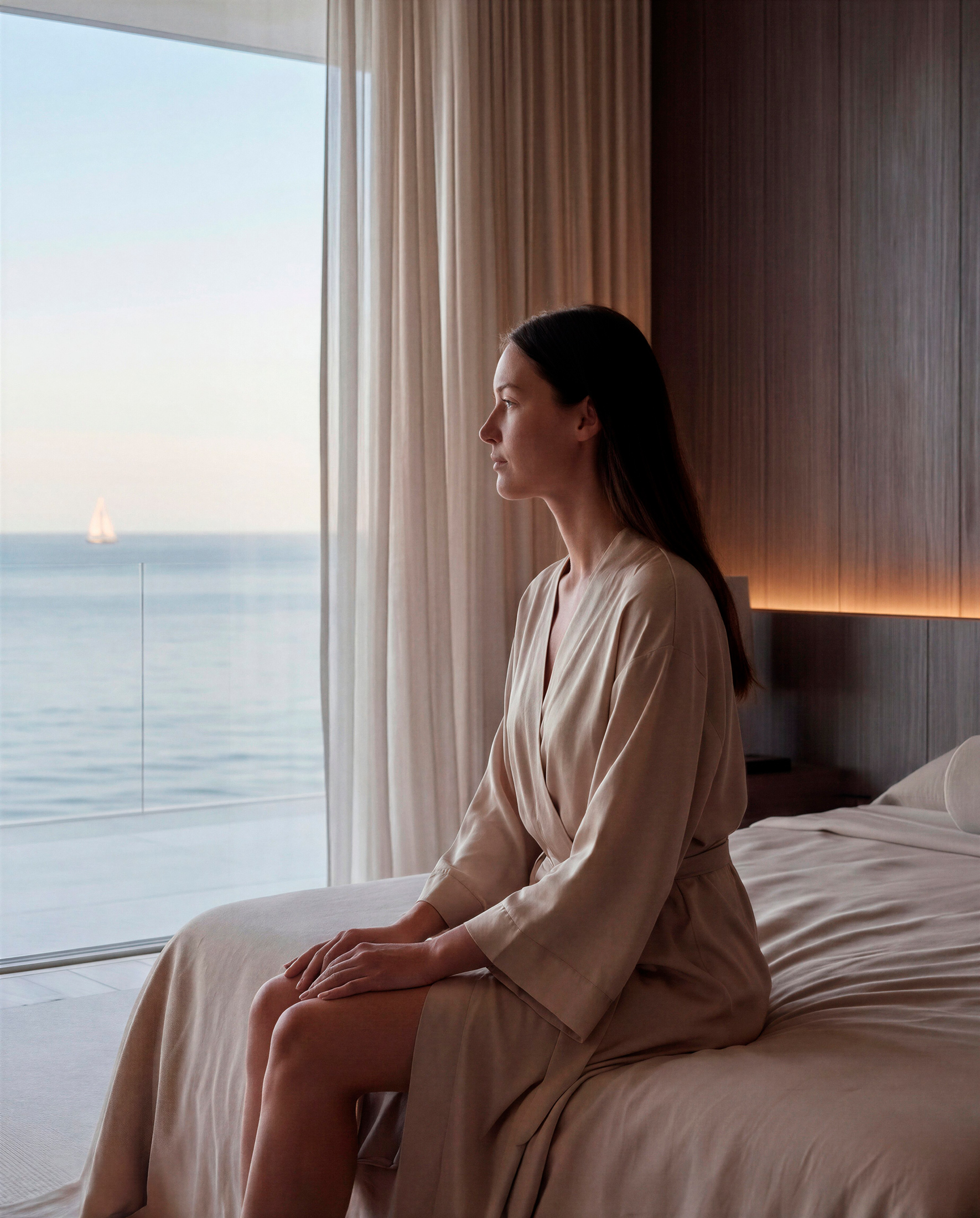
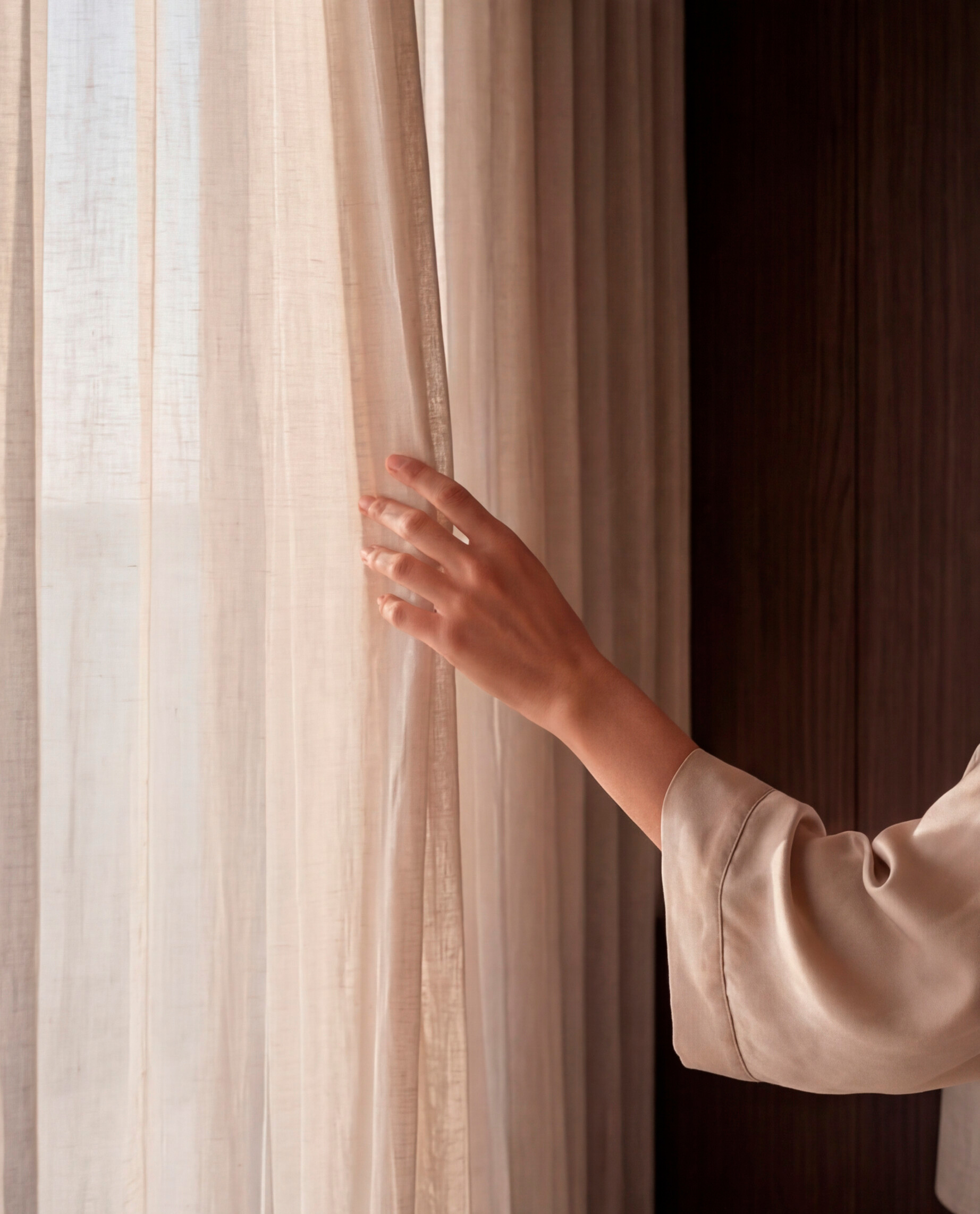
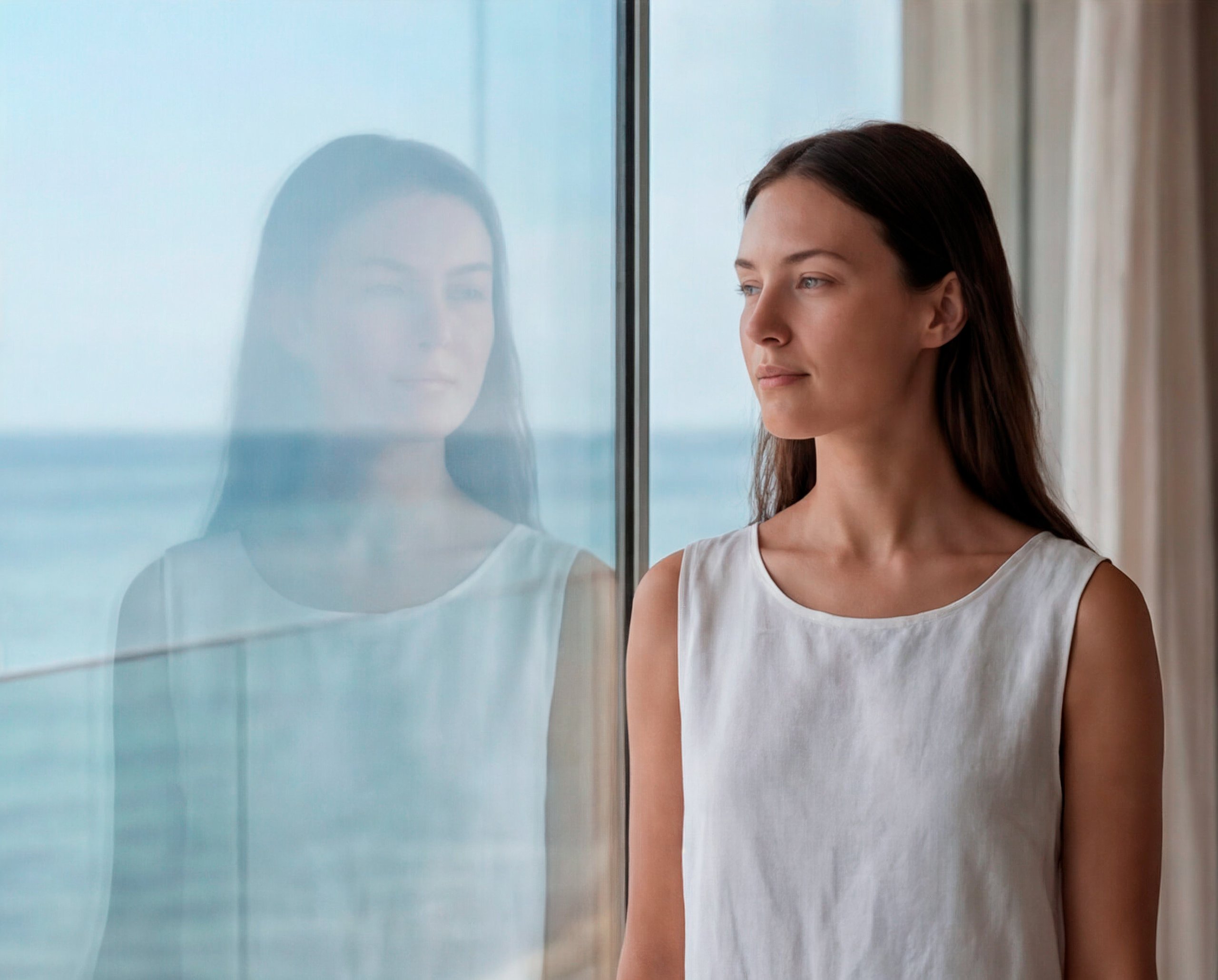
On the upper floor, the master suites face the horizon directly. From the bed, the sea is present at eye level, visible from the moment of waking. The window frames a reclined gaze; dark wood and linen hold the same earthen tone.
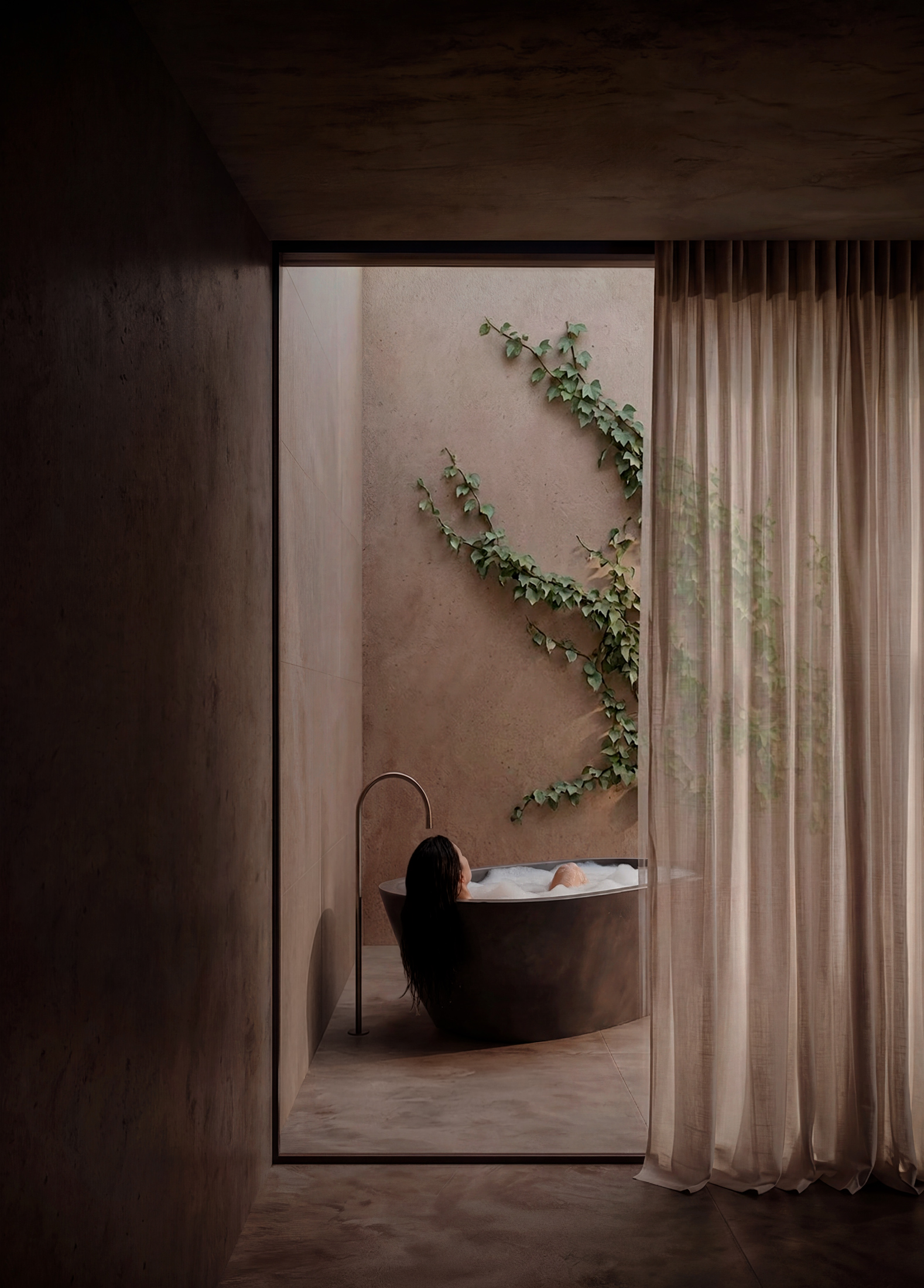
How each master bath meets the light depends on where its suite sits along the sea.
The central suites hold the protected heart of the sea frontage, so their bathrooms open to the horizon: the bath set before the water, private by its own depth in the plan. The suites at the ends meet the edge of the building, where an outward opening would lie in view. Their baths turn inward to a private patio cut between the suite and its neighbour.
The tub takes its light and sky from above, kept to itself. The images here show that second case, the bath in its patio.
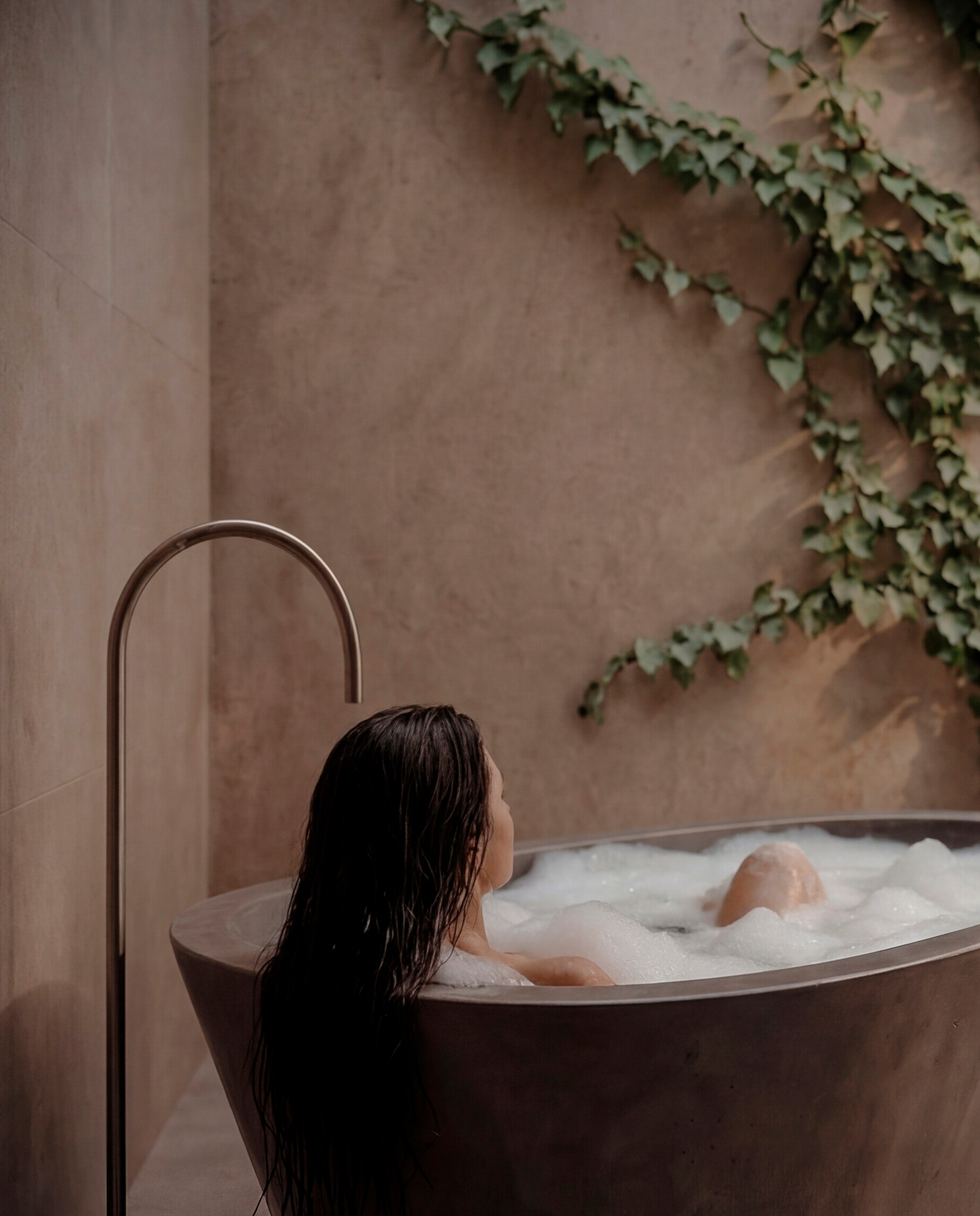

The architecture provides the rooms, the orientations, the proportions and the materials, and allows the life to take whatever form it takes. The house inhabited; life moving through the rooms.
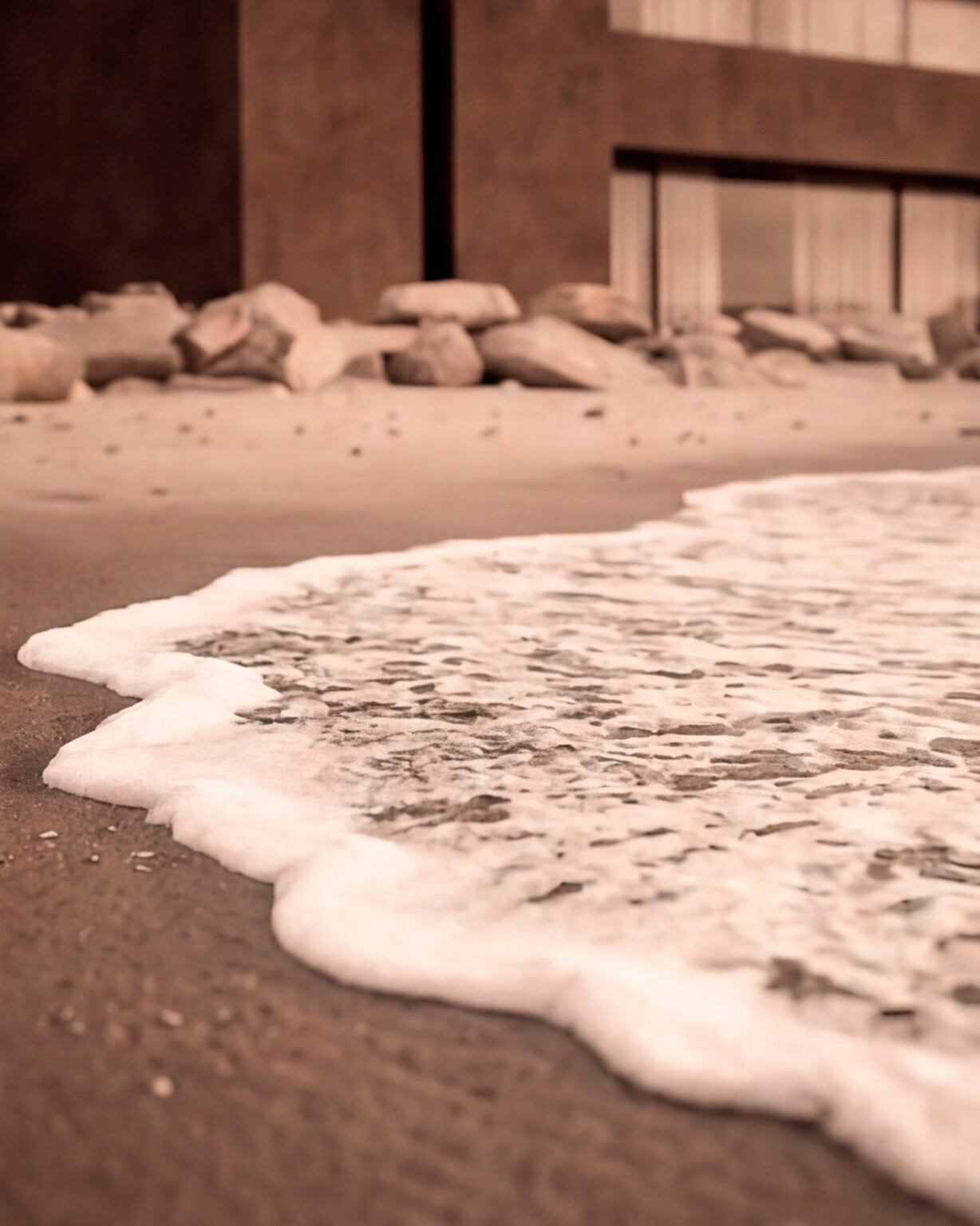
Built for the days it is full, and for the days it is empty.
Travertine, lime, wood and linen, the four that build the interior. Three of them carry two tones, a darker and a lighter; the wood is the constant that holds them together.
The interior is built in two tonal families, one darker and one lighter, and the same logic runs through both. Each material carries the two registers. The travertine comes in chocolate and in Ocean Blue. The lime is mixed in the tone of wet sand and the tone of dry sand. The linen is woven in two colours. Only the wood holds constant, always dark, the warm anchor of every room.
These are not two palettes but one, read at two depths. A room composed in the darker register and a room composed in the lighter one remain unmistakably the same house, because the pairing of stone, lime, wood and linen never changes. The family shifts; the logic holds.
Outside, the house is monochrome, a single tone held from the entrance to the sea. The variation belongs to the interior, where the day is spent; the exterior keeps one colour, the colour of the ground.
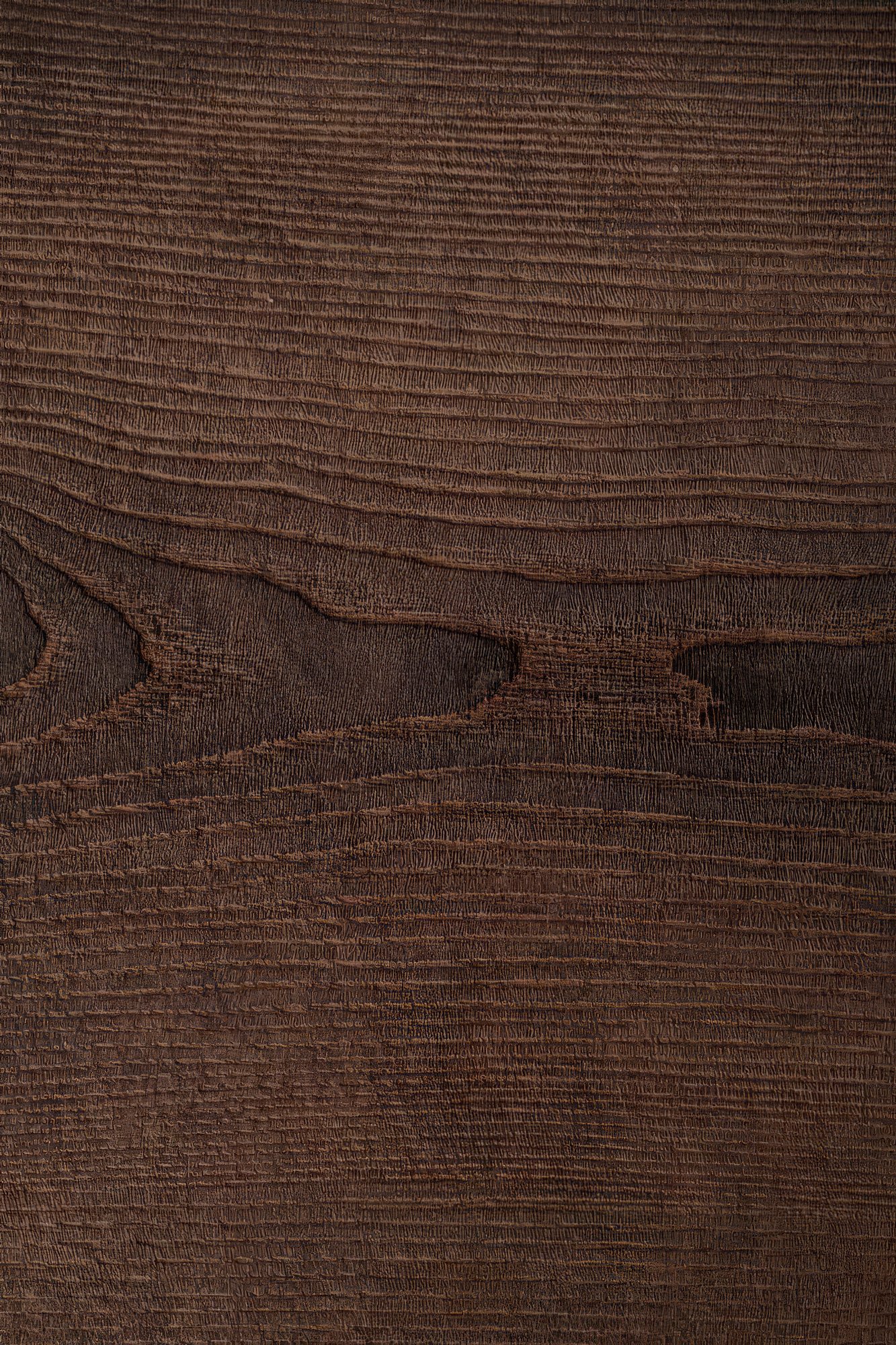
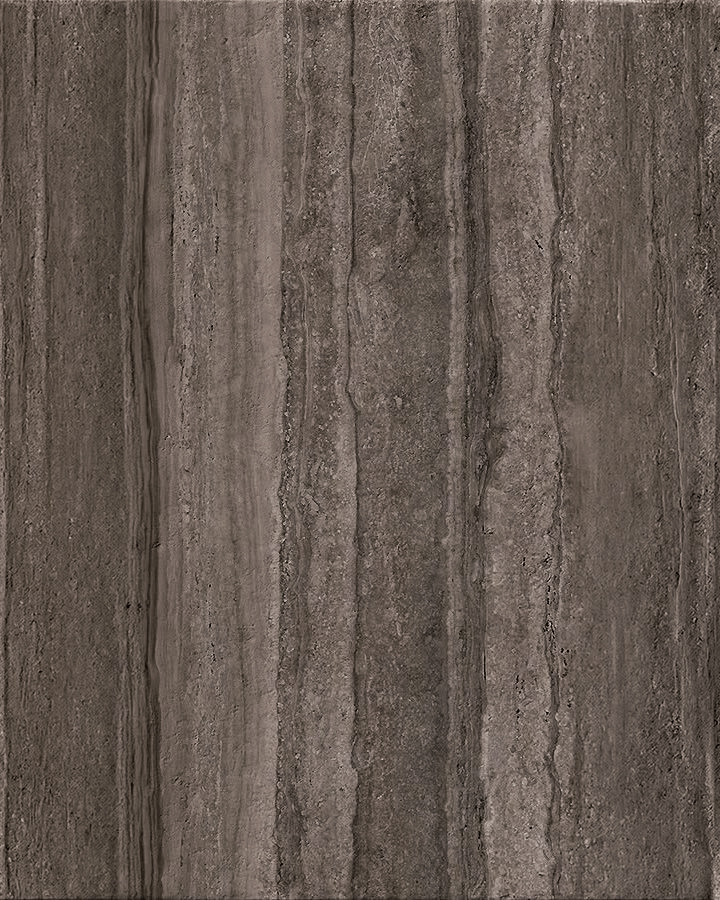
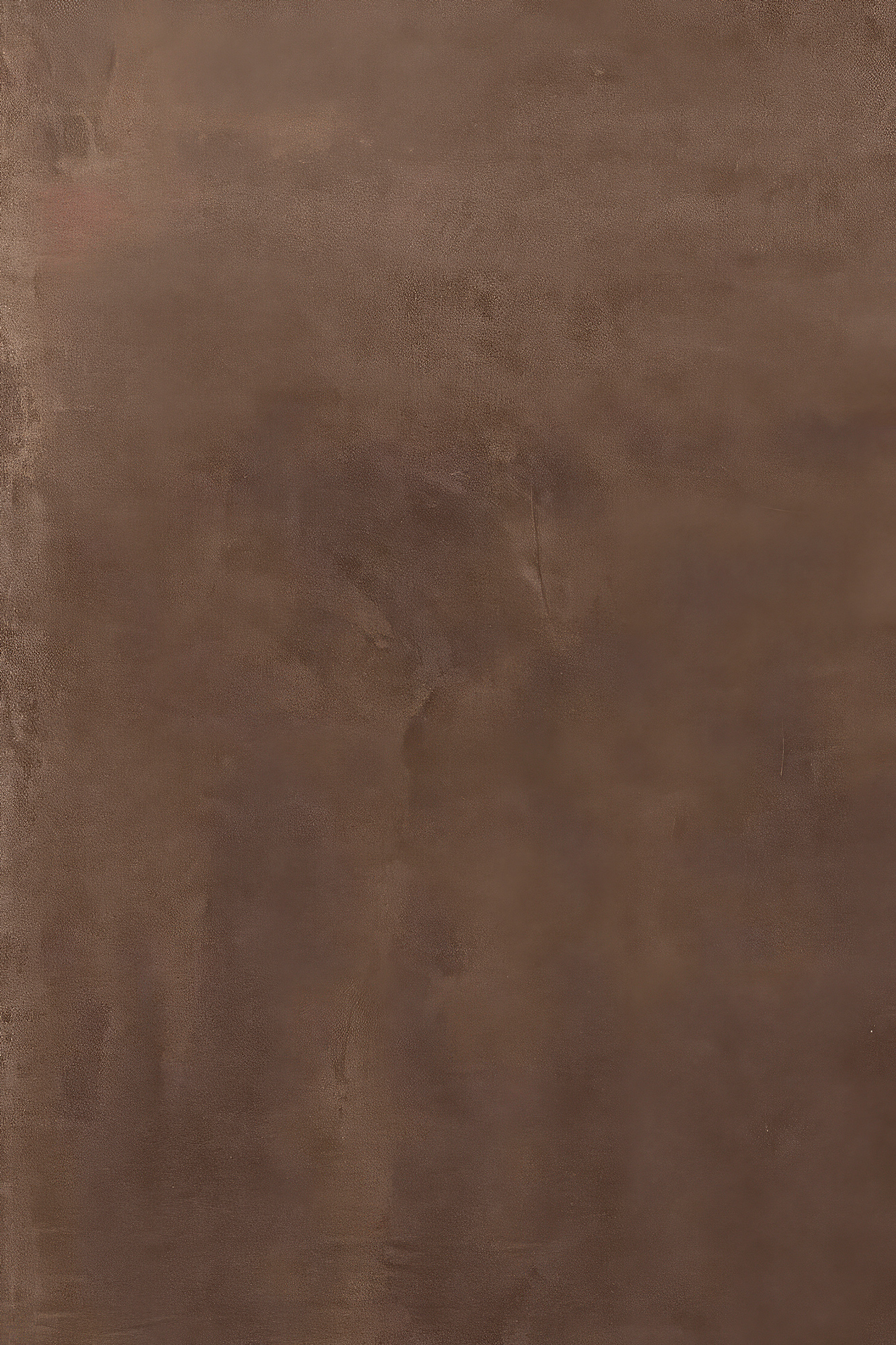
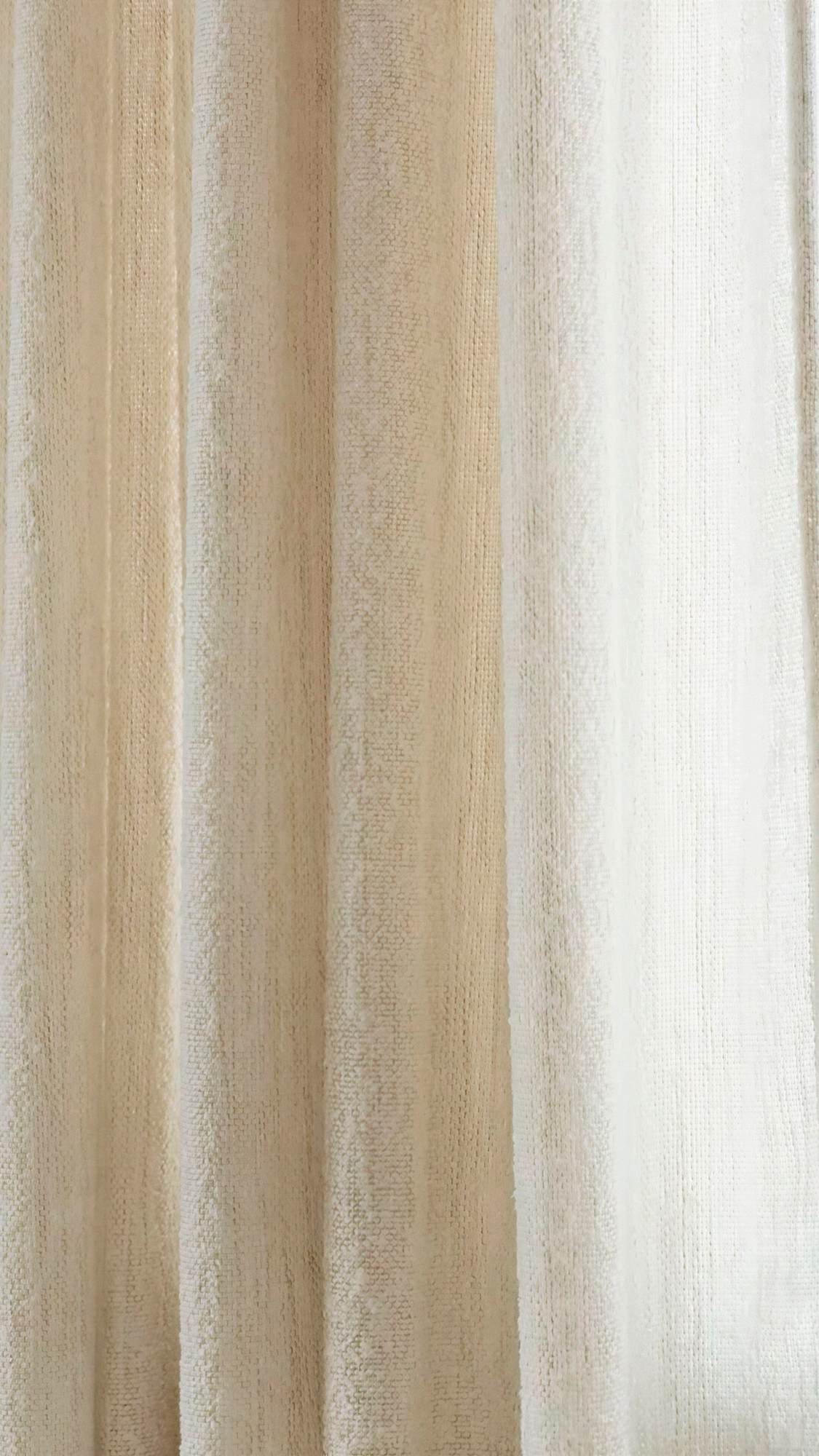
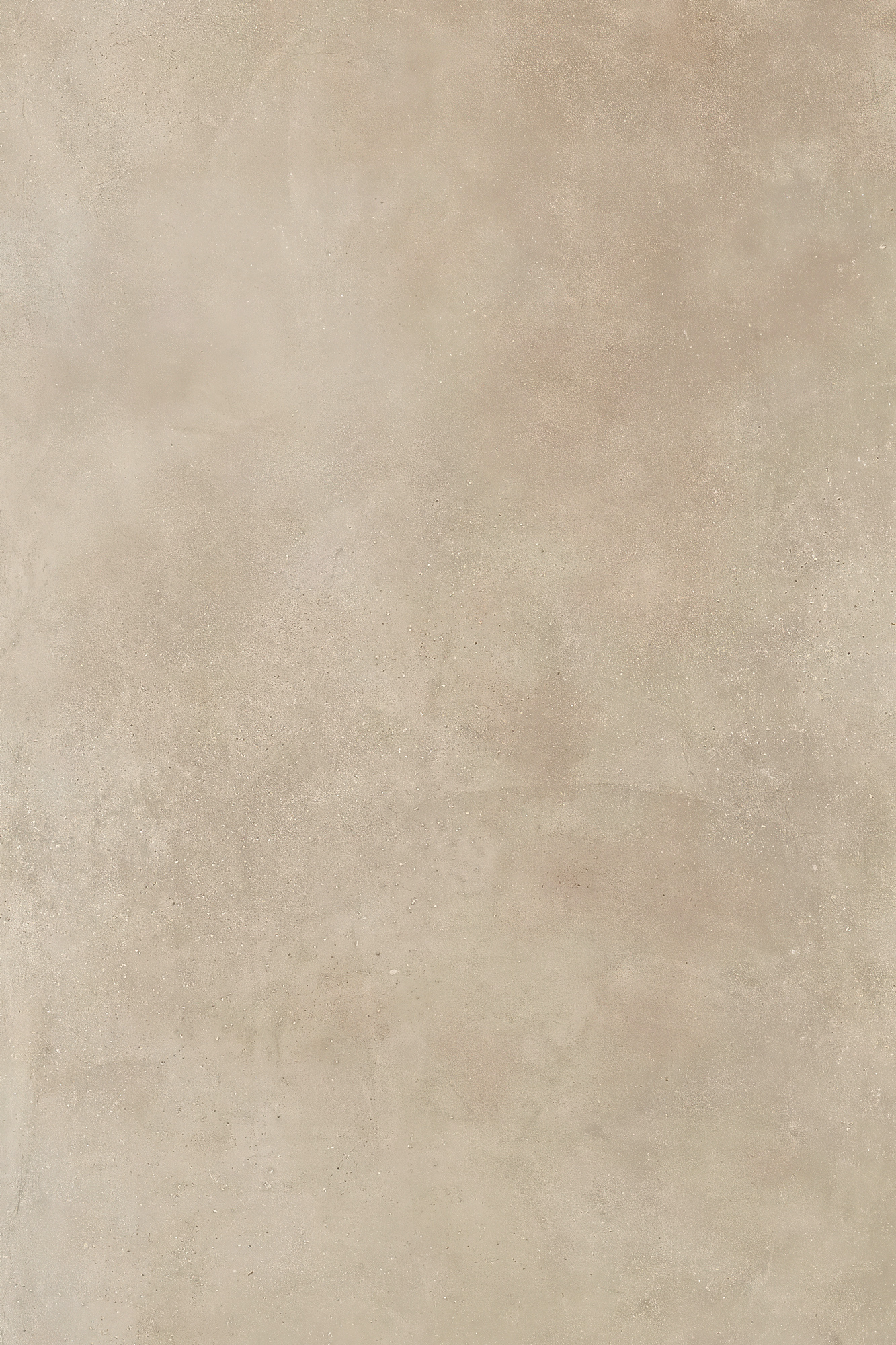
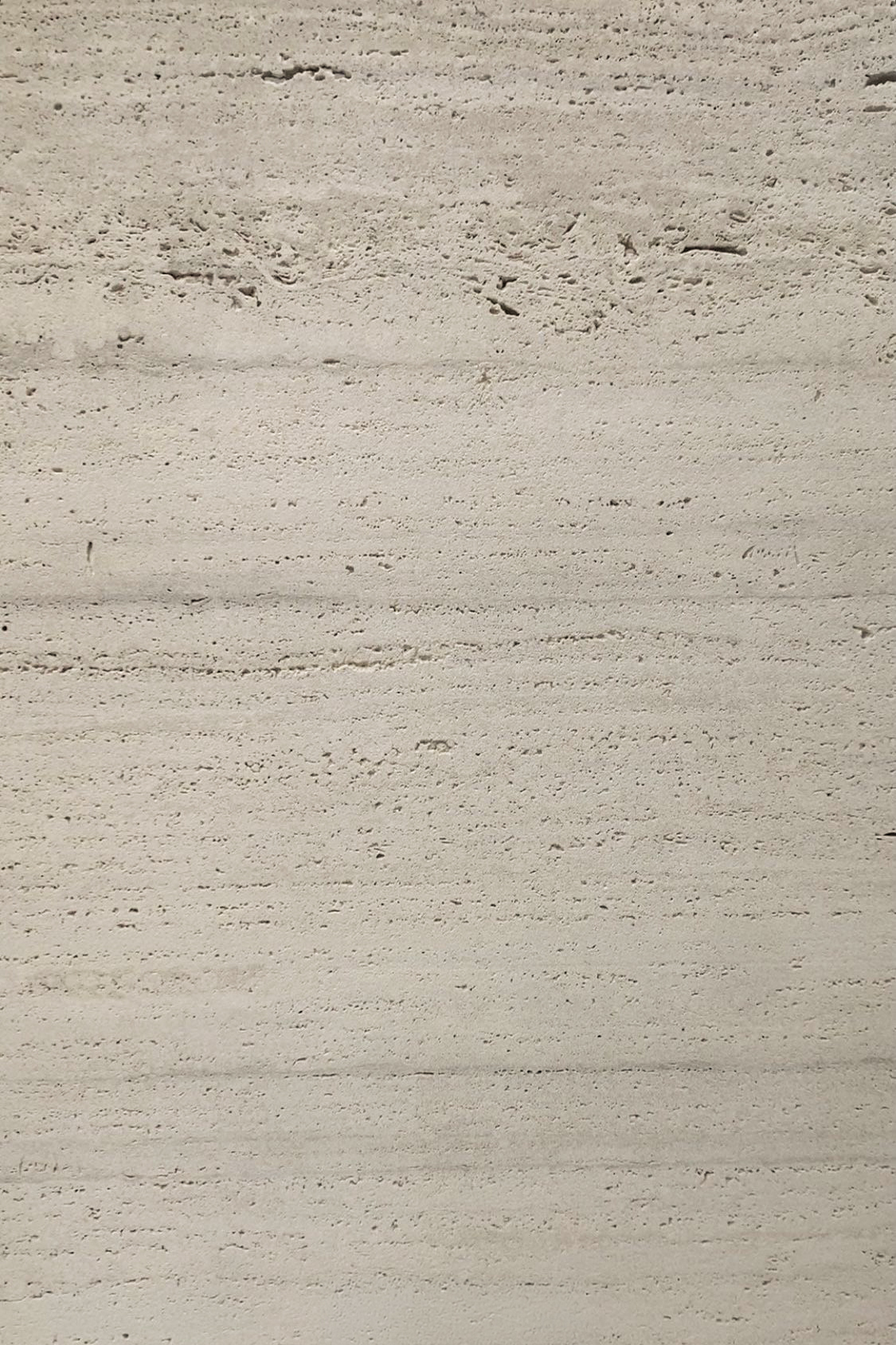
Two families of tone, one logic.
The house changes register, never character.
-
A plot of 7,895 square metres on the Red Sea coast at El Gouna. The open sea lies to the northeast, the lagoon and the road to the southwest, and the shoreline forms the eastern edge of the garden, with no road between the house and the beach. Arrival is from the south; parking is held against the southeast boundary, and a path leads to a sculptural roundabout on the central axis.
-
About 1,800 square metres across two storeys, organised so the rooms read well whether the house is full or empty. Deep covered terraces extend the living space outdoors through most of the year.
-
A social wing runs along the sea: a reception and living for twenty-four, a dining room, a games room, a cinema for twenty, and a family kitchen with an island and a place to eat for six. Behind it sit the dirty kitchen and the laundry.
-
Four master suites and four junior suites, two guest bedrooms, and a staff wing of two bedrooms with a small living area. The master suites face the sea; the junior suites face the interior patios.
-
A self-contained service band sits behind the social wing: dirty kitchen, laundry and the staff wing. The staff reach the house quickly and unseen, on a route kept clear of the family and guest spaces.
-
Six large spaces under a light pergola, set against the southeast boundary and held off the arrival sequence. From the parking, a path reaches the drop-off on the central axis of the house.
-
To the north, beside the pool, an open-air dining area with a table for twenty, an island and an outdoor kitchen for event days. Exterior toilets and changing rooms serve the pool and the garden.
-
Travertine in chocolate and Ocean Blue, lime in wet and dry sand, linen in two colours, and wood always dark. The interior moves between the two registers; the exterior is monochrome, a single tone held from the entrance to the sea.
-
Mass walls, internal patios for daylight and cross ventilation, and deep covered terraces answer the desert climate. The closed southwest wall shades the house from the hardest sun. Air conditioning is supplementary rather than the primary instrument.
- Detailed drawings PDF Download
-
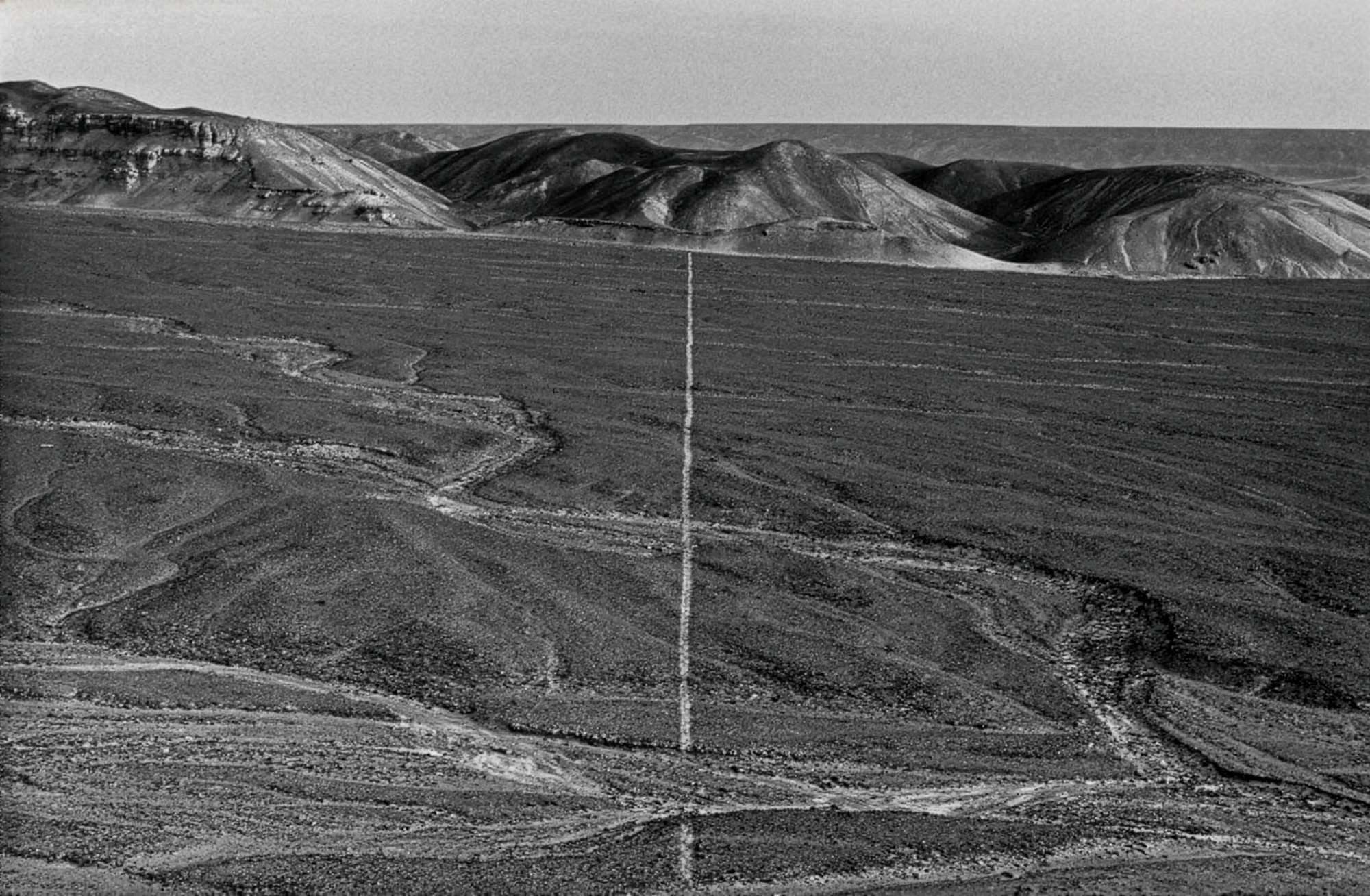
Hassan Fathy, New Gourna, Egypt
Fathy built from the earth on which he stood: mud-brick mass, the courtyard, deep shade produced by geometry. The house takes from Egypt the same fundamentals, the mass wall and the colour of the ground, as method rather than quotation.
-
Andrea Palladio, the villas
Palladio organised each villa around a central axis with symmetrically arranged rooms, so that symmetry let every room be itself without competing with its neighbour. The bilateral plan here follows that discipline: two equal wings, one axis, nothing residual.
-
Louis Kahn, Salk Institute
At the Salk Institute two identical volumes face a single channel of water to the horizon. The symmetry is absolute, and its effect is stillness rather than ornament. The eye has nothing to resolve; the body registers balance.
-
Hiroshi Sugimoto, Seascapes
Sugimoto reduces the sea to a single line dividing two tones. The proposition that a fragment of horizon, precisely framed, says more than a panorama organises the vertical slit at the kitchen and the cinema.
-
In search of beauty
Architects are taught to speak of function, structure and cost, and to leave beauty unspoken, as if it were a private indulgence. Alberto Campo Baeza has spent a lifetime insisting on the opposite: that beauty is not the reward for solving the other problems, but the problem itself.
The house takes a deliberate position. It is not a landmark, though it is built at a scale that would allow one. It does not imitate the styles the resort has accumulated. It takes from Egypt what is fundamental, the mass wall, the courtyard, the response to the sun, the colour of the earth.
Restraint here is a method: every gesture examined for its necessity, what does not belong removed. Not a showpiece, not a beach villa. A serious house, built with care, for a family that will return.
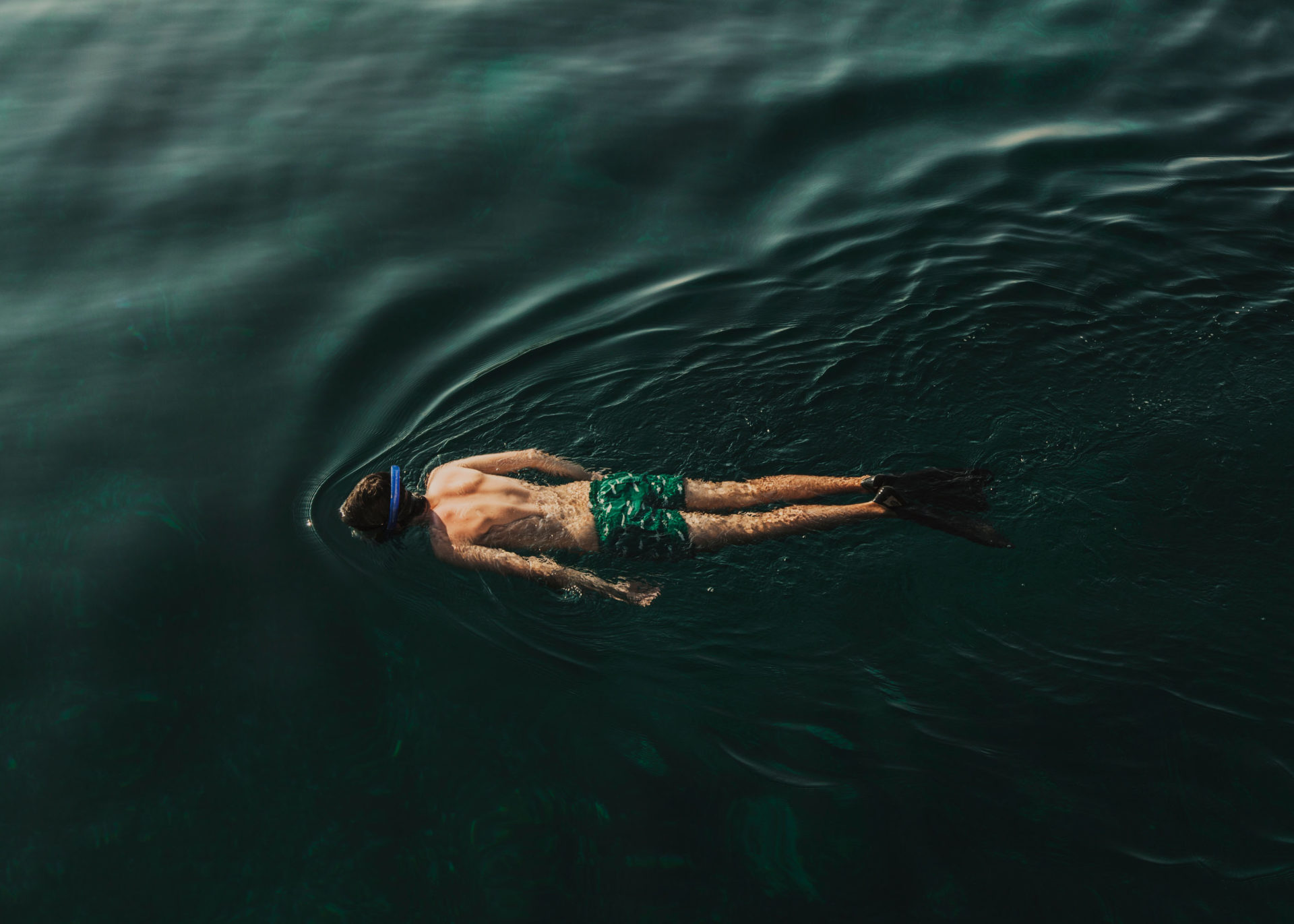
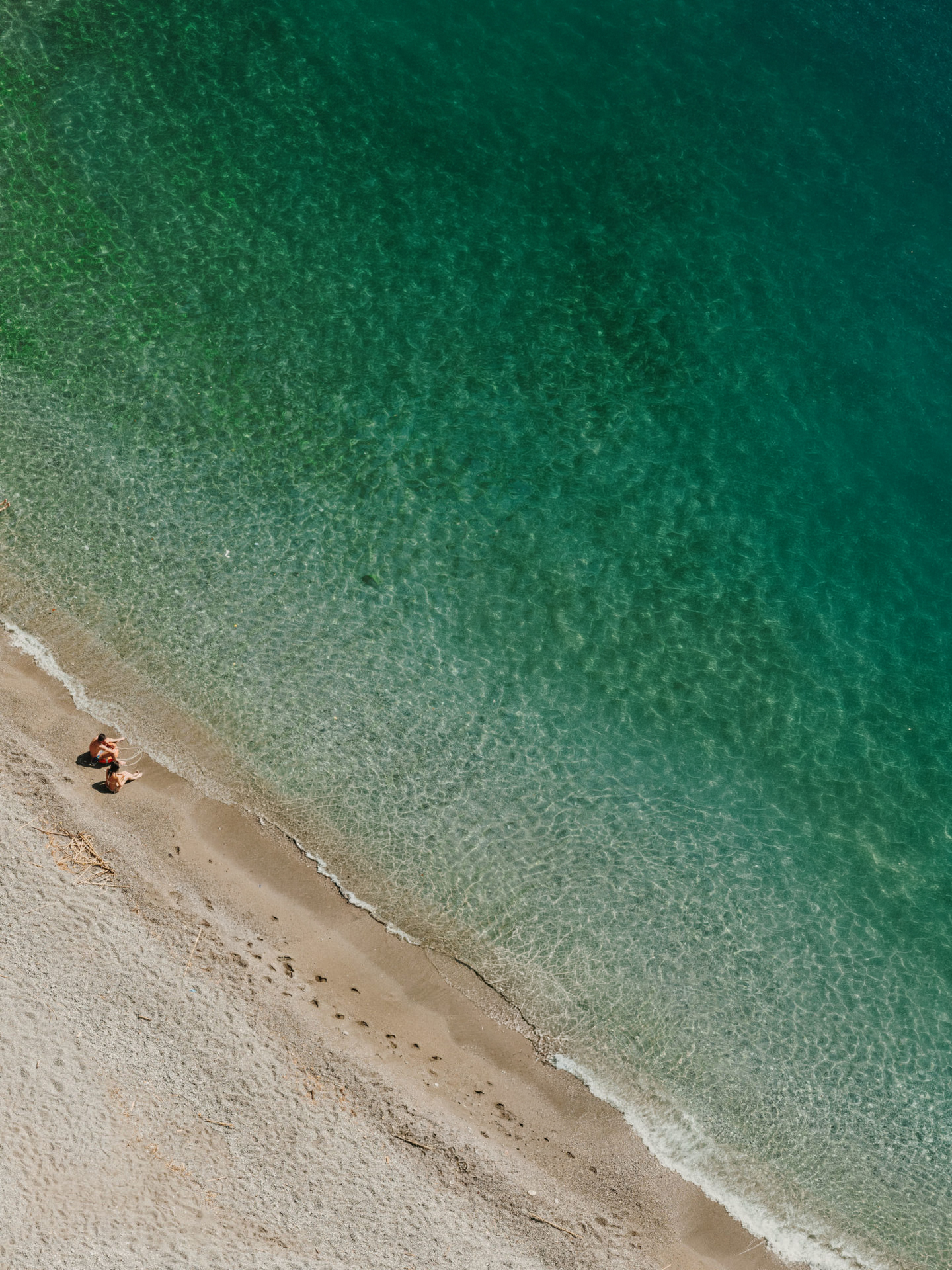
Closed to the road, open to the sea:
one house, two faces.