Hassan Fathy — New Gourna and the climate house
Before any conversation about style, there is a more basic question: where does a building's material come from, and what does it owe to the ground it stands on. Hassan Fathy answered it once, on a strip of Egyptian earth, and the answer still holds.
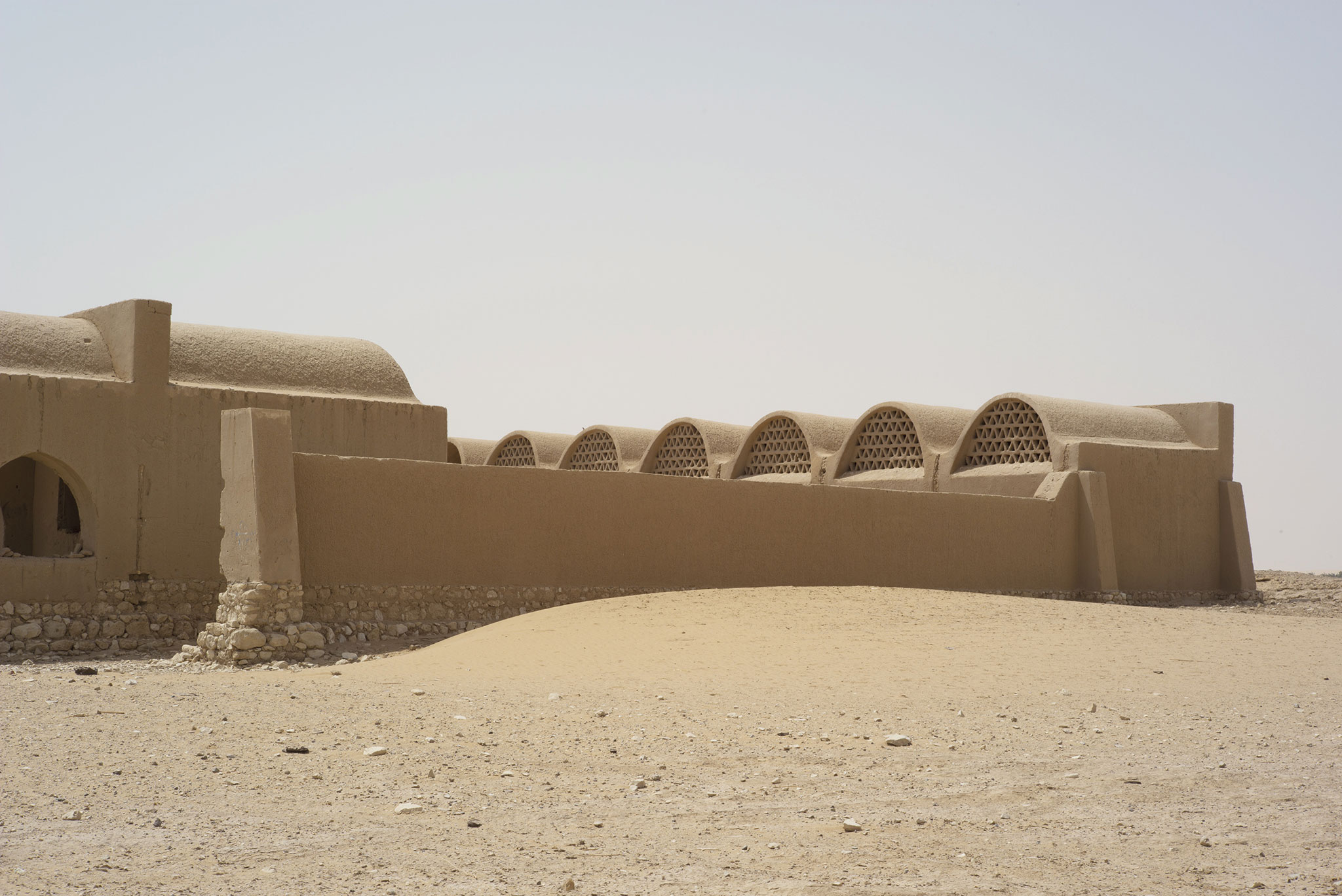
At New Gourna, near Luxor, Fathy set out to build a whole village from the cheapest material available: the mud of the Nile, formed into brick and raised into vaults and domes that local masons could build by hand, without timber formwork and without imported steel. The architecture answered the climate by geometry rather than by machinery. Thick walls held the heat of the day and released it at night. Courtyards drew cool air down into the rooms. Deep openings traded glare for shade. Nothing about it was nostalgic; it was the most rational way to build well in that place, with what that place offered.
The lesson of New Gourna is often mistaken for its form. The vault and the dome are memorable, and they have been copied across the Middle East, El Gouna included, as a kind of regional signature. But the form was a consequence, not a style. What endures in Fathy is the method beneath it: build from the ground you stand on, let mass and shade do the work that machines would otherwise do, and take the colour of the building from the colour of the earth.
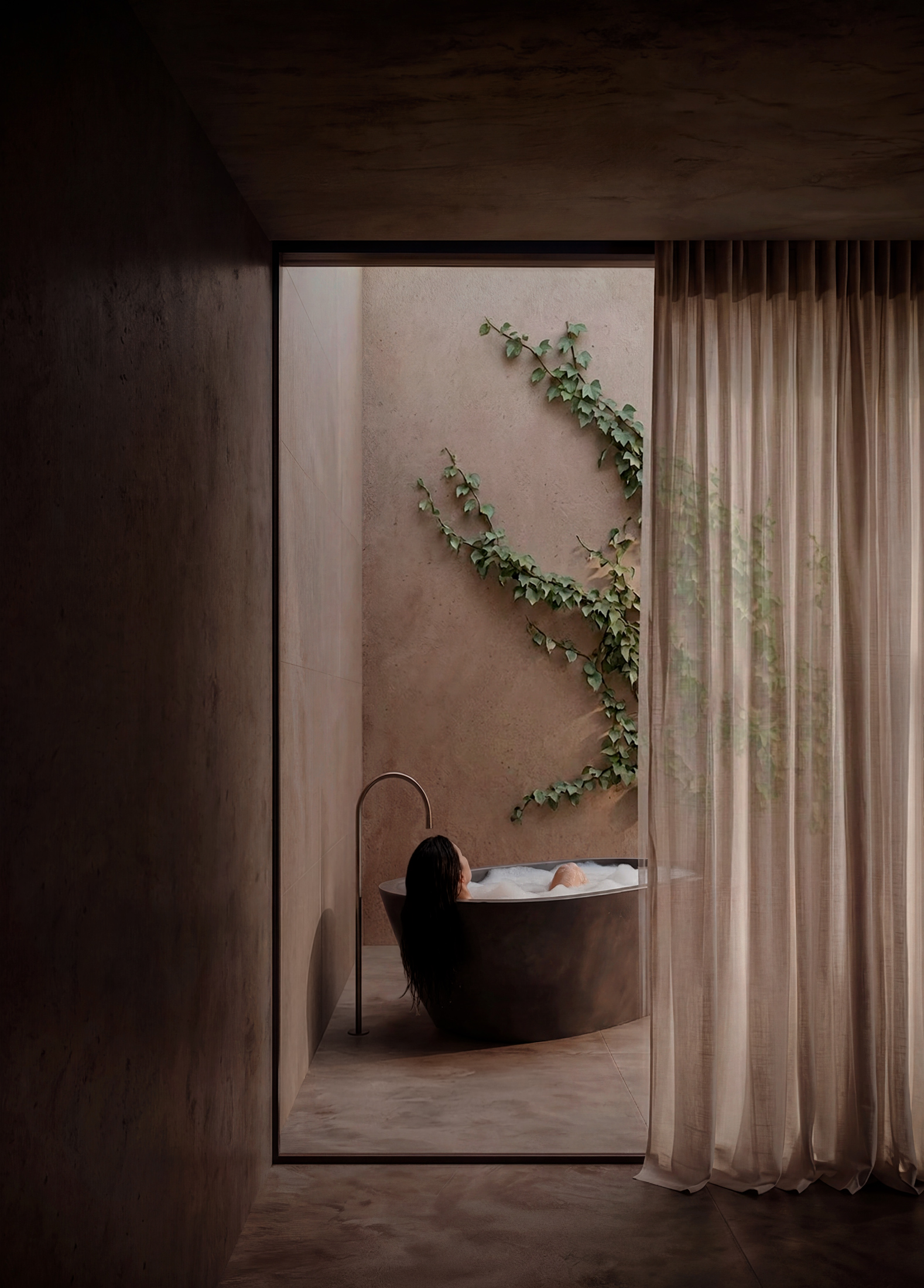
This house takes that method and leaves the motifs alone. It raises no vaults and borrows no domes. The closed southwest wall is mass set against the hardest sun. The interior patios are the courtyard, repeated through the depth of the plan, bringing light and moving air to the rooms behind the wall. The lime is pigmented in its body, so the colour belongs to the wall and to the ground, not laid over it as paint.
There is a discipline in refusing the picturesque. A resort accumulates quotations: a vault here, an arch there, a colour from a catalogue. The more Egyptian decision is to ask the older questions again and answer them for this plot, this orientation, this family. The most Egyptian thing about the house is not anything one can point to. It is the logic.