Photography · 1980 onwards · Reference for El Gouna Family House

Hiroshi Sugimoto — Seascapes as architectural model

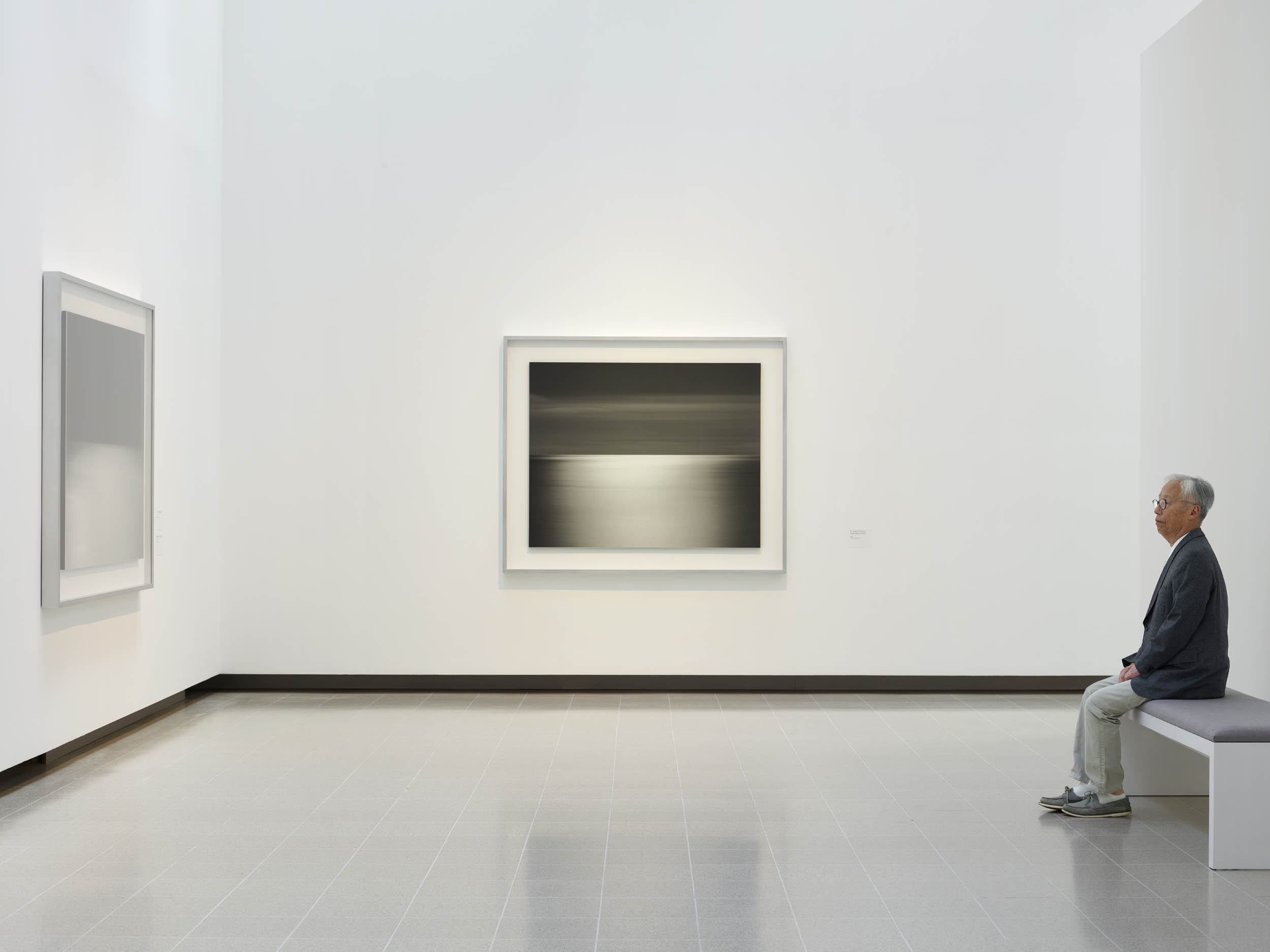
Hiroshi Sugimoto has been photographing seascapes since 1980. Each image reduces the ocean to a single line — water below, sky above, the horizon held at the centre. We use this composition as the model for the first opening from the main living room.

Sugimoto's project is serial. He returns to different shorelines around the world — the Pacific, the Mediterranean, the Caribbean, the North Sea — and he photographs each of them with the same camera, at roughly the same height, with the same composition. The horizon always falls at the centre. The framing is always nearly square. The exposure is long. What changes between images is everything that he can't control: the weather, the light, the surface of the water. What stays constant is the geometry.

The series proposes something simple but radical for an architect to look at. It says that the ocean, as a subject, is essentially the horizon. Strip away the boats and the rocks and the people, hold the camera steady, expose long enough to dissolve the waves, and what remains is a line dividing two zones of tone. That line is the architecture of the world. Everything else is incident.

The Red Sea Water, sky and the line between them, at the height of a seated figure

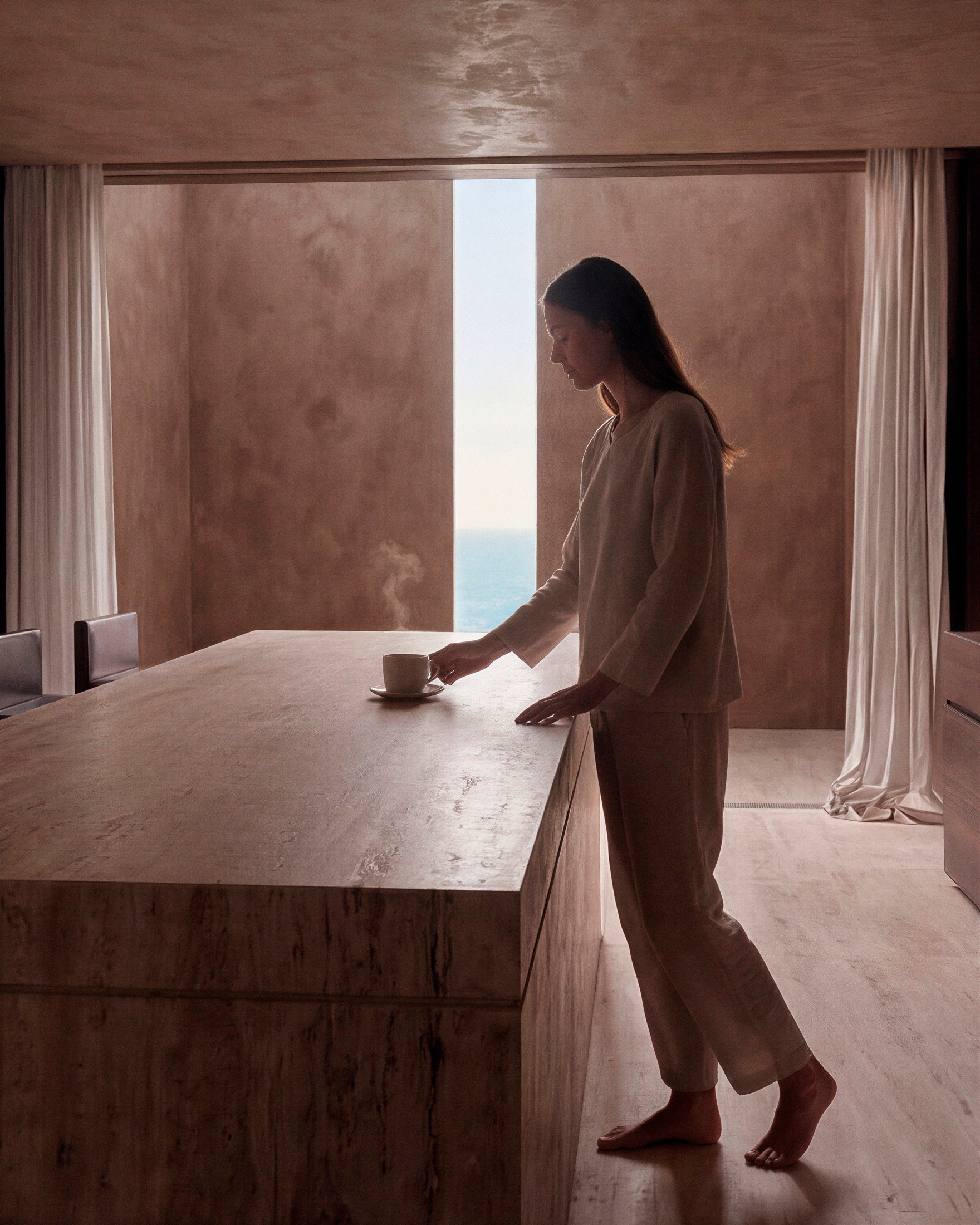
For El Gouna, this changes how we draw the main opening. The instinct on a beachfront site is to pursue the panorama: a wall of glass, the room dissolved into the view, every part of the beach equally available from every part of the room. We didn't do that. The opening from the main living room is precise. It is wider than it is tall. It is set at the height of a seated figure, so that the horizon falls almost exactly at eye level when you sit down. The view from standing is different and less complete. The view from a sofa is the Sugimoto.

The reason for this is partly atmospheric. A panorama is a generous gesture, but a precise frame is a more intense one. You see the horizon better when there is something to compare it against — a depth of wall, a pressed-down ceiling, a slow approach from a darker room. The framing organises attention. It tells you what the architecture thinks the most important thing is.

The band The horizontal stripe of the sea as the diagram of the project

The other reason is that we trust the seascape to do its own work. Sugimoto's photographs work because he doesn't compete with what he is photographing. He doesn't add filters, frames, decorative elements, captions, anything that would mediate between the eye and the line. The work is the result of stepping out of the way. We try to do the same thing with the opening. The frame is plain. There is no reveal moulding, no inset shadow gap, no tinted glass. Stone wall, glass, sea. The architecture is the placement of the cut.

What the Seascapes give us, finally, is a discipline. Whenever the design wants to do too much at the threshold of the sea — a balcony, a sculptural canopy, a deeper terrace — we test the move against the photograph. If it competes with the line, it goes. If it sets up the line, it stays.

Reference Hiroshi Sugimoto
Seascapes — 1980 onwards
Photography, horizon, reductive composition
Applied to Main living room opening — wide, low, set at seated eye height. Plain frame, no decorative reveal. Composition dictated by the line of the sea.
Other references
  1. Architecture · 1948 Hassan Fathy — New Gourna, Egypt
  2. Architecture · 1948–1998 Geoffrey Bawa — Lunuganga, Sri Lanka