Andrea Palladio, the villas
A house can be a collection of rooms, or it can be an order the rooms obey. Palladio drew the second kind, and four centuries later the discipline still reads as calm.
In the villas of the Veneto, Palladio organised the house around a central axis, with the rooms arranged symmetrically to either side and their proportions tuned so the whole held together. The plan is legible at a glance. You know where you are the moment you step through the door, and you know what lies opposite, because the building tells you.
Symmetry, in Palladio, is not grandeur and not ornament. It is a way of giving every room its place without argument. A symmetrical plan distributes weight evenly; no part competes with another, and nothing is left over as the residual room behind the stair. Each space can be fully itself precisely because the order around it is settled.
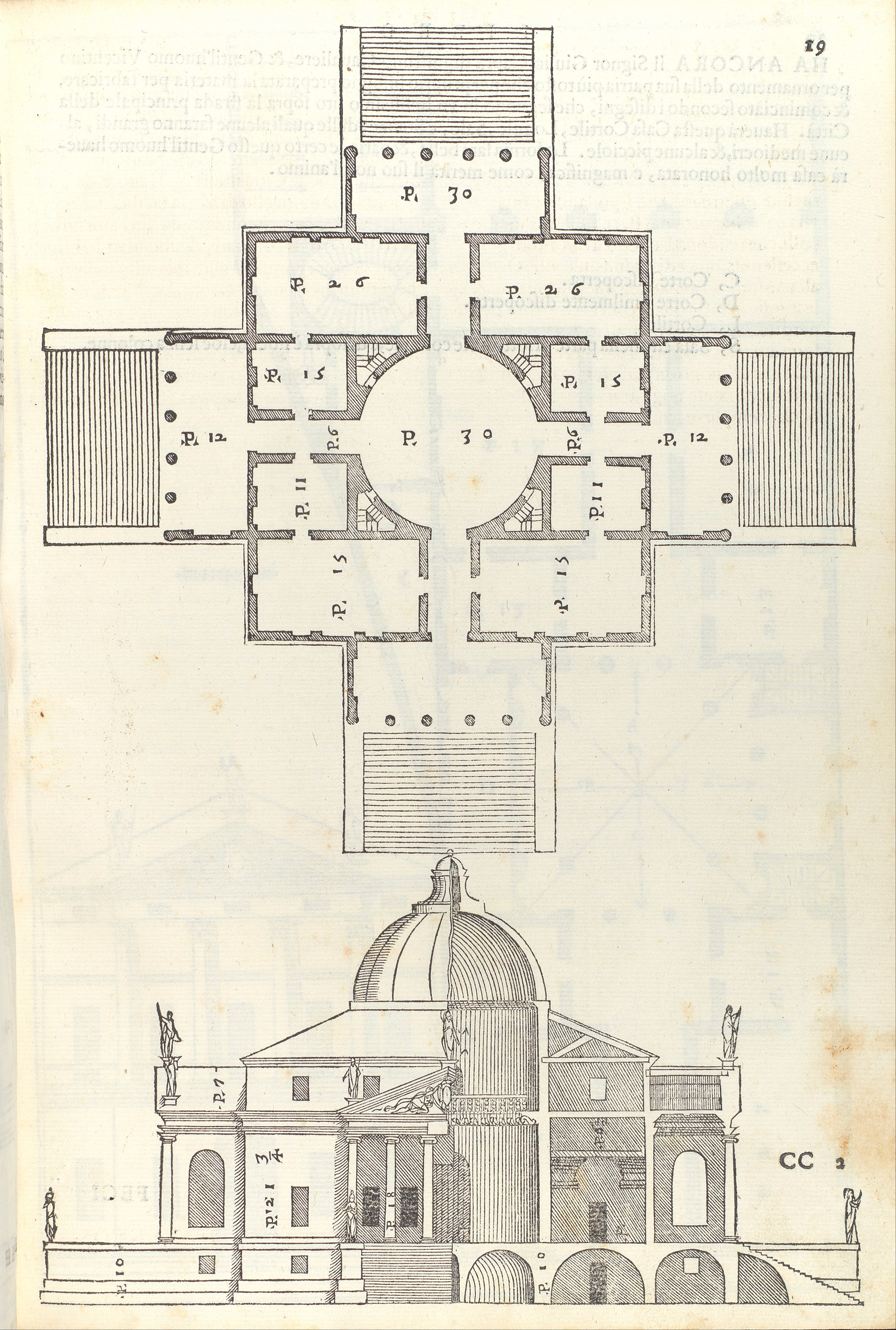
The villa also sets the house in relation to its land. A clear front, an axis driven through the building, the landscape received along that line. The architecture does not chase the view from every window; it frames one relationship and holds it.
This house follows that discipline directly. It is bilaterally symmetrical on a single axis that runs from the entrance to the sea. Two wings of equal weight, equal programme, equal proportion. The four master suites are equal to one another; the four junior suites equal; there is no leftover room and no privileged one. A house of this size could easily read as a hotel, a long string of similar rooms. Symmetry holds it instead as a single figure, understood in one look.
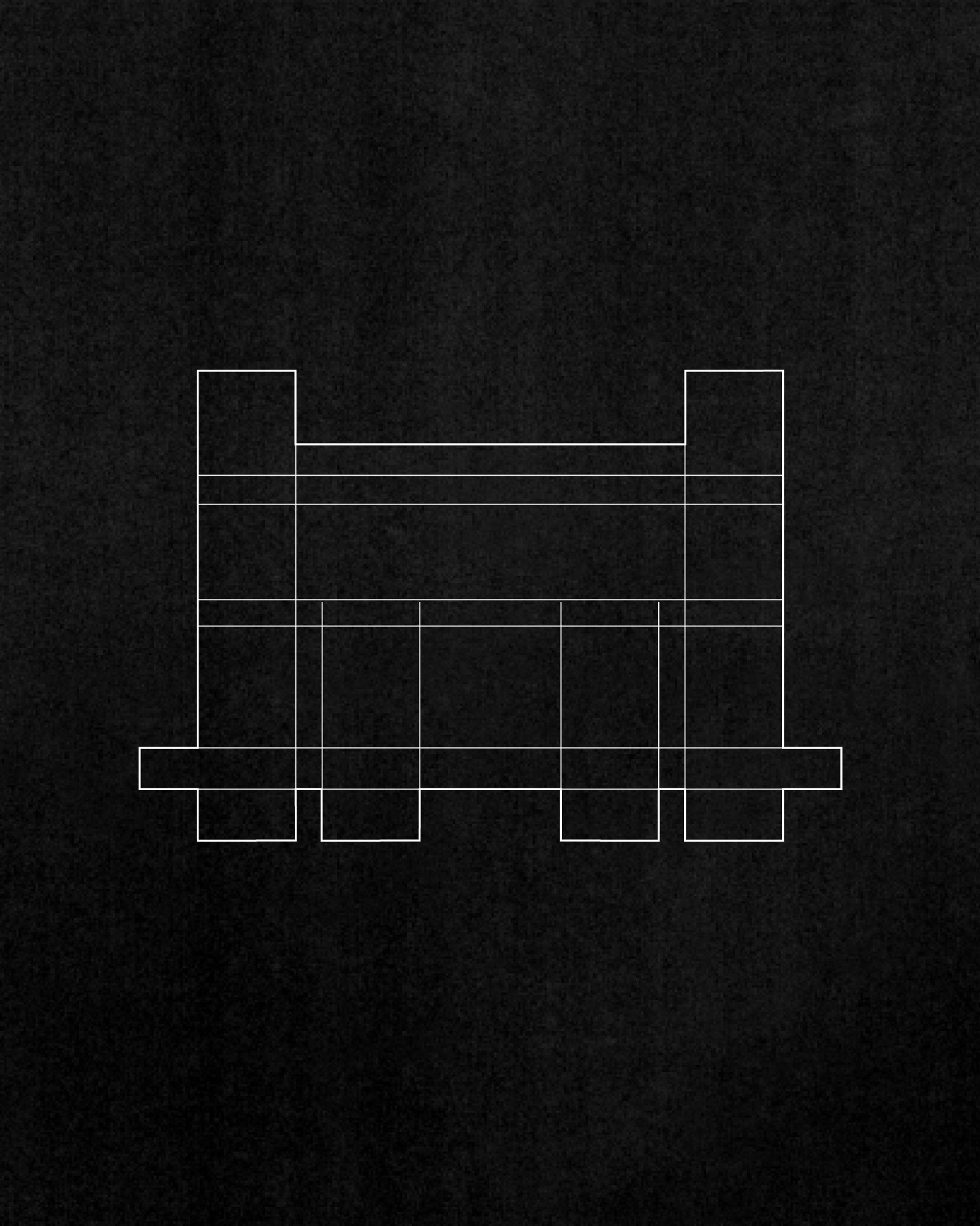
And symmetry resists fashion, because it is a principle and not a style. A house meant to stand for forty years and more cannot belong to the taste of its moment. It must belong to its principle.